
The Perfect Baked Potatoes Recipe: Crispy Outside, Fluffy Inside

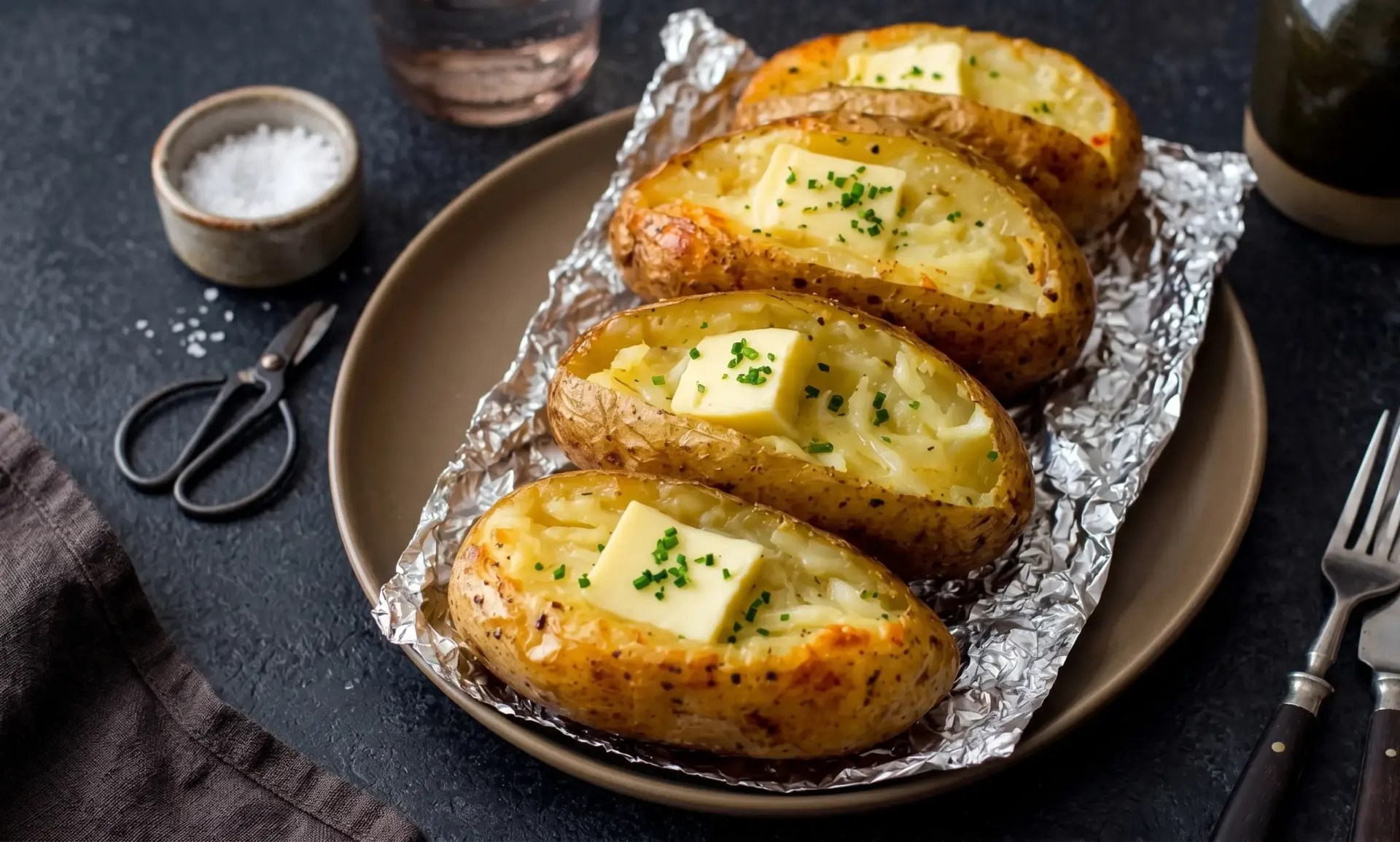
Baked potatoes don’t sound like anything special until you have really good ones.
You know the kind. The skin is crispy enough to crack when you cut into it, while the inside is soft, fluffy, and practically melts into the butter.
It is one of the simplest comfort foods out there, yet somehow it’s surprisingly easy to get wrong.
Most disappointing baked potatoes have one thing in common. They’re either dry, soggy, undercooked, or weirdly dense in the middle.
The good news? Making an incredible baked potato isn’t difficult. A few small changes can make a huge difference.
Let’s get into it.
Why So Many Baked Potatoes Turn Out Disappointing
A lot of people unknowingly sabotage their baked potatoes before they even go into the oven.
One of the biggest mistakes is wrapping them in foil. While it might seem like a good idea, foil traps moisture and essentially steams the potato. The result is soft skin instead of that crispy exterior everyone loves.
Another common mistake is skipping the oil and salt. A plain potato baked on its own will cook just fine, but it won’t develop much flavor on the outside.
The type of potato matters too. Waxy varieties like red potatoes hold their shape well, but they don’t give you that light, fluffy center that makes baked potatoes so satisfying.
And then there’s the temptation to cut into the potato the second it comes out of the oven. We’ve all done it. Unfortunately, that trapped steam can leave the inside a bit gummy instead of airy and fluffy.
Step 1: Start With the Right Potato
If your goal is the perfect baked potato, reach for russets.
Russet potatoes have thick skins that crisp up beautifully in the oven, and their high starch content creates that soft, cloud-like texture inside.
When you’re shopping, look for potatoes that feel firm and heavy for their size. Avoid any with green patches, wrinkles, or sprouts.
It might seem like a small detail, but starting with a good potato sets the stage for everything that comes after.
Step 2: Give It a Little Prep
Before the potato goes into the oven, take a couple of minutes to prepare it properly.
First, give it a good scrub under running water. Potatoes grow in the ground, and dirt loves to hide in the tiny creases of the skin.
After washing, dry the potato completely. This step matters more than most people realize. Any moisture left on the surface turns into steam in the oven, which works against crispy skin.
Next, poke several holes around the potato with a fork. Six to eight pokes is usually enough. This allows steam to escape while it bakes and helps prevent the potato from splitting open unexpectedly.
Step 3: Don’t Skip the Oil and Salt
This is where the magic starts.
Rub a small amount of neutral oil all over the potato. You don’t need much. About a teaspoon per potato is plenty.
The oil helps the skin crisp up while giving it that rich, golden appearance.
Then comes the salt.
Be generous. Coarse kosher salt or sea salt works best because it sticks nicely to the skin and adds flavor to every bite.
If you’re feeling creative, you can also sprinkle on a little garlic powder, smoked paprika, or dried rosemary before baking. These simple additions can take a baked potato from basic to memorable.
Step 4: Bake It the Smart Way
Many people bake potatoes at one temperature from start to finish, but a two-stage approach often gives better results.
Start by baking the potato at 375°F (190°C) for about 45 minutes. This allows the inside to cook gently and evenly.
Once the potato is mostly cooked through, increase the temperature to 450°F (230°C) and continue baking for another 15 to 20 minutes.
That final blast of heat transforms the skin. It becomes crisp, slightly crackly, and packed with flavor.
Depending on the size of the potato, the total baking time usually falls somewhere between 60 and 75 minutes.
If you have a thermometer, the sweet spot is an internal temperature between 205°F and 210°F.
No thermometer? Give the potato a gentle squeeze using an oven mitt. It should feel soft inside while the skin remains firm and crisp.
Step 5: Let It Rest
This is the step most people skip.
When the potato comes out of the oven, resist the urge to cut into it immediately.
Instead, place it on a wire rack and let it sit for about five to ten minutes.
A wire rack is important because it allows air to circulate around the baked potatoes. If you place it directly on a plate, steam gets trapped underneath and can soften the skin you worked so hard to crisp up.
Once it’s rested, cut it open and gently fluff the inside with a fork.
The key word here is gently.
You want to separate the fluffy interior, not mash it into potato paste.
Now comes the fun part.
A perfectly baked potato is delicious on its own, but toppings can take it to another level.
If you’re a traditionalist, you really can’t go wrong with butter, sour cream, fresh chives, and cracked black pepper.
For something heartier, pile on shredded cheese, crispy bacon, and sliced scallions.
Trying to keep things lighter? Greek yogurt works surprisingly well as a substitute for sour cream. Add some steamed broccoli and a sprinkle of everything bagel seasoning for extra flavor.
If you’re in the mood to impress guests, top your potato with crème fraîche, fresh dill, and even a little caviar.
No matter which route you choose, consider serving it in a bowl rather than on a flat plate. You’ll catch every fluffy bite, along with any melted butter or toppings that try to escape.
The beauty of baked potatoes is that it doesn’t rely on complicated ingredients or fancy techniques.
When done right, it delivers everything people love about comfort food. Crispy skin. Soft center. Rich flavor. Pure satisfaction.
Sometimes the best meals are not the most expensive or the most complicated. They’re the ones that take a humble ingredient and bring out its absolute best.
So the next time you’re craving something warm and comforting, grab a russet potato, give it a little attention, and let the oven do the rest.
You might be surprised by how good something so simple can be.