
My Neighbors Treated My Driveway Like Their Own, So I Made Sure It Never Happened Again

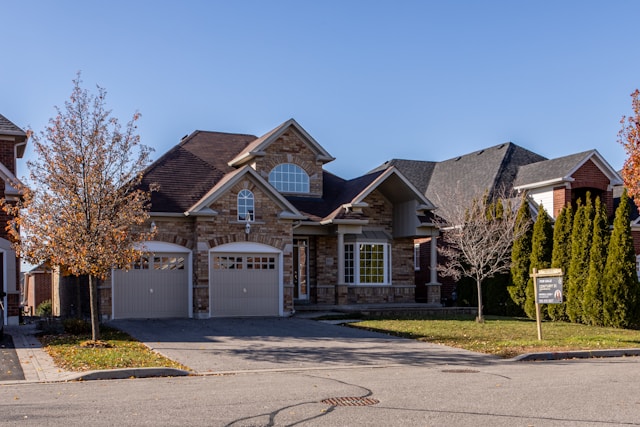
The first time Brent Callaway tried to take part of my driveway, he did it with three orange traffic cones.
He placed them neatly along the gravel, as though they had always belonged there. As though the line he had imagined in his head had suddenly become official just because he marked it.
I stood beside my truck for a moment, staring at them.
Then I picked up each cone and placed it gently on his lawn.
I did not throw them. I did not kick them over. I did not march next door looking for a fight.
I simply returned his property to him.
Ten minutes later, Brent was knocking on my front door.
That was the beginning of a dispute that eventually involved two surveyors, a lawyer, the police, a judge, the sheriff’s office, code enforcement, and more strategic parking than I had ever done in my life.
All because my neighbor decided that eight feet of my driveway would look better if it belonged to him.
My name is Nate Brennan. I am thirty-eight years old, and I bought my house nine years ago.
It is not a glamorous place. It is a small, two-bedroom house on a corner lot just outside a Midwestern city. The detached garage leans slightly to one side, the kitchen cabinets are older than I am, and the pipes complain every winter.
Still, it is mine.
I bought it back when interest rates were reasonable and the neighborhood still felt friendly. People waved from their porches. They borrowed tools. If somebody’s car would not start, three people usually came outside with jumper cables before they were even asked.
The main reason I chose the property was the driveway.
It was wide, covered in gravel, and wrapped around the side of the house before opening into a larger area behind the fence. Most buyers probably would not have cared about it. To me, it was perfect.
I own a small landscaping company. It is nothing enormous. Most of the year, it is just me. During the busy season, I bring on two extra workers. We mow lawns, spread mulch, trim shrubs, build simple stone borders, and handle smaller hardscaping jobs.
That driveway allowed me to park my pickup, trailer, mowers, tools, and occasional deliveries without blocking the street. I could back the trailer in, unload safely, clean the equipment, and leave room for my own car.
I maintained it carefully. I added fresh gravel when it thinned out. I filled low spots after heavy rain. I never left broken equipment sitting around. There were no piles of trash, leaking oil pans, or rusted-out trucks.
It was a working driveway, but I kept it clean.
For years, nobody complained.
Then Brent and Elise Callaway moved in next door.
They bought the house beside mine for nearly twice what it had sold for five years earlier. Within days, contractors began arriving.
The old siding came off. New white siding went up. They installed black-framed windows, added a pale stone facade, replaced the front door, removed the overgrown bushes, and planted perfectly matched shrubs.
The house looked like it belonged in an advertisement.
I met Brent one evening near the mailbox.
He walked over wearing a crisp polo shirt and loafers without socks. He extended his hand with the confidence of someone greeting a new employee.
“Brent Callaway,” he said. “We just moved in next door.”
“Nate Brennan,” I replied. “Welcome to the neighborhood.”
He glanced toward my truck and trailer.
“You run a business from here?”
“Landscaping,” I said. “Keeps me busy.”
He nodded slowly.
“Well, I’m sure we can all work together to keep things looking clean.”
He smiled when he said it, but something in his tone bothered me.
At the time, I ignored it.
Over the next few months, Brent and Elise continued renovating. Every week brought another delivery truck, contractor, or landscaper.
At the same time, little remarks started drifting across the property line.
Brent would mention that my truck looked large for a residential street.
Elise asked whether equipment was allowed to be stored outside overnight.
Once, while I was loading a mower, Brent casually wondered aloud whether the neighborhood had rules about commercial vehicles.
It did not.
There was no homeowners association, no private committee, and no special restriction preventing me from parking my equipment on my own property. I had checked all of that before buying the house.
Brent seemed disappointed by the lack of rules.
He looked like a man who believed every neighborhood should have a board, a handbook, and a fine for leaving the wrong trash can outside.
The real trouble began on a Saturday evening.
The Callaways were hosting a dinner party. Their driveway was full, and several cars were parked along the curb.
When I returned from a job, I found a BMW angled across the entrance to my driveway. Half of the car was on the street. The other half was blocking the gravel.
I could not back my trailer in.
I parked temporarily and walked next door.
Elise answered the door holding a glass of wine.
“Hi,” I said. “One of your guests is blocking my driveway.”
She turned toward the room behind her.
“Brent, it’s about the parking.”
He appeared a few seconds later, looking irritated before I had even explained.
“It’s only for a few hours,” he said. “We have limited space.”
“You have your driveway,” I replied. “This one is mine.”
His expression changed slightly.
“Your driveway comes pretty far toward our side.”
“It goes exactly as far as the property line.”
He tilted his head.
“Are you sure about that?”
I remember the way he asked.
It was not curiosity. He already had something in mind.
“I’m sure,” I said.
The BMW was moved, but the conversation stayed with me.
A week later, the cones appeared.
After I placed them back on his grass, Brent knocked on my door.
He stood on the porch with his arms folded.
“Nate, we need to talk about the property line.”
“What about it?”
“I had a survey done,” he said. “Your driveway crosses onto my property by approximately eight feet.”
For a second, I thought I had misheard him.
“Eight feet?”
“The gravel section along the side of your house. It’s on my land.”
“Show me the survey.”
He unfolded a sheet of paper and handed it to me. It included measurements, lines, and a red boundary running straight through the edge of my driveway.
I studied it.
Then I looked past him toward the gravel I had used and maintained for nine years.
“This does not match the survey from when I bought the house.”
“Then your old survey might be wrong.”
“Or this one is.”
His jaw tightened.
“I paid a professional.”
“So did I.”
He pointed toward the side yard.
“That section belongs to us, Nate. I need the gravel removed.”
I almost laughed.
He was speaking as though we were discussing a misplaced flowerpot, not a section of land attached to my house.
“I’m not removing anything.”
“You’re using part of my property.”
“No, Brent. I’m using my driveway.”
He left without another word.
I went inside and pulled the box containing my closing documents from the hall closet. After sorting through old insurance papers and tax records, I found the property survey from 2014.
It was certified and clear.
The driveway sat entirely within my property boundaries.
According to that survey, the line did not cut across the gravel at all. In fact, it ran slightly into the lawn beside it.
I carried the document next door.
Brent was standing in his garage arranging tools on a pegboard. Everything was lined up by size, as though nobody had ever used any of it.
I held out the survey.
“This was completed when I bought the house. It shows the driveway is mine.”
He barely looked at it.
“That survey is nine years old.”
“So?”
“Things shift.”
“Land can erode. Property lines do not walk across a yard.”
“Surveys can contain errors.”
“So can yours.”
His face hardened.
“I want the gravel removed.”
“And I want you to stay off my property.”
I knew arguing would not settle anything, so I called a surveyor named Tom.
I had worked with him on a commercial landscaping job several years earlier. He was careful, experienced, and not connected to either of us.
Tom came out two days later.
He reviewed my deed, checked county records, located the physical markers, took measurements, and compared everything with the existing survey.
Brent watched from his kitchen window for part of the afternoon.
When Tom finished, he called me over.
“Your driveway is completely inside your property,” he said. “The boundary actually runs around two feet into the neighboring lawn. None of the gravel belongs to him.”
I showed him the survey Brent had given me.
Tom studied it for a while.
“This is not good work,” he said.
“What is wrong with it?”
“Wrong reference points, inconsistent measurements, and the line does not match the county record. Either the surveyor made serious mistakes, or somebody strongly encouraged a particular result.”
That was enough for me.
I made a copy of Tom’s findings and brought them to Brent.
“This is from an independent certified surveyor,” I told him. “It matches my deed, the county records, and the original survey. You have no claim to the driveway.”
He read the first page, then looked at me.
“I do not accept this.”
“You do not need to accept it. It is still accurate.”
“I’ll get another opinion.”
“Get ten opinions. Until you produce something legitimate, stay off my driveway.”
For two weeks, nothing happened.
I began to think he had finally understood.
Then I came home from work one afternoon and found a chain-link fence cutting across my driveway.
It stood about eight feet in from the road, directly along the false boundary shown on Brent’s survey. The fence was four feet high and included a locked gate.
It blocked access to the back section of my property.
I stopped my truck in the street and stared at it.
Brent had not warned me. He had not filed anything with the city. He had simply hired someone to install a fence across land that did not belong to him.
I called the non-emergency police line.
A young officer arrived about twenty minutes later. He walked around the fence, examined the documents I gave him, and took several photographs.
“So he built this on your property?” he asked.
“Yes.”
“And you have two surveys showing the boundary?”
“Two surveys, the deed, and county records.”
He looked uncomfortable.
“Based on what you’ve shown me, you may have a strong claim. But this is a civil property dispute.”
“What does that mean for the fence?”
“You will probably need a court order.”
“How long does that take?”
“Could be weeks. Could be longer.”
“And until then?”
“Do not damage or remove the fence yourself. He could accuse you of destroying his property.”
I looked toward Brent’s house.
He was standing behind the window.
He smiled.
That smile made the entire situation clear.
He knew the system was slow. He believed that if he created enough inconvenience, I might eventually surrender the land just to make the problem disappear.
I called my lawyer.
Angela handled some of my business contracts and also worked on property disputes.
After reviewing the surveys and photographs, she sounded almost offended on my behalf.
“This is straightforward trespassing,” she said. “We file for an injunction and ask the judge to order the fence removed.”
“How soon?”
“Probably three weeks for the hearing.”
“Three weeks without access to half my driveway?”
“It is fast by court standards.”
“What am I supposed to do in the meantime?”
“Document everything. Photograph the fence. Write down dates. Save every message. Do not threaten him and do not touch the structure.”
I followed her advice.
I photographed every post, panel, and hinge. I recorded where the fence crossed the driveway. I saved copies of every survey and county record.
Then I solved the parking problem in my own way.
Since I could no longer access the back section of my driveway, I used every available inch in front of the fence.
I parked my main truck close to the property line.
Behind it, I parked the trailer.
Behind that, I placed my backup work truck.
Nothing crossed onto Brent’s property. Nothing blocked the sidewalk or street. Every vehicle was properly registered and legally parked.
But from the Callaways’ new black-framed windows, the view was now dominated by trucks, mowers, gas cans, trimmers, and a landscaping trailer.
It was not messy.
It was simply impossible to ignore.
Brent came to my door that evening.
“You’re doing this intentionally,” he said.
“Doing what?”
“Parking all that equipment in front.”
“I’m parking in the part of my driveway that is still accessible.”
“You’re ruining the view.”
“I thought you said that area belonged to you.”
“The fence is on the boundary.”
“No, it is not. It is in the middle of my driveway.”
“You’re being petty.”
“You installed a locked fence across land I own.”
“It is my property.”
“A judge will answer that in three weeks.”
His face turned red.
“This equipment makes the whole street look terrible.”
“Then you should not have blocked the place where I normally keep it.”
He walked away without responding.
The court hearing took place three weeks later.
Angela presented my deed, the original certified survey, Tom’s independent verification, county records, and photographs showing the fence crossing the gravel.
Brent’s lawyer presented his survey and argued that the property boundary was disputed.
The judge reviewed both sets of documents.
Then he looked directly at Brent’s attorney.
“Your client’s survey contradicts the deed, the earlier certified survey, the county record, and an independent verification. What evidence supports the claim that the driveway belongs to Mr. Callaway?”
The lawyer shifted through his papers.
“Our surveyor determined that the original measurements were incorrect.”
“Based on what?”
“His professional assessment.”
“An assessment commissioned by a client who stood to gain eight feet of neighboring property?”
The courtroom went quiet.
The judge ruled in my favor.
He granted the injunction and ordered Brent to remove the fence within seven days.
Brent did nothing.
The fence remained in place on the eighth day.
Angela filed a motion for contempt.
On the tenth day, a sheriff’s vehicle arrived with a removal crew.
They cut the lock, took down the chain-link panels, pulled the posts from the gravel, loaded everything onto a truck, and sent Brent the bill.
By sunset, I could use my entire driveway again.
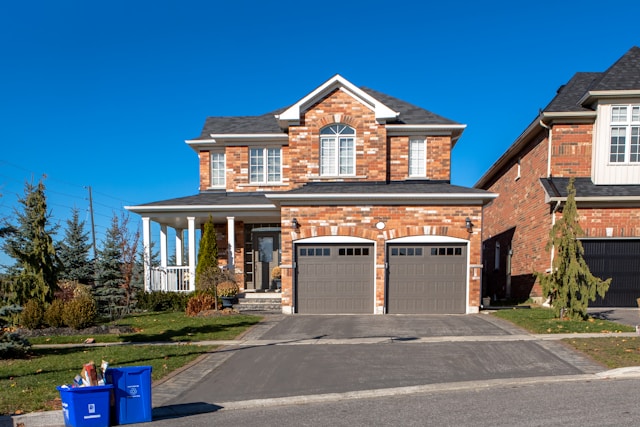
I thought that would end it.
I was wrong.
Brent appealed the decision and claimed the judge had been biased. The appeal was denied.
Then he filed a complaint with the county, saying I was operating an illegal commercial business from a residential property.
An inspector visited, reviewed my license and storage setup, and found no violations.
Next, Brent reported me to code enforcement. He claimed my equipment was being stored improperly.
They inspected the property and found everything in compliance.
He complained about noise.
I kept records showing that I loaded equipment during normal daytime hours.
He complained about the trailer.
It was legally parked.
He complained about the gravel.
The gravel was mine.
Every new complaint ended the same way.
No violation.
No action.
No victory for Brent.
The reason was simple. I had followed the rules long before he arrived.
My business was registered. My equipment was maintained. My vehicles were legal. My driveway was documented. My property line was clear.
He kept expecting some hidden technicality to hand him what he wanted.
There was none.
About six months after the fence came down, a real estate sign appeared outside the Callaway house.
Brent and Elise sold the property and moved to a gated development with a strict homeowners association.
It sounded perfect for them.
Every mailbox matched. Every lawn had approved grass. Every driveway looked almost identical. I imagine Brent felt much more comfortable there.
The couple who bought their old house were completely different.
They introduced themselves, asked whether their moving truck would block my driveway, and apologized when one of their boxes blew onto my lawn.
A few months later, they borrowed my mower.
I was happy to lend it to them.
It has been two years since the dispute.
I still live in the same house. I still run my landscaping business. I still park my trucks and trailer on the gravel driveway that wraps around the side of the property.
Every now and then, while backing the trailer into place, I think about Brent.
I think about how confidently he placed those cones on my gravel.
How easily he handed me a questionable survey.
How calmly he told me to remove part of a driveway I had owned, maintained, and used for nearly a decade.
He did not need the land.
His driveway was wide enough for his vehicles. His house had plenty of space. The missing eight feet caused him no hardship.
He simply did not like looking at my work equipment.
Instead of accepting that he had moved next door to someone who ran a landscaping company, he tried to reshape the property line around his preferences.
At first, he used comments.
Then cones.
Then paperwork.
Finally, he built a fence.
He assumed I would give in because fighting would cost money, take time, and create stress.
He was right about those parts.
It did cost money.
It did take time.
It was stressful.
He was wrong about me giving up.
That driveway was not just a strip of gravel.
It allowed me to run my business. It gave me room to store the tools that paid my bills. It was part of the home I had spent years working to afford.
When Brent blocked it, he was not making a minor adjustment.
He was interfering with my livelihood and trying to take something he knew did not belong to him.
So I defended it.
I did not tear down the fence myself.
I did not threaten him.
I did not damage his property or give him a reason to turn the situation against me.
I kept records.
I hired a surveyor.
I contacted a lawyer.
I followed the legal process.
And while the court handled the property line, I parked every truck I owned directly in front of his expensive new windows.
That part may have been a little petty.
I am comfortable admitting it.
The fence is gone now. The survey is settled. The county records are clear.
The driveway is mine.
Completely, legally, and permanently mine.
Some people believe boundaries are flexible when they become inconvenient. They treat property lines like suggestions and assume that politeness means weakness.
Brent mistook my patience for permission.
He learned otherwise.
He wanted to elevate the neighborhood by taking part of my driveway.
Instead, he improved the neighborhood by moving away.
And I ended up with exactly what I wanted from the beginning.
My house.
My business.
My gravel driveway.
And no orange cones in sight.