My Son Said His Wife’s Mother Didn’t Want Me at Thanksgiving, So What I Did Next with the House…

The house smelled like cinnamon and brown sugar. A tray of cookies was already cooling near the window, and I had another batch waiting to go into the oven.
I had spent most of the morning preparing for Thanksgiving, even though the holiday was still a few days away. I was standing in my kitchen, rolling cookie dough between my palms, when my phone buzzed against the counter.
I liked doing things early. It gave me time to make sure everything was right.
That year felt especially important. Just hours earlier, I had signed the papers that would transfer a $350,000 house to my son, Danny, and his wife, Sarah.
Not a down payment.
Not a loan.
The entire house.
I had imagined Thanksgiving being the first real family gathering in their new home. I pictured the dining table covered with food, Sarah arranging flowers, Danny carving the turkey, and everyone talking about the future.
Then I read the message on my phone.
“Mom, I know you just bought us the house, but Sarah’s dad says you can’t come for Thanksgiving.”
For several seconds, I honestly thought I had misunderstood it.
I read it again.
Then once more.
The words did not change.
My son was telling me I was not welcome at Thanksgiving in the house I had just purchased for him.
I stared at the screen until it dimmed.
Then I typed one word.
“Okay.”
Danny probably thought I had accepted it. He probably expected me to feel hurt, complain privately, and then forgive him before Christmas.
That was the version of me he knew.
The mother who always understood.
The mother who covered bills, repaired emergencies, and stayed quiet when invitations never came.
But something changed in me that afternoon.
Maybe it was the bluntness of the message. Maybe it was the timing. Maybe I had finally reached the point where one more insult was simply too much.
Whatever the reason, the woman who replied “Okay” was not agreeing to stay home.
She was done.
The House I Had Saved Six Years to Buy
The purple notebook was still inside my handbag. It contained copies of the transfer documents I had signed that morning.
Six years of sacrifice were sitting inside that notebook.
After my husband died, I began thinking constantly about Danny’s future. He and Sarah were renting a small apartment, and they often complained about rising rent, unreliable landlords, and not having enough space.
I wanted to give them stability.
At first, I planned to help with a down payment. Then I decided that was not enough. I wanted to buy them a house outright so they would never have to worry about losing it.
Once the idea entered my head, it became a mission.
For six years, I cut almost every expense I could.
I stopped eating at restaurants unless someone else insisted on paying. I drove my old car long after it began making sounds that worried me. I postponed repairs around my own home. I bought clothes only when something I owned could no longer be worn.
The biggest sacrifice was a trip to Europe.
My husband and I had talked about going for years. After he died, I promised myself I would still take the trip someday. I kept brochures in a drawer and occasionally looked at photographs of Italy, France, and Switzerland.
Then Danny mentioned how difficult it was to save for a house.
I canceled the dream before I ever booked it.
Every extra dollar went into the account I had opened for their future home.
At the time, it felt worthwhile. I told myself that seeing my son secure would mean more than any vacation.
The morning I signed the transfer papers, I felt proud.
My attorney explained that there was a thirty-day processing period before everything became final. She mentioned that the transfer could still be revoked under limited circumstances.
I barely paid attention.
Why would I ever revoke it?
I walked out of the office feeling lighter than I had in years. I thought I had just given my son the greatest gift a mother could offer.
On the way home, I stopped at the expensive grocery store on Oak Avenue. I normally avoided it because the prices were ridiculous, but I wanted Thanksgiving to feel special.
I bought fresh herbs, real butter, imported chocolate, and the good pecans Sarah liked. I planned to make my grandmother’s stuffing and sweet potatoes topped with marshmallows because Sarah had once said they reminded her of childhood.
My cart was half full when Danny’s message arrived.
I left it in the middle of the baking aisle.
I did not put anything back.
I simply walked out.
When I got home, I did not cry.
That surprised me.
I set my handbag on the kitchen table, removed the purple notebook, and placed it beside my checkbook.
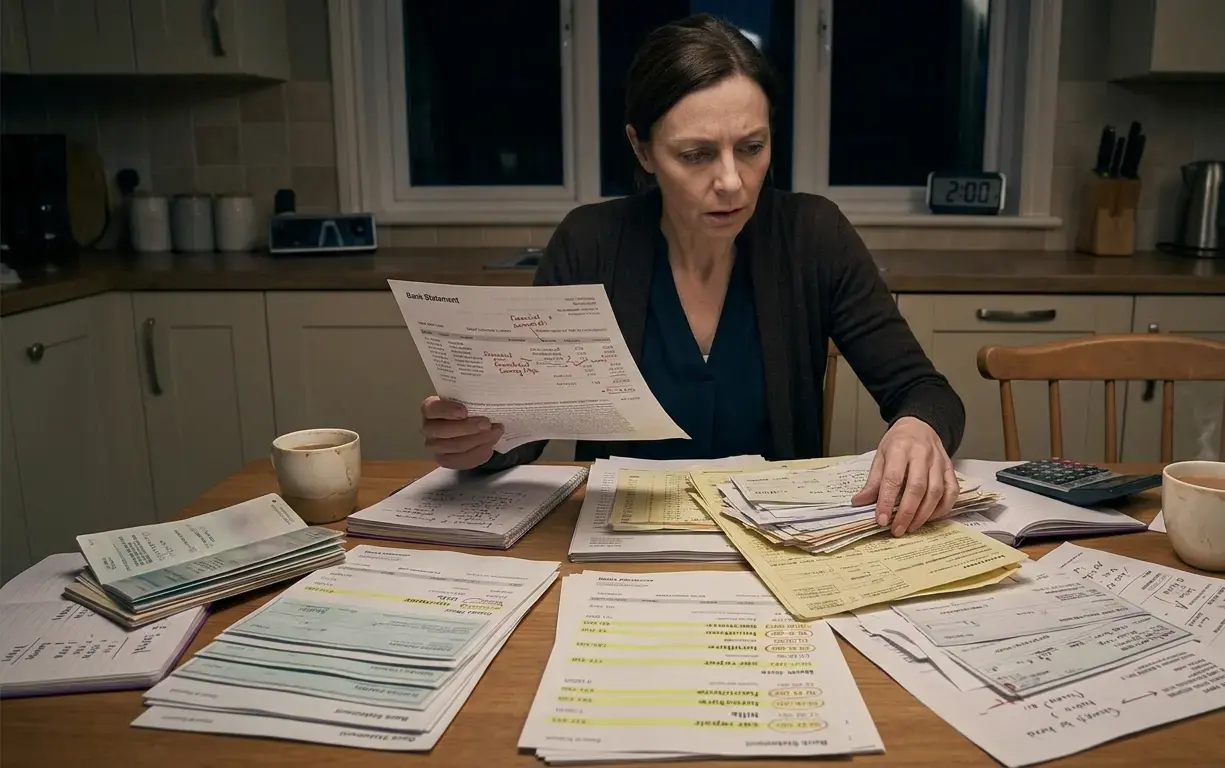
Then I pulled out years of bank statements.
For a long time, I had treated every payment as an isolated event.
Six thousand dollars to help with overdue bills.
Ten thousand dollars for furniture.
Twelve thousand dollars when Danny said his car needed urgent repairs.
There were smaller amounts too. Five hundred here. Eight hundred there. Groceries, dinners, insurance payments, and cash slipped quietly into birthday cards.
I had always called it helping.
That night, I began calling it a pattern.
The more money I gave, the less often they contacted me.
After I paid their bills the previous March, Danny called once that month. Then I did not hear from him for almost seven weeks.
Two years earlier, I purchased nearly $10,000 worth of furniture for their apartment. That Thanksgiving, they stayed with me for barely an hour before Sarah announced that they needed to leave for her father’s celebration.
Earlier that year, I gave Danny $12,000 for his car.
Two months later, he forgot my birthday.
I sat at the kitchen table with a calculator, adding the documented amounts.
The total came to $28,000.
That did not include cash gifts or meals. It did not include the countless smaller expenses I had covered without keeping receipts.
Twenty-eight thousand dollars in four years.
And now a $350,000 house.
Yet I was apparently not close enough to be included at Thanksgiving.
For the first time, I asked myself a question I had avoided for years.
Did my son value me, or did he value what I provided?
I stayed awake until almost two in the morning.
Then I opened the transfer documents again.
This time, I read every page.
The Clause That Changed Everything
One sentence caught my attention.
The transfer could be withdrawn during the waiting period if certain legal conditions were met.
I remembered the attorney mentioning serious misconduct and gross ingratitude.
Those words sounded dramatic when she first said them. Now they sounded strangely relevant.
I began researching.
By sunrise, I had read everything I could find about revoking a major gift before the transfer became final.
The law was not as simple as taking something back because my feelings were hurt. I understood that. But the timing mattered.
I had transferred an enormous asset to my son and daughter-in-law. Before the paperwork was even complete, they excluded me from a family celebration in that same home.
At six in the morning, Danny called.
His voice was cheerful in the forced way people sound when they know they have done something cruel but want to pretend it is merely inconvenient.
“Mom,” he began, “I wanted to explain.”
I said nothing.
“Richard wants a small family Thanksgiving,” he continued. “You know how he is about holidays. Sarah thought it would be easier if we kept things simple this year.”
“Easier for whom?” I asked.
He paused.
“Mom, please don’t make this bigger than it is.”
That sentence did something to me.
For years, every time they hurt me, I had been expected to make it smaller.
I lowered my voice.
“Let me understand this correctly. Your father-in-law, a man I have met twice, does not want me at Thanksgiving. You are holding Thanksgiving in a house I paid for. You accepted his decision.”
“It’s not like that.”
“It is exactly like that.”
He tried to interrupt, but I continued.
“How much do you still owe me for the car?”
Another silence.
“Mom, you said that was help.”
“I asked how much.”
“I don’t know.”
“Twelve thousand dollars. Before that, six thousand for bills. Before that, ten thousand for furniture. Would you like me to keep going?”
His tone changed.
“Why are you bringing money into this?”
I almost laughed.
Money had been in our relationship for years. I was simply the first person willing to say it aloud.
“I have another call to make,” I told him.
Then I hung up.
Canceling the Transfer
At nine o’clock, I called Patterson and Smith, the firm that had handled my retirement documents.
Linda Martinez, the attorney I had worked with before, agreed to meet me that morning.
I brought everything.
The text from Danny.
The transfer papers.
My bank records.
The checks.
The messages asking for temporary help.
Linda read through the documents carefully.
Unlike me, she did not react emotionally. She asked questions, made notes, and checked dates.
Finally, she placed her pen on the desk.
“The transfer has not been completed,” she said. “That gives us options.”
I told her I wanted it stopped.
She studied me for a moment.
“Are you certain? Once we start this process, your relationship with your son may change permanently.”
“It already changed,” I said. “I was simply the last person to notice.”
That afternoon, I signed the cancellation paperwork.
I used the same blue pen I had used to give them the house.
Three days apart.
Two completely different decisions.
I expected to feel triumphant, but I did not.
I felt tired.
Still, beneath the exhaustion, there was something else.
Relief.
For the first time in years, I had protected myself before protecting everyone else.
Before leaving the office, I asked Linda to help me with the $28,000.
I did not want another emotional conversation with Danny. I wanted everything documented.
She drafted a formal repayment demand. It listed every verifiable loan, every date, and every written promise that the money was temporary.
They were given sixty days to repay the total.
The letter was delivered by certified mail on Saturday morning.
Sarah signed for it.
My phone began ringing less than ten minutes later.
I did not answer.
Three weeks passed.
During that time, Danny called repeatedly. Sarah sent messages accusing me of destroying their future. She said I had embarrassed them and turned the family against them.
Neither one apologized for Thanksgiving.
Neither one asked how I felt.
They were still focused on what they had lost.
That was when I decided I wanted to understand Richard Morrison, Sarah’s father.
This man had somehow been given the authority to decide whether I could enter a house purchased with my savings.
I hired a private investigator.
I expected to learn that Richard disliked me or believed I interfered too much.
What I learned was far worse.
Richard was fifty-nine years old. His furniture business had failed in 2022. He owed more than $30,000 to former suppliers and around $18,000 in personal credit card debt.
He had been evicted from his townhouse.
For sixteen months, he had been living with Danny and Sarah without paying rent.
The investigator also found messages from a shared cloud account that Sarah had allowed Richard to access.
The messages revealed how he spoke about me when I was not there.
“Your mother-in-law has money. Make her pay for the house.”
“She’s retired. What else is she going to spend it on?”
“Don’t let her use money to control you. She needs to feel useful.”
I read that last message several times.
Richard had accused me of using money to control them while encouraging them to take as much of it as possible.
He had slowly convinced Sarah that my support was not generosity. According to him, it was manipulation.
At the same time, he lived in their apartment, paid no rent, and encouraged them to depend on me.
The hypocrisy was almost impressive.
I closed the folder and sat quietly for a long time.
The Thanksgiving decision suddenly made sense.
Richard did not want me at the table because my presence threatened the story he had created.
He needed Sarah to believe I was the problem.
A few nights later, I invited Beth and Robert to dinner.
They were my late husband’s sister and brother. I had known them for thirty years, and they had been part of Danny’s life since he was born.
I had kept most of the situation private because I felt embarrassed.
That evening, I told them everything.
The house.
The message.
The transfer cancellation.
The loans.
Richard’s debts.
The investigator’s report.
Beth did not speak for several minutes.
Then she began to cry.
Not because she felt sorry for me.
She was furious.
“Margaret,” she said, “we knew Sarah had become distant with you. We had no idea it had gone this far.”
Robert read several of Richard’s messages and shook his head.
“He’s been living off them while teaching them to resent the person funding their life.”
For years, I had protected Danny from the family’s judgment. Whenever he missed events or forgot to call, I invented excuses.
He was busy.
Work was stressful.
Sarah’s family needed them.
That night, I stopped protecting him.
Beth began calling relatives.
By the next morning, nearly everyone knew what had happened.
Danny had excluded his mother from Thanksgiving in a house she had just bought him while allowing his unemployed father-in-law to live with him for free.
The family’s reaction was immediate.
Cousins sent Danny messages telling him they were ashamed of him.
Aunt Ruth removed Sarah from the family Facebook group.
Old Thanksgiving photographs began appearing online with captions about gratitude and family.
I did not ask anyone to do those things.
I also did not stop them.
For the first time, Danny experienced consequences that I could not soften for him.
As the repayment deadline approached, panic began to set in.
Through friends in town, I heard that Danny and Sarah had applied for loans at several banks.
They were rejected.
Their income was not high enough. Their debt was already too heavy. They had little savings and no property to use as collateral.
They had only $4,200 in the bank.
They owed me $28,000.
Four days before the deadline, Sarah confronted Richard.
The argument was loud enough for neighbors to hear.
“You said you would help us,” she shouted. “You told me to stand up to Margaret. Now we have no house and owe her thousands.”
Richard insisted he had been protecting them from me.
Danny finally said what should have been said more than a year earlier.
“No, Richard. You’ve been living here for free while turning Sarah against my mother. You need to leave.”
By the next morning, he was gone.
No apology.
No goodbye.
He packed his belongings and walked away from the damage he had helped create.
Danny and Sarah were left to deal with it.
Sarah listed her Honda for sale. It was worth around $25,000, but they did not have time to wait for the best offer.
A used car dealer gave them $12,000.
They sold furniture for another $2,000.
They borrowed $4,000 from coworkers and friends. Those loans came with written agreements because nobody trusted verbal promises anymore.
Sarah’s parents withdrew $7,000 from a retirement account.
By the final day, they had gathered $25,000.
At 3:32 that afternoon, my phone displayed a bank notification.
The money had arrived.
Three thousand dollars was still missing.
Minutes later, Danny sent an email asking for thirty more days.
There was no anger in his message. No accusation. No claim that I owed him understanding.
For the first time, he sounded frightened by his own choices.
I called Linda.
She gave me three options.
I could accept the amount as full payment.
I could demand the remaining balance immediately.
Or I could create a formal loan for the final $3,000.
I chose the loan.
Twelve months.
Eight percent annual interest.
Monthly payments of $275.
Everything in writing.
Danny was no longer allowed to treat money from me as a vague family favor. He would understand exactly what borrowing meant.
The agreement turned our financial relationship into something clear.
No guilt.
No assumptions.
No forgotten promises.
Five months later, every payment had arrived on time.
Then, one evening, I received an email from Danny.
The subject line read, “No excuses.”
I almost deleted it.
Instead, I opened it.
“Mom, I’m not asking you to forgive me. I’m not asking for money or another chance. I need to admit what I did.
I used you for years. I treated you like a bank account instead of my mother. I took your help and acted as if your feelings were an inconvenience.
I let Sarah and Richard convince me that your generosity was control, even while we depended on your money. I chose the approval of a man I barely knew over the woman who raised me.
When you canceled the house transfer, I was furious. I believed I deserved the house even after disrespecting you. I understand now how wrong that was.
You deserved a better son than the one I became.
I’m sorry.”
I read the email nine times over the next four days.
I examined every sentence.
There were no excuses.
He did not blame Richard.
He did not blame Sarah.
He did not ask me to remove the remaining debt or give the house back.
For the first time, he seemed to understand that the real loss was not the house.
It was me.
While Danny was trying to change, I was changing too.
I had spent most of my adult life caring for other people.
My students.
My husband.
My son.
Even after retirement, I continued measuring my worth by how much I could provide.
Once the house transfer was canceled, I looked at my savings differently.
That money was not simply waiting to solve someone else’s problems.
It belonged to me.
I purchased a small cottage in the mountains near Flagstaff.
It was not large or luxurious. It had two bedrooms, a stone fireplace, and a porch that faced the trees.
The first time I stood inside it, I felt something I had not felt in years.
Ownership.
Not just of the cottage.
Of my time.
My choices.
My life.
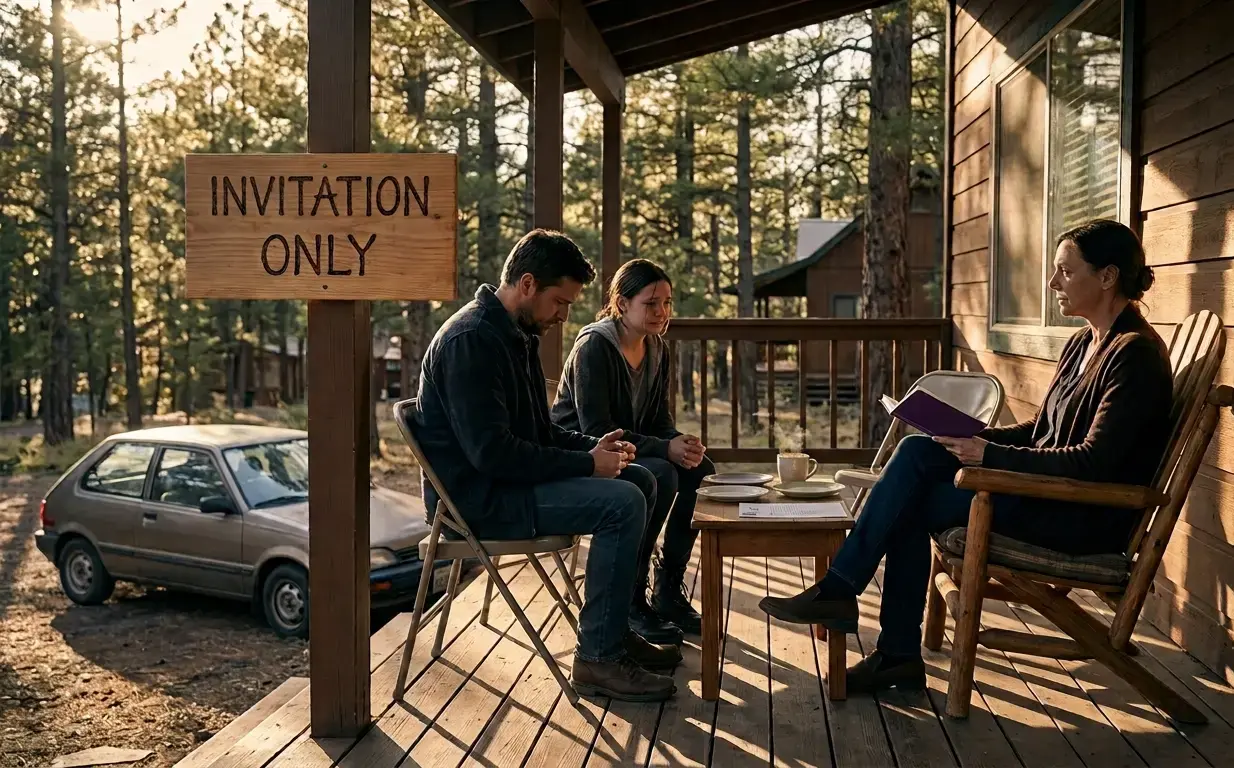
The cottage would be invitation-only. Nobody would be entitled to visit because of blood, marriage, or expectation.
People would be welcome because they treated me well.
Three weeks after his email, Danny came to my home.
I watched through the upstairs window as he sat inside his car for more than half an hour.
Eventually, I walked outside.
He looked nervous.
The confidence he used to carry had disappeared.
“Thank you for coming out,” he said. “I know you didn’t have to.”
“No,” I replied. “I didn’t.”
He nodded.
“I needed to say it in person.”
We sat on the porch.
Danny admitted that he had used me. He said he had grown comfortable receiving help without considering what it cost me.
He admitted that he had allowed Richard to influence him because it was easier than challenging Sarah’s family.
“The house should have been the moment I realized how much you loved us,” he said. “Instead, I let someone else decide you were not welcome.”
I asked him the only question that mattered.
“What changed? The consequences, or your understanding?”
He looked down at his hands.
“Both,” he said. “At first, it was the consequences. Losing the house. Selling the car. Borrowing money. Being judged by the family. I was angry at you because blaming you was easier.”
He took a breath.
“Then I realized you weren’t destroying my life. You were refusing to keep supporting the person I had become.”
His eyes filled with tears.
“I became someone Dad would have been ashamed of.”
I felt pain at the mention of my husband, but I did not rush to comfort him.
“You are my son,” I said. “I never stopped loving you. Taking back the house did not mean I stopped loving you.”
He looked at me.
“Then why did you do it?”
“Because allowing you to continue using me would not have been love. It would have damaged both of us.”
He asked whether I could forgive him.
I answered honestly.
“Maybe, eventually. But forgiveness does not return everything to the way it was. Trust is rebuilt through behavior, not apologies.”
He nodded.
“What do I need to do?”
“Stop asking what you need to do. Start living differently.”
We did not hug.
We shook hands.
I agreed to meet him for coffee the following week. One hour. A public place. No promises about the future.
It was a beginning, but only a small one.
Six months later, I climbed the outdoor stairs to Danny and Sarah’s new apartment.
I brought nothing with me.
No bottle of wine.
No flowers.
No envelope with money tucked inside.
For years, I had never entered their home empty-handed. That evening, I wanted my presence to be enough.
Sarah opened the door before I knocked. She had clearly been watching through the peephole.
“Margaret,” she said. “Thank you for coming.”
The apartment looked very different from the life they had before.
Most of the expensive furniture was gone. The walls were nearly bare. A folding table stood in the dining area with three mismatched plates.
It was not a sad home.
It was simply a home they could actually afford.
Halfway through dinner, Sarah set down her fork.
“I need to apologize,” she said.
I waited.
“Not only for Thanksgiving. That was horrible, but it was not the only thing I did. I accepted your help for years and then treated you as if your presence was a burden.”
She swallowed.
“I let my father convince me that you were controlling. Looking back, I think I wanted to believe him because it made taking your money feel less shameful.”
Her honesty surprised me.
“What changed?” I asked. “The consequences or your understanding?”
“Both,” she said immediately.
She did not try to make the answer sound noble.
“Losing the house terrified me. Selling the car was humiliating. Borrowing money from friends made me realize how casually we had treated your generosity.”
She looked directly at me.
“Counseling helped too. Once my father was out of the apartment, I could finally see how much he had manipulated me. But I also had to accept that I allowed it.”
Danny remained quiet while she spoke.
That mattered.
He did not rescue her or explain for her.
She took responsibility herself.
I placed my fork on the table.
“I appreciate what both of you are saying,” I told them. “But I need to be very clear.”
They listened.
“I am sixty years old. I do not want to spend the next fifteen or twenty years wondering whether my family loves me or simply wants something from me.”
Neither one interrupted.
“I love you, Danny. And Sarah, despite everything, I care about you too. But love is not permission to disrespect me.”
I looked from one to the other.
“If either of you returns to the old behavior, I will leave. There will be no shouting, no long family argument, and no second financial rescue. I will simply remove myself.”
The room stayed silent.
For nearly half a minute, nobody rushed to offer promises.
That silence convinced me they understood.
Finally, Sarah nodded.
“You should never have needed to say that,” she said. “But we gave you every reason to.”
Danny added, “We know words are not enough.”
Later, the conversation moved to lighter subjects.
I told them about the cottage.
Sarah smiled.
“Would you ever invite us?”
“Possibly,” I said. “The cottage is for people I trust.”
Her smile faded slightly, but she nodded.
“I understand.”
“Trust is being rebuilt,” I continued. “That means an invitation may come someday. Six months ago, I would have said no.”
At the door, Danny extended his hand.
He still did not assume he was entitled to a hug.
“Dinner again next month?” he asked.
“Next month,” I agreed. “We’ll see.”
What Thanksgiving Really Taught Me
Driving home that night, I thought about how much had changed since the message that began everything.
A simple Thanksgiving exclusion had exposed years of imbalance.
For a long time, I believed love meant giving people whatever I could.
Money.
Time.
Forgiveness.
Another chance.
I confused generosity with obligation and patience with silence.
Taking back the house was not revenge.
Demanding repayment was not cruelty.
Those decisions forced Danny and Sarah to face a reality I had protected them from for years.
Actions have consequences.
Relationships require respect.
Love does not excuse exploitation.
The consequences did not destroy them. They made growth unavoidable.
Danny still sends the $275 payment every month. It arrives on the same date, usually before noon.
The payment is no longer only about debt.
It is proof that he can follow through.
Our relationship is still careful.
We have coffee occasionally. We share a meal once a month. Sometimes he calls simply to ask how I am, and I pay attention to whether the conversation stays focused on me without turning into a request.
Sarah has begun reaching out too.
She does not ask for favors.
She sends photographs, recipes, or brief messages after family events. The contact is small, but it feels more sincere than the grand gestures we once exchanged.
Richard is no longer part of their life.
His manipulation was exposed, and Sarah eventually accepted that keeping him close would pull her back into the same patterns.
I updated my will with Linda’s help.
Danny remains an heir, but there are protections in place. My assets will be managed carefully, and nobody will have immediate access simply because they expect it.
The cottage has become my sanctuary.
I spend quiet weekends there. I read on the porch, make coffee before sunrise, and finally plan trips based on what I want to see.
Perhaps Danny and Sarah will visit one day.
Perhaps they will sit at my table and understand that the invitation was earned through respect, not purchased through guilt.
I am open to that possibility.
But I no longer need it.
That may be the greatest change of all.
I once believed being needed was the same as being loved.
It is not.
People can need your money, your labor, your patience, and your constant forgiveness without truly valuing you.
Real love looks different.
It notices sacrifice.
It shows gratitude.
It does not make you beg for a place at the table you paid for.
I have also learned that strength is not always found in giving more.
Sometimes strength is closing the checkbook.
Sometimes it is canceling the transfer.
Sometimes it is answering “Okay” and quietly deciding that the disrespect ends today.
The goal was never to ruin my son’s life.
The goal was to stop ruining my own.
Danny and Sarah are becoming more responsible. I am becoming more discerning. None of us can erase what happened, but we can decide what happens next.
The best outcome was not revenge.
It was transformation.
They learned that generosity is not something they are owed.
I learned that love without boundaries eventually becomes self-abandonment.
And now, when I sit on the porch of my mountain cottage and watch the sunlight disappear behind the trees, I no longer wonder whether I should have given the house back.
I know I made the right decision.
The house would have rewarded their entitlement.
Taking it back gave all of us a chance to change.
Most importantly, it gave me something I had nearly forgotten I was allowed to have.
A life of my own.
And at sixty years old, that kind of freedom feels more valuable than any house I could ever buy.