Richard Ramirez, One of America’s Most Feared Killers

Richard Ramirez was born on February 29, 1960, in El Paso, Texas.
He was the youngest of five children in a Mexican American family. His father worked on the railway, and the family was raised Catholic. From the outside, his childhood may have looked ordinary.
Inside the home, it was anything but.
His father was reportedly a violent alcoholic who often lashed out at the family. Ramirez suffered several serious head injuries while still very young, including injuries that left him unconscious. He later developed temporal lobe epilepsy and experienced seizures.
According to accounts of his childhood, his father sometimes punished him in frightening ways. One story claims he was tied to a crucifix in a cemetery and left there overnight, alone among the graves.
By the age of 10, Ramirez was already drinking alcohol and smoking marijuana. His life became even darker when he began spending time with his older cousin, Miguel, a Vietnam veteran who reportedly showed him disturbing photographs from the war.
In May 1975, 15-year-old Richard Ramirez watched Miguel shoot and kill his wife, Jessie, during an argument. Miguel was later found not guilty by reason of insanity.
After witnessing the killing, Ramirez became more withdrawn. He dropped out of school in the ninth grade and later moved in with his sister and her husband, Roberto. Roberto was said to be a voyeur who sometimes took Ramirez with him while spying on women through their windows.
By 1982, Ramirez had moved to California. He began using cocaine heavily and supported his addiction through theft and burglary. He drifted between San Francisco and Los Angeles, rarely keeping a steady job or permanent home.
His crimes soon escalated far beyond burglary.
In April 1984, Richard Ramirez committed his first known murder.
Two months later, 79-year-old Jennie Vincow was murdered in her Los Angeles apartment. She had been attacked while sleeping.
After several quiet months, Ramirez began the crime spree that would make his name infamous.
Between March and August 1985, he broke into homes across California, usually late at night. His attacks appeared random, making them even more frightening. His victims included young adults, elderly people, couples, and individuals living alone.
He used different weapons and showed no consistent pattern in choosing victims. Some people were shot. Others were stabbed or beaten. Several survivors were sexually assaulted.
Richard Ramirez also began leaving Satanic symbols behind. Pentagrams were drawn on walls or on victims, and survivors said he forced them to swear that they loved Satan.
These details helped create the terrifying public image that followed him. Newspapers called him the “Night Stalker,” while other reports referred to him as the “Valley Intruder” or the “Walk-In Killer.”
One of his most disturbing attacks involved Vincent and Maxine Zazzara. Both were murdered inside their home, and Maxine’s body was mutilated. Ramirez removed her eyes and kept them as a souvenir.
In another attack, sisters Mabel Bell and Florence Lang were beaten with a hammer and shocked with an electrical cord. Pentagrams were drawn on one victim’s body. Both women later died from their injuries.
The growing number of attacks led to one of the largest manhunts in California history. Detectives Frank Salerno and Gil Carrillo worked to connect crimes that had taken place in several different cities and police jurisdictions.
The case finally began to break because of a 13-year-old boy named James Romero III.
Late on August 24, 1985, James heard noises outside his family’s Mission Viejo home. He saw a suspicious man near the property and watched him leave in an orange Toyota.
James remembered the car’s color, model, and part of its license plate.
Police later found the stolen Toyota abandoned in Los Angeles. The vehicle had been wiped down, but investigators discovered one fingerprint on the rearview mirror.
The print belonged to Richard Ramirez.
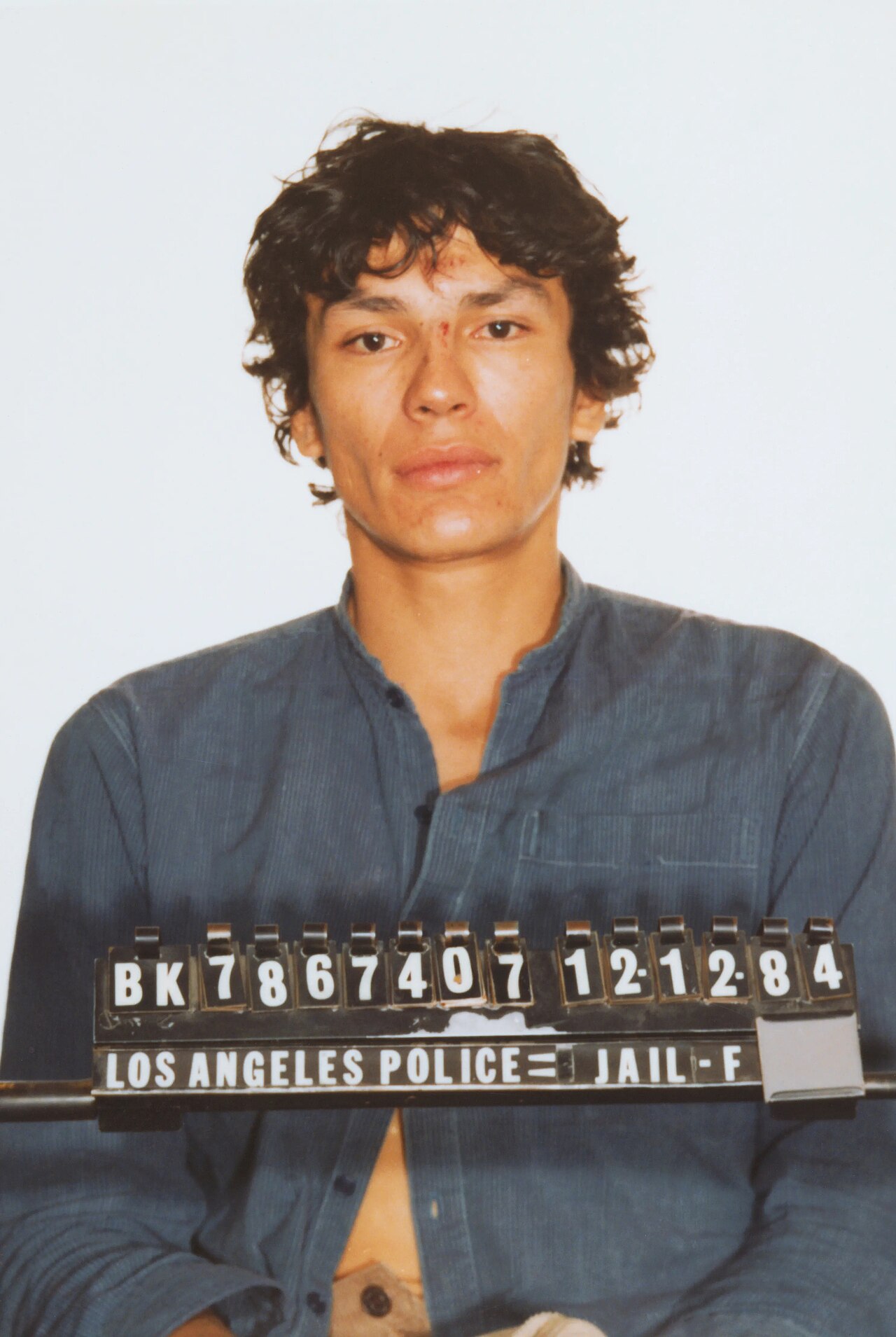
At the time, he was a 25-year-old drifter with a criminal record involving drugs and traffic offenses. On August 29, police released his photograph to the public.
His face appeared on television and across newspaper front pages.
Ramirez, however, did not immediately realize that he had been identified. He traveled to Arizona and returned to Los Angeles the next morning.
After walking past police officers at a bus station, he entered a convenience store in East Los Angeles. Several women recognized him from the newspaper and began calling him “el matador,” meaning “the killer.”
When Richard Ramirez saw his own photograph on the front page, he panicked and ran.
He attempted to steal vehicles while fleeing through the neighborhood, but residents fought back. A group chased him through Boyle Heights, struck him, restrained him, and held him until police arrived.
His trial began in 1988 and quickly became a media spectacle.
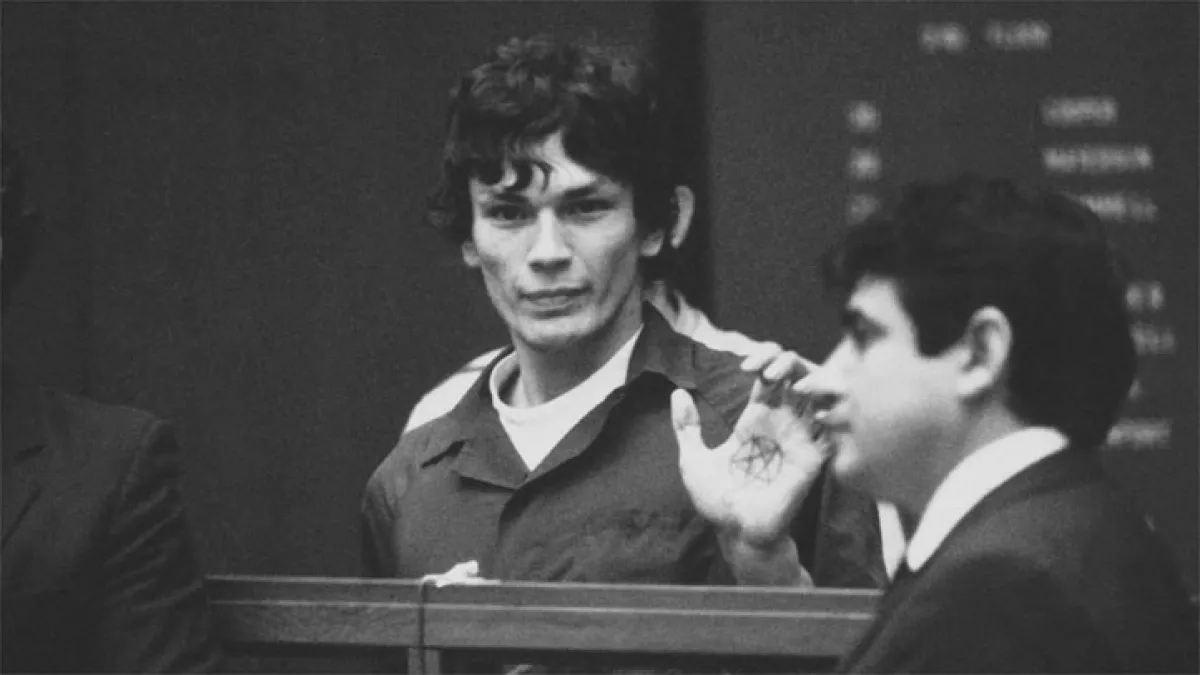
Ramirez appeared in court dressed in black and wearing dark sunglasses. During one appearance, he raised a hand marked with a pentagram and shouted, “Hail Satan.”
He also attracted a strange group of admirers who regularly attended the proceedings.
In September 1989, Richard Ramirez was convicted of 13 murders, five attempted murders, 11 sexual assaults, and 14 burglaries.
He was sentenced to death that November.
When the sentence was announced, Ramirez reportedly replied, “Big deal. Death always went with the territory. See you in Disneyland.”
The judge described his crimes as acts of extreme cruelty and viciousness. Ramirez showed no public remorse for the people he had killed or harmed.
He spent almost 24 years on death row at San Quentin State Prison. While incarcerated, he received letters from admirers and married one of his supporters, Doreen Lioy, in 1996.
He was also reported to have bragged about killing more people than those officially connected to him.
Richard Ramirez died on June 7, 2013, at the age of 53. His death was caused by complications linked to B-cell lymphoma.
He never reached the execution chamber.
Looking at a childhood photograph of Richard Ramirez is unsettling. The boy in the image appears ordinary, perhaps even innocent. Nothing in his expression reveals the violence, fear, and suffering that would later become attached to his name.
His childhood may help explain some of the darkness that surrounded him, but it does not excuse his choices. Many people endure trauma without becoming violent criminals.
Richard Ramirez ultimately became responsible for his own actions and for the lives he destroyed.