
What Does It Mean for Humanity When Blue Whales Go Silent?

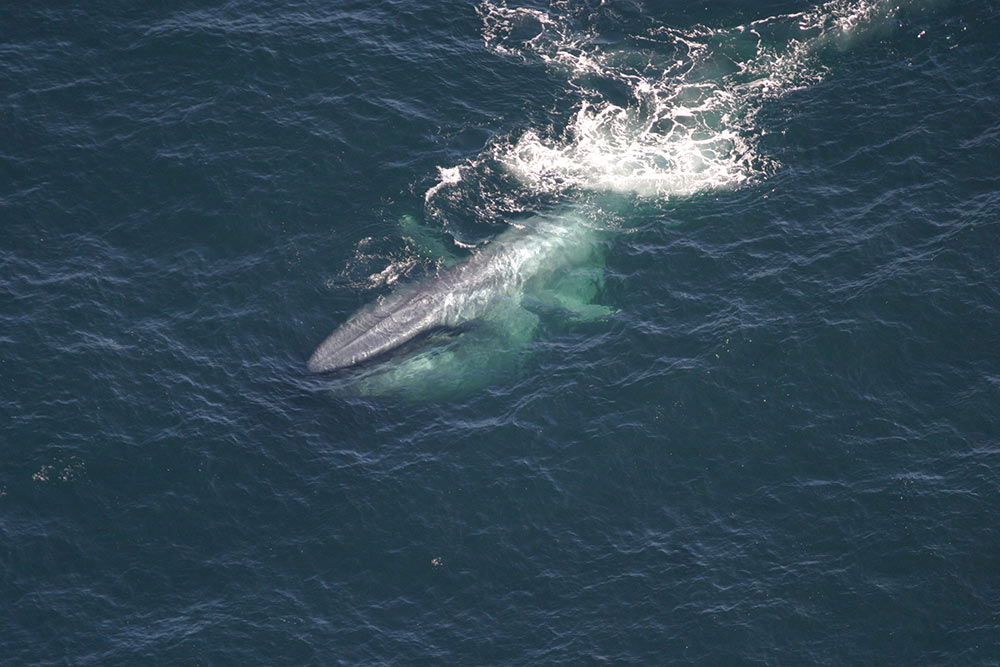
Blue whales are falling silent, and scientists say this troubling shift could signal deeper problems in the ocean. Blue whales have long relied on powerful, low-frequency songs to communicate across vast underwater distances, but experts are now warning that those once steady calls are fading in ways that are hard to ignore.
For decades, Blue whales have been known as the loudest animals on Earth.
Their deep, resonant vocalizations can travel hundreds of miles through the sea, helping them find mates, coordinate movements, and maintain social bonds. These songs are not random noises. They follow patterns, rhythms, and seasonal cycles that researchers have studied for years. When those patterns change, it raises immediate questions about what might be happening beneath the surface.
Researchers now warn that Blue whales are becoming quieter in some parts of the world’s oceans. This is not a minor fluctuation. Scientists monitoring acoustic data have noticed consistent shifts in how often these animals sing and how strong their calls appear to be. Because so much of what we know about these giants comes from tracking their sounds, any drop in vocal activity stands out as a serious concern.
The songs of Blue whales travel across entire ocean basins, cutting through dark waters where visibility is limited. Sound is their primary tool for connection. In an environment where sight is often useless, communication depends on stable underwater conditions. When that stability is disrupted, it affects how effectively their calls can move from one whale to another.
What worries scientists most is that Blue whales are not simply singing less for no reason. Changes in ocean temperature, chemistry, and circulation appear to be altering the way sound travels underwater. Warmer waters and shifting currents can bend or weaken sound waves. If calls no longer travel as far or as clearly, whales may struggle to reach one another even when they try.
Instead, Blue whales appear to be adjusting their behavior in response to these shifting conditions. Some experts believe they may be conserving energy, especially if food sources are becoming less predictable. Singing at full strength requires effort, and if survival becomes more challenging, communication might take a back seat to basic needs like feeding.
Climate change plays a central role in this growing concern about Blue whales. Rising global temperatures are heating the oceans, which affects everything from plankton growth to migration patterns. Even subtle temperature differences can change how sound moves underwater. Over time, these shifts can reshape entire acoustic landscapes that whales depend on.
As oceans warm, the tiny creatures that Blue whales feed on, especially krill, can change their distribution. Food may become harder to find in traditional feeding grounds. When prey moves or declines, whales must travel farther and expend more energy. This added strain could influence how often and how loudly they sing, since vocal displays are closely linked to breeding and social behavior.
When Blue whales have to travel farther for food, their migration routes may also shift. That movement can bring them into unfamiliar or noisier waters. Shipping lanes, industrial activity, and other human-generated sounds can interfere with whale songs. If background noise increases, whales may struggle to hear each other, leading to fewer successful interactions.
Noise pollution adds another layer of stress to an already changing environment. Large cargo ships, underwater construction, and energy exploration all contribute to a steady hum beneath the waves. Scientists studying Blue whales say that even low-frequency noise from distant vessels can overlap with the frequencies whales use to communicate. Over time, this constant interference may discourage them from singing as frequently.
Scientists studying Blue whales say the silence is not uniform across the globe. Some regions show more dramatic changes than others. This uneven pattern suggests that local environmental conditions matter. Areas experiencing rapid warming or heavier shipping traffic might see stronger effects, while more remote waters could remain relatively stable for now.
There is also concern that Blue whales may struggle to adapt quickly enough. These animals are long-lived and reproduce slowly. A female typically gives birth to a single calf after a lengthy pregnancy, and years may pass between births. If communication is disrupted, it could affect mating success and population recovery in ways that are not immediately visible.
Part of what makes Blue whales so extraordinary is their sheer size and endurance. They can reach lengths of up to 100 feet and weigh as much as 200 tons. Despite their massive bodies, they depend on delicate ecological balances. When climate systems shift, even the largest animals on Earth can feel the impact.
Acoustic monitoring has been one of the most reliable ways to track whale populations over wide areas. If fewer calls are recorded, it becomes harder to estimate how many whales are present and how they are behaving.
In some monitored regions, Blue whales have reduced the frequency of their songs over time. Scientists are careful not to jump to conclusions, but they stress that consistent downward trends deserve attention. A quieter ocean may sound peaceful to humans, yet for whales it can mean isolation.
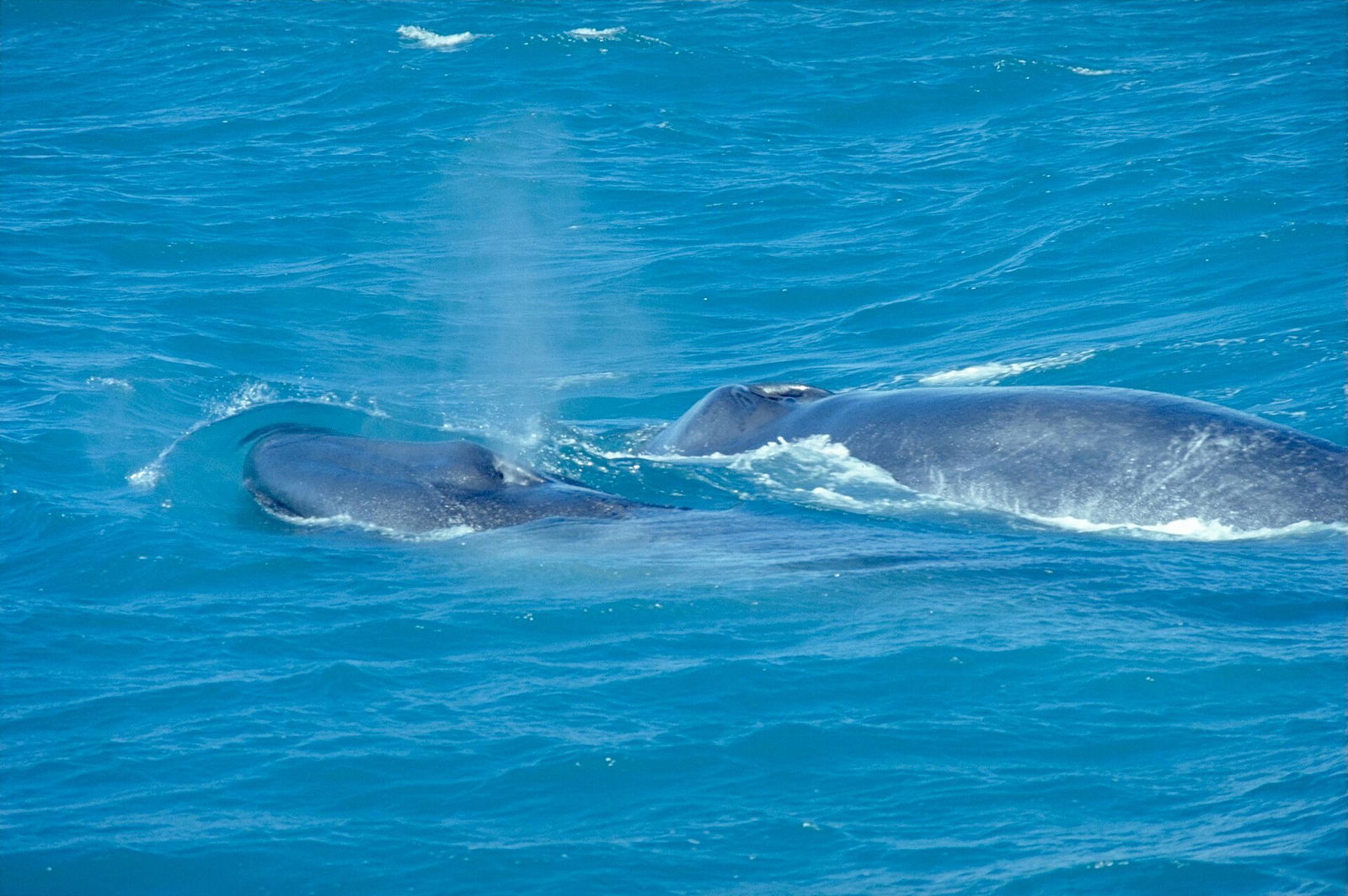
One theory is that Blue whales are conserving energy in response to changing feeding conditions. If krill populations fluctuate due to warmer waters, whales might prioritize foraging over communication. Singing is important during breeding seasons, but survival always comes first. Energy budgets in the wild are tightly balanced, and even small environmental pressures can tip the scale.
Another possibility is that Blue whales are finding it harder to detect one another’s calls. If sound transmission weakens in warmer or more acidic waters, a whale might not receive the feedback it expects. Without clear responses from others, it may reduce its own calling. Over time, this could create a feedback loop where fewer whales sing because fewer songs are heard.
Scientists emphasize that Blue whales are not vanishing overnight, but subtle behavioral changes can signal long-term trouble. In the past, commercial whaling pushed populations to the brink of extinction. Although international protections have helped numbers slowly recover, the species remains vulnerable. Climate change introduces a new, complex threat that is harder to regulate than hunting.
Protecting Blue whales will require addressing the broader issue of global warming. Reducing greenhouse gas emissions, managing shipping routes, and limiting underwater noise could all play a role. Conservationists argue that safeguarding ocean health benefits not only whales but entire marine ecosystems that support millions of species.
There are still many researchers who do not fully understand how Blue whales will respond in the coming decades. Ongoing acoustic studies aim to map changes in song patterns more precisely. By comparing historical recordings with current data, scientists hope to separate natural variation from climate-driven disruption.
The concern surrounding Blue whales serves as a powerful reminder that the ocean is deeply interconnected. Temperature shifts in one region can ripple outward, influencing food webs and migration routes far away. When the largest animal on Earth begins to grow quieter, it suggests that the underlying system is under strain.
For now, experts continue to listen carefully. Every recorded call, every silent stretch of ocean, adds to a growing body of evidence. Blue whales have survived for millions of years, adapting to ice ages and shifting continents. Whether they can withstand the rapid pace of human-driven climate change remains an open and urgent question.
As researchers expand their monitoring efforts, they hope the warning signs will inspire meaningful action. The fading songs of Blue whales are more than a scientific curiosity. They are a signal from the depths that the planet’s largest ecosystems are changing. Listening closely to that signal may be one of the most important steps in ensuring that these giants continue to sing for generations to come.