Best Fence Side to Face Your Neighbor Explained

If you’re putting up a new fence, you’ve probably wondered which side should face your neighbor. Should they see the smooth, finished panels, or the side with the posts and support rails?
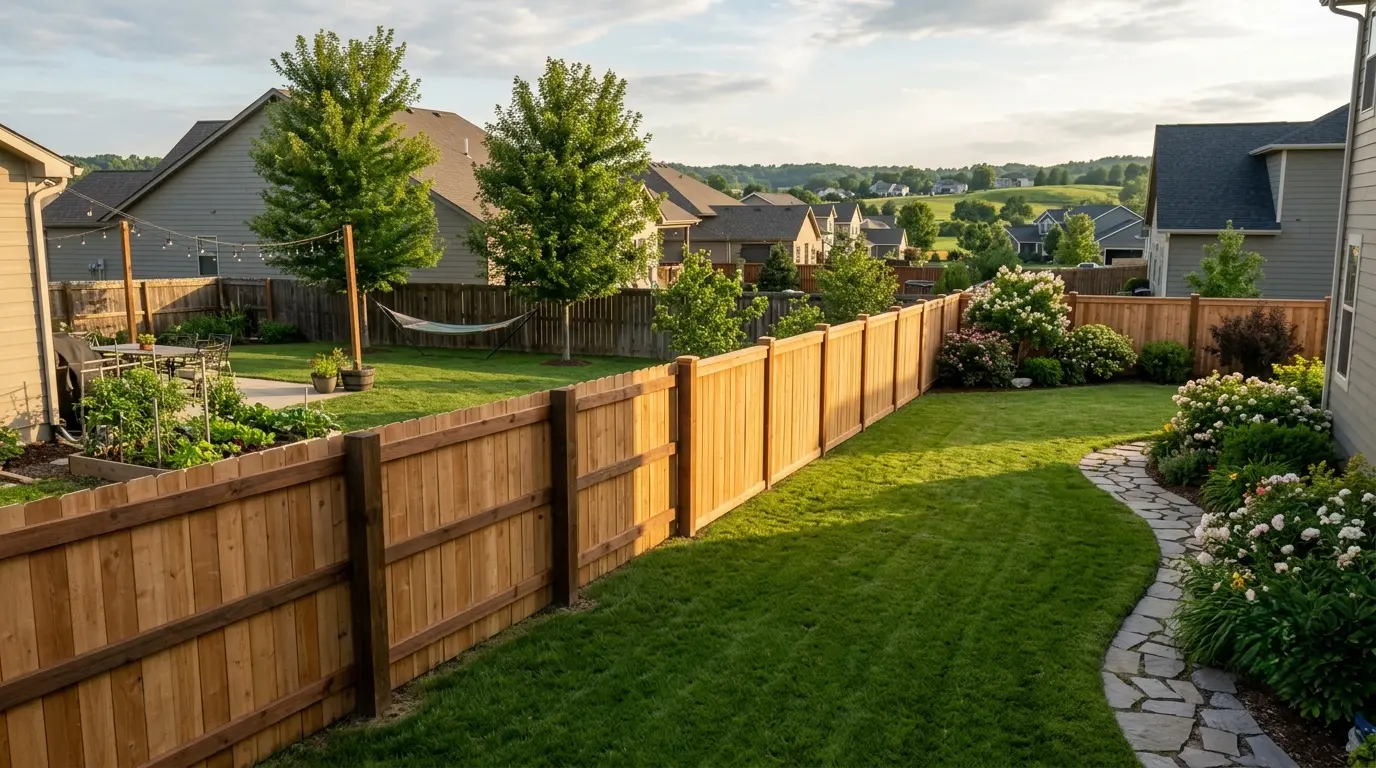
In most places across the United States, Canada, and many other countries, the common rule is simple: the finished side should face outward toward your neighbor and the street.
It isn’t always required by law, but it’s a long-standing practice that helps maintain good relationships, improves the look of the neighborhood, and often meets local community guidelines.
Why the Finished Side of the Fence Faces Out?
It’s Considered Good Neighbor Etiquette
A fence doesn’t just separate two properties. It becomes part of the view for everyone around it. Showing your neighbor the cleaner, finished side is generally seen as a respectful gesture. It shows you’ve thought about how your project affects the people living next door, not just your own backyard.
Small details like this can make a surprisingly big difference when it comes to keeping good relationships with neighbors.
It Looks Better for Everyone
The finished side is designed to be more attractive. Hiding the rails and posts creates a cleaner appearance, whether someone is looking at the fence from the neighboring yard or from the street.
A well-built fence can improve the overall appearance of a neighborhood, which may even have a positive impact on nearby property values.
It Fits Shared Property Line Traditions
When a fence is built directly on a property line, many homeowners treat it as a shared boundary, even if only one person paid for it.
Facing the finished side outward is often viewed as a sign of fairness and consideration. It acknowledges that both properties are affected by the structure.
Many HOAs Require It
If you live in a neighborhood with a homeowners association, check the rules before construction begins.
Many HOA guidelines specifically state that the finished side of the fence must face neighboring properties and public streets. Ignoring these rules could lead to fines or even require the fence to be rebuilt.
If your fence is already installed with the rails facing your neighbor, don’t panic.
In many areas, it’s completely legal. Fence orientation is often left up to the homeowner unless local ordinances or HOA rules say otherwise. Still, it’s worth checking with your city or county if you’re unsure.
Even if it isn’t against the rules, some neighbors may not love looking at the structural side every day. Fortunately, there are several ways to improve its appearance without replacing the entire fence.
Some common options include:
Installing decorative lattice panels
Adding bamboo or weather-resistant privacy screens
Growing climbing plants such as clematis, jasmine, or ivy to cover the rails naturally
Attaching decorative fence boards designed to hide the support structure
These upgrades can make the fence look more finished from both sides.
Before starting your project, take a little time to plan ahead.
First, check your local building regulations. Cities and counties may have rules covering fence height, materials, setbacks, and sometimes even which direction the fence should face.
If you’re building directly along a shared property line, talk with your neighbor before construction starts. A quick conversation can prevent misunderstandings later, and in some cases they may even want to split the cost.
It’s also worth investing in durable materials that will still look good years from now. It is something you’ll likely live with for a long time, so choosing quality materials now can reduce maintenance later.
A fence marks where one property ends and another begins, but it also reflects how homeowners interact with the people around them.
Facing the finished side toward your neighbor isn’t simply about following tradition. It’s a practical choice that creates a cleaner appearance, meets many community standards, and shows basic courtesy.
When you’re deciding which way it should face, imagine standing in your neighbor’s yard instead of your own.
Giving them the better view is a small decision that can leave a lasting impression. After all, good fences don’t just create boundaries. They help build better relationships between neighbors.