Inside Ashley Judd’s Painful Journey Before Becoming a Hollywood Star

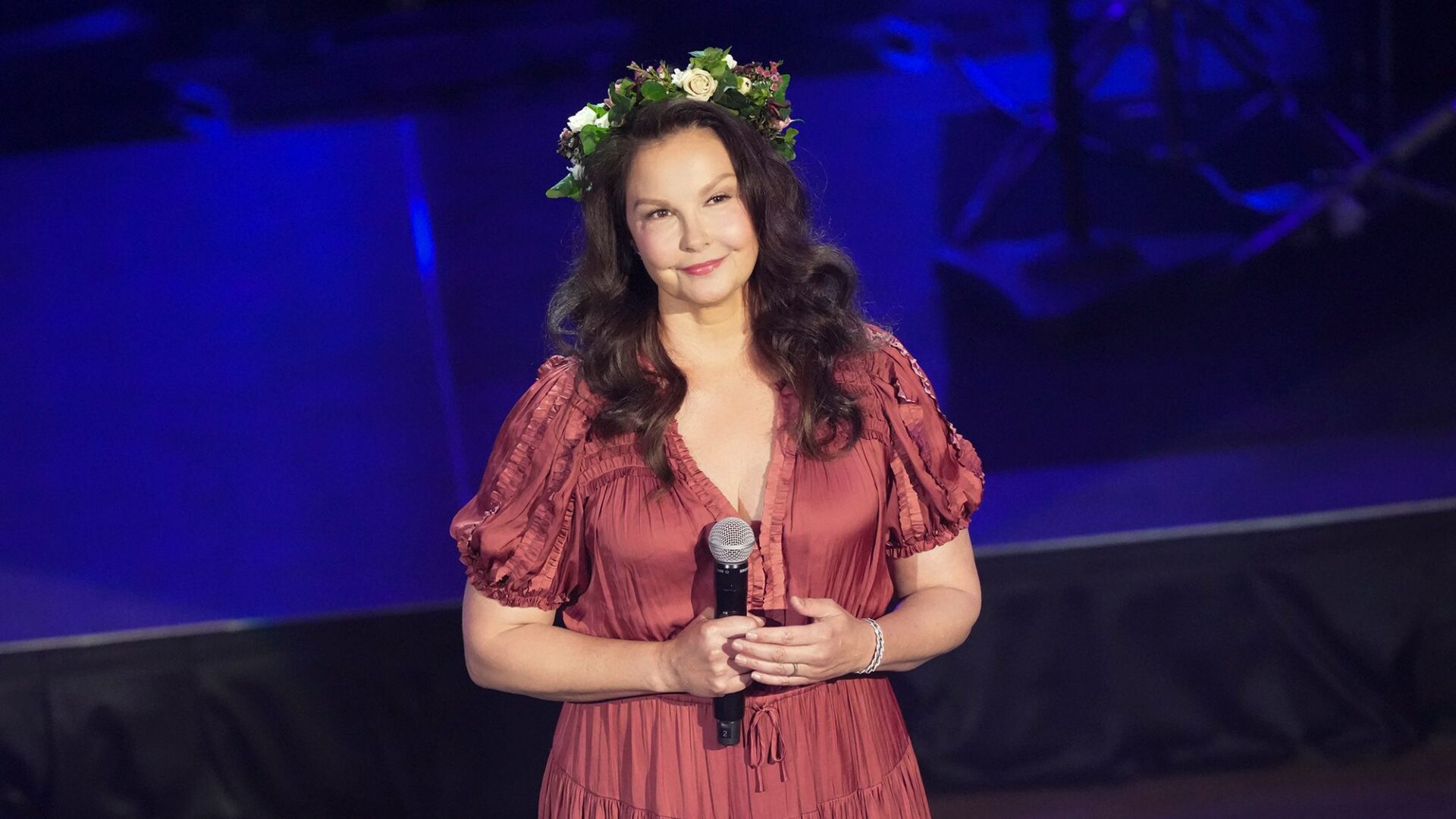
Ashley Judd’s story is one of those where all the years of hardship many stars endured before anyone knew their names get overlooked.
Long before she became an award-winning actress, she was growing up in poverty, moving from place to place, and trying to survive a childhood marked by instability and trauma.
Ashley was born into a family that would eventually become famous, but fame was nowhere in sight during her early years. After her parents separated, life became incredibly difficult. She, her older sister Wynonna, and their mother lived in rural Kentucky, where money was always tight.
There were times when the family had no electricity or indoor plumbing. If they couldn’t grow food themselves or make it from what they had, they simply went without. Ashley’s mother worked long hours as a nurse, doing everything she could to provide for her daughters while raising them on her own.
Life eventually took an unexpected turn when her mother, Naomi Judd, found success in country music. Alongside Ashley’s older sister Wynonna, she formed the legendary duo The Judds, becoming one of the biggest acts in country music during the 1980s.
For Ashley Judd, however, her mother’s success didn’t immediately make life easier.
In her memoir All That Is Bitter & Sweet, Ashley revealed that she attended 13 different schools before turning 19. While Naomi toured across the country, Ashley Judd spent much of her childhood moving between relatives, including two sets of grandparents and her biological father, who struggled with substance abuse.
She later admitted that although she deeply loved her mother, the constant uncertainty surrounding her life left lasting emotional scars.
“I loved my mother, but at the same time, I dreaded the chaos that seemed to follow her everywhere,” Ashley wrote. She often felt like an outsider watching her mother’s life unfold from a distance while trying to figure out her own place in the world.
The emotional pain was only part of what she endured.
Ashley Judd has spoken openly about suffering sexual abuse as a child. During a speech at the World Congress Against Sexual Exploitation of Women and Girls in New Delhi, she revealed that she was first abused when she was just seven years old.
She also shared that she was raped twice at the age of 14.
One of those assaults resulted in a pregnancy.
Ashley has since explained that she was able to access a legal abortion, something she says profoundly affected the course of her life.
“As everyone knows, and I’m very open about it, I’m a three-time rape survivor,” she said. She later explained that because of the laws in Kentucky and Tennessee, carrying that pregnancy to term could have legally forced her to co-parent with the man who assaulted her.
Over the years, Ashley Judd has described her childhood as growing up inside what she called a “dysfunctional family system.”
She has also spoken about the uncomfortable environment inside the family home, saying that she and Wynonna were often exposed to behavior that she now recognizes as inappropriate. Ashley later referred to those experiences as a form of covert sexual abuse.
Despite everything she had survived, Ashley refused to let her past define her future.
After graduating from the University of Kentucky, she headed to Hollywood with very little to her name. She had no industry connections, no formal acting career, and only about $250 in her pocket.
To support herself, Ashley Judd studied acting while working as a hostess at the famous Los Angeles restaurant The Ivy.
Her breakthrough came in 1993 with the independent film Ruby in Paradise. Playing a young woman escaping an abusive relationship, Ashley delivered a performance that earned widespread praise and won her the Independent Spirit Award for Best Female Lead.
Hollywood quickly took notice.
Throughout the late 1990s, she became one of the industry’s most recognizable actresses, starring in successful thrillers such as Kiss the Girls, Double Jeopardy, and High Crimes. Audiences admired her for portraying intelligent, resilient women, but behind the scenes she was still carrying the emotional weight of her childhood.
Eventually, the trauma became too much to ignore.
In 2005, Ashley Judd sought professional help.
“I needed help,” she later told Glamour. “I was in so much pain.”
Looking back on that period, she said treatment completely changed her life.
“I was unhappy, and now I’m happy,” she explained. “Even my worst day today is better than my best day before treatment.”
As her own healing progressed, Ashley dedicated much of her life to helping others.
She traveled extensively through countries including Rwanda, Kenya, and the Democratic Republic of Congo, working alongside organizations that support survivors of sexual violence. Advocacy gradually became just as important to her as acting.
In 2001, Ashley Judd married Scottish racing driver Dario Franchitti.
The couple decided not to have children, a choice Ashley discussed openly over the years. She said she felt it was difficult to justify bringing more children into the world while so many already lacked food, safety, and basic necessities.
Their marriage ended in 2013 after twelve years together.
A few years later, Ashley found herself at the center of one of Hollywood’s biggest cultural shifts.
In 2017, she became one of the first actresses to publicly accuse film producer Harvey Weinstein of sexual harassment. She described inappropriate encounters, including his now infamous request asking whether she would watch him shower.
Her decision to speak publicly helped ignite what soon became the global #MeToo movement.
Ashley Judd later revealed that harassment had followed her throughout much of her career.
During one early audition, she was reportedly asked to remove her shirt despite the request having nothing to do with acting ability.
She refused.
“I said that isn’t about acting,” she recalled. “That’s about evaluating a pair of breasts.”
Her answer was immediate.
“Hell no.”
Although speaking out reportedly affected opportunities in Hollywood, Ashley never expressed regret over telling her story.
In recent years, she has appeared in fewer films, choosing instead to focus much of her time on humanitarian work, public health initiatives, and women’s rights advocacy.
Then, in 2022, tragedy struck her family once again.
On April 30, country music legend Naomi Judd was found unresponsive at her Tennessee home.
Ashley was the family member who discovered her mother’s body.
The loss devastated both Ashley and Wynonna.
Authorities later confirmed that Naomi had died by suicide after living with severe mental illness, including depression, anxiety, bipolar disorder, and several chronic physical health conditions.
Only weeks later, Ashley appeared on Good Morning America to speak publicly about the grief she was experiencing.
During her first Mother’s Day without Naomi, Ashley described feeling overwhelming anger, saying her mother had been “stolen” by mental illness after spending a lifetime carrying emotional wounds.
“My mama was a legend,” Ashley said. “She was an artist and a storyteller. She fought like hell to overcome the hand she was dealt.”
Months later, another painful chapter unfolded.
In January 2023, the New York Post published what it claimed was a handwritten note Naomi had left before her death.
The publication sparked immediate backlash from Ashley, who strongly criticized the decision to release such deeply personal material.
She argued that publishing suicide-related documents only retraumatizes grieving families while putting vulnerable people at greater risk.
“Our family is deeply distressed,” Ashley said in a public statement, describing the publication as an invasion of privacy and an example of turning personal tragedy into entertainment.
Ashley emphasized that the words contained in the note reflected the effects of severe mental illness rather than her mother’s true feelings.
She also urged lawmakers to strengthen privacy protections surrounding suicide investigations.
Supporting those efforts, she publicly backed Tennessee Senate Bill 9, legislation designed to limit public access to death records, investigative reports, and emergency call recordings in cases where no crime had occurred.
Ashley argued that grieving families deserve compassion rather than public scrutiny.
“If passed,” she wrote, “this bill will give Tennessee families the privacy they deserve without having to fight for it.”
Today, Ashley Judd remains respected not only for her work on screen but also for her willingness to speak honestly about subjects many people still find difficult to discuss. From surviving childhood abuse and overcoming trauma to challenging powerful figures in Hollywood and advocating for mental health awareness, she has spent much of her life using her own experiences to help others.
Her journey has never been easy, but it has become a powerful reminder that strength is often built long before the spotlight ever arrives.