The Amazing Story of Katie Stubblefield, the Youngest Person Ever to Receive a Face Transplant

Katie Stubblefield was only 18 when one heartbreaking decision changed her life forever.
After an emotional breakup with her boyfriend, she attempted to take her own life, leaving her with catastrophic facial injuries. Against all odds, she survived. Years later, her story became one of the most remarkable examples of resilience, medical innovation, and second chances.
Before that tragic day, Katie was known as a bright, outgoing teenager with a cheerful personality. She had done well in school and had recently started dating a young man she met through their church, where both of their families were actively involved. Like many first relationships, it meant everything to her.
One evening, Katie discovered that her boyfriend had been talking to another girl. When she confronted him, the conversation ended with him telling her he no longer wanted to be in the relationship. The breakup devastated her.
Instead of returning home, Katie Stubblefield drove to her older brother Robert’s house. The moment he saw her, he knew something wasn’t right.
“I asked her, ‘What are you doing home from school?'” Robert later recalled. Concerned, he immediately called their parents to let them know Katie was with him.
Her mother, Alesia, rushed over hoping to comfort her daughter. Katie had already endured a difficult year after undergoing surgeries to remove both her appendix and gallbladder, and her parents knew she had been struggling emotionally. But this time, she shut everyone out. She refused to talk or let anyone close.
Believing she needed a little space, Robert and Alesia stepped outside for a few minutes.
Then they heard a loud bang.
At first, it sounded like a heavy door slamming shut.
When they rushed back inside, they found the bathroom door locked. Almost immediately, they noticed the unmistakable smell of gunpowder.
“I tried opening the door,” Alesia later remembered. “I kept calling her name. By the third time, my heart just dropped.”
Robert instantly realized what had happened.
Katie Stubblefield had shot herself in the face.
Although the injuries were almost impossible to survive, doctors managed to save her life.
The damage, however, was devastating.
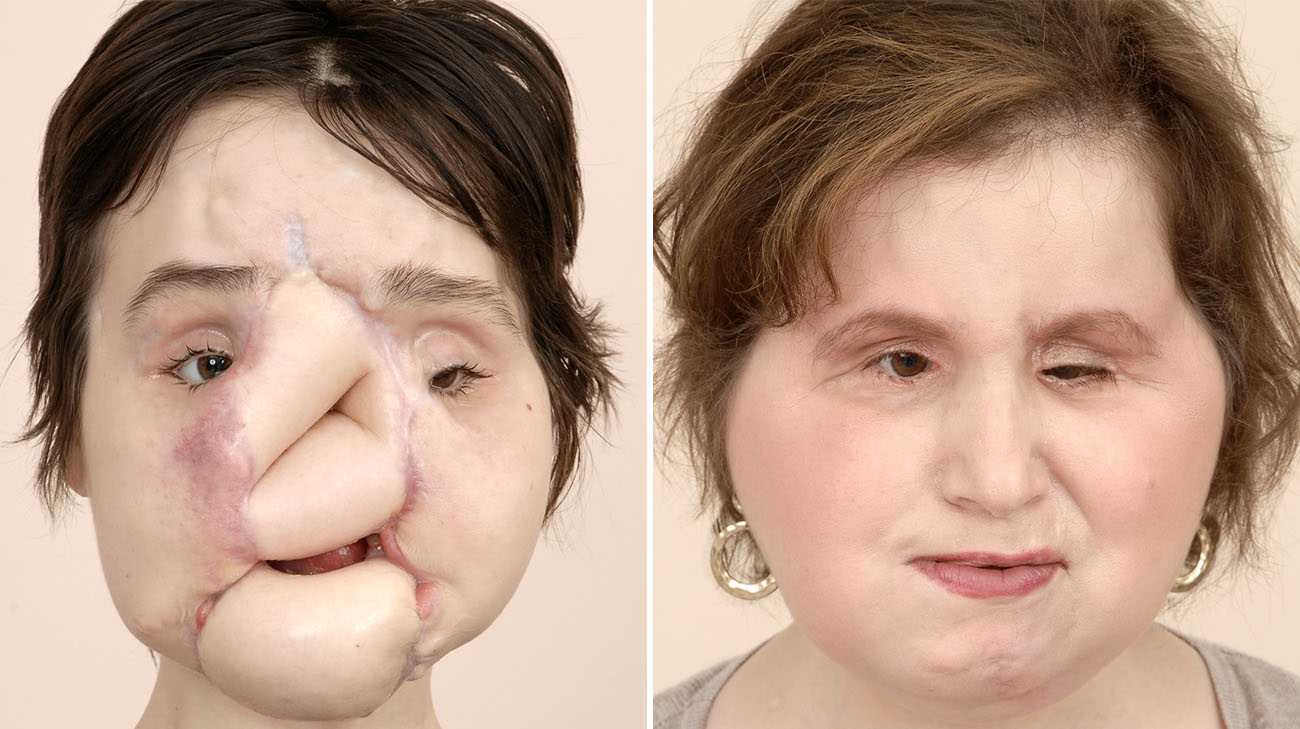
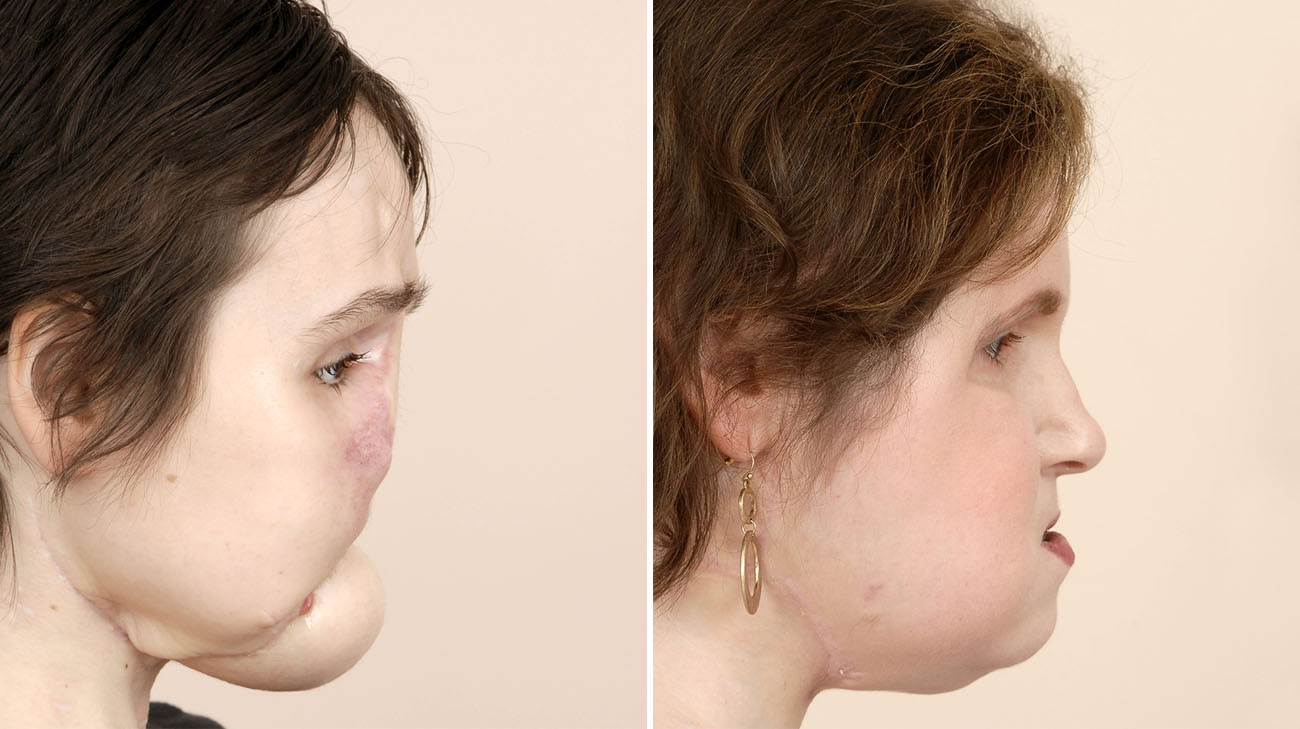
She lost much of her forehead, nose, sinuses, and most of her mouth, leaving only the corners of her lips intact. Large sections of her upper and lower jaw were destroyed, and many of the bones that formed the front of her face were gone. Her eyes survived but suffered severe damage.
When Katie briefly regained consciousness in the emergency room, she asked doctors to deliver a message to her parents.
“Tell my mom and dad I love them,” she said. “I’m sorry.”
Her father later described those words as taking incredible strength.
Over the following months, surgeons performed multiple reconstructive procedures, doing everything possible to rebuild what had been lost. But eventually, the medical team had to face a painful reality.
Traditional reconstruction would never restore normal facial function.
One doctor told Katie’s family something they had never imagined hearing.
“This is the worst wound I’ve ever seen,” he reportedly said. “The only thing that could truly give her a chance at a normal life is a face transplant.”
Until that moment, the family had never even heard the term.
Katie Stubblefield hadn’t either.
“When my parents explained what a face transplant was, I became excited,” she later said. “Not just because of how I might look, but because I could have function again.”
Looking back, Katie Stubblefield has spoken openly about the regret she felt after surviving.
“I never thought I’d do something like that,” she admitted. “After everything happened, I just felt so guilty. I hated knowing how much pain I had caused my family.”
Then came another life-changing moment.
About a year later, the family of a 31-year-old woman named Adrea Schneider made the extraordinary decision to donate her organs and facial tissue after her unexpected death.
Their selfless choice gave Katie an opportunity very few people ever receive.
The surgery lasted 31 hours.
A team of specialists transplanted nearly her entire face, including her scalp, forehead, eyelids, eye sockets, nose, upper cheeks, upper jaw, part of her lower jaw, teeth, muscles, nerves, skin, and other facial structures.
At the time, Katie Stubblefield became the youngest person in the United States to undergo a face transplant.
The operation was only the beginning.
Recovery required enormous patience.
She spent months healing while taking powerful medications to prevent her body from rejecting the transplanted tissue. She also attended speech therapy several times each week and learned Braille after her vision was severely affected.
Even with her new face, speaking clearly remained a challenge, and everyday tasks required determination that most people never have to think about.
Fourteen months after the transplant, doctors carried out three additional surgeries to refine the results. These procedures reduced scarring, reshaped parts of her face, and improved the function of her eyelids.
Gradually, Katie Stubblefield began experiencing something many people take for granted.
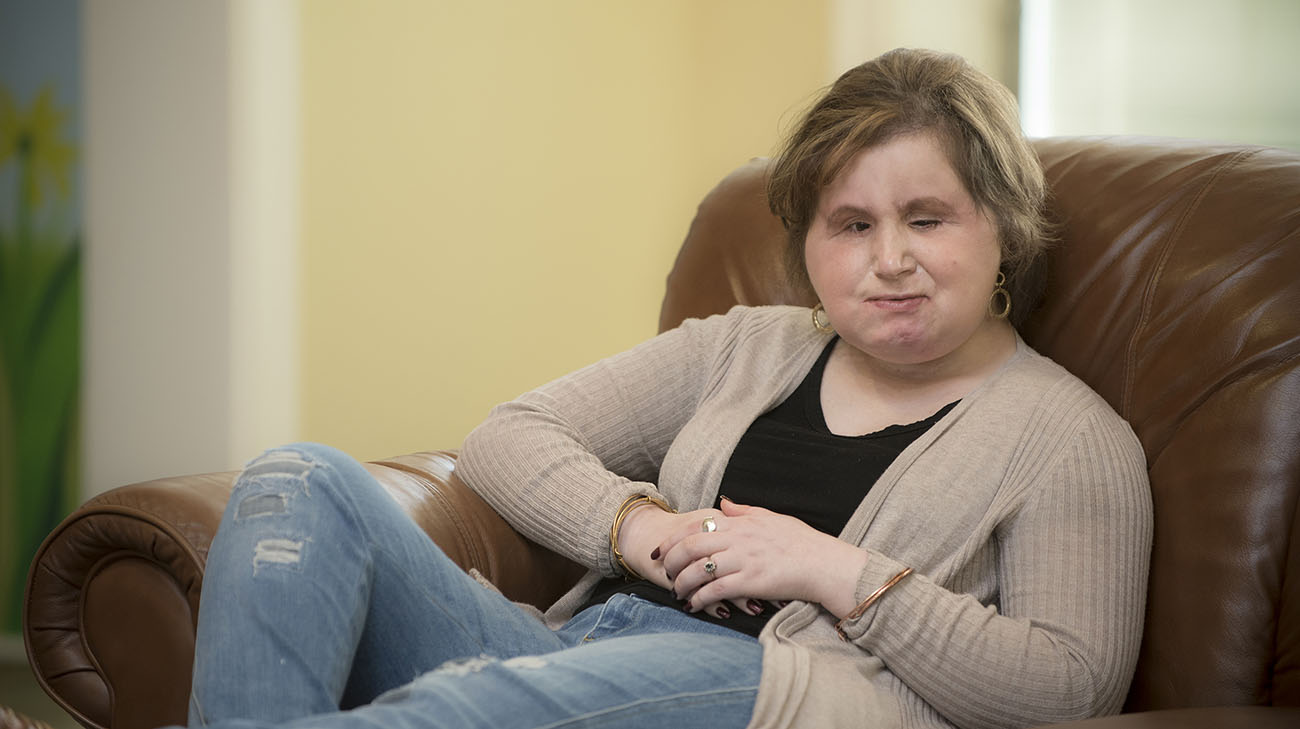
“I can touch my face now,” she told CNN. “It feels amazing.”
She explained that most people never think about the countless muscles, nerves, bones, and tissues working together every time they smile, speak, or simply feel a gentle touch.
“You don’t realize how important all those parts are until they’re gone,” she said. “When you receive a transplant, you’re just incredibly thankful.”
Katie has never forgotten the family whose decision made her recovery possible.
She has repeatedly expressed deep gratitude to Adrea Schneider’s relatives for giving her a second chance at life.
“I am forever grateful,” Katie said after the surgery. “Words can’t express what this gift means to me.”
She also praised the doctors, nurses, therapists, and caregivers who stood beside her throughout the years of treatment, saying their dedication made her recovery possible.
Today, Katie Stubblefield continues moving forward.
Her journey has never been easy, and she still faces daily challenges, but she refuses to let her past define her future.
She has spoken about her dream of attending college, becoming a counselor, and using her own experiences to encourage people struggling with mental health or difficult moments in life.
Her story is about much more than one of the world’s most complex surgeries.
It is about survival after unimaginable trauma.
It is about the extraordinary generosity of one family whose decision transformed another person’s life.
And above all, it is a reminder that even after life’s darkest moments, hope can sometimes arrive in the most unexpected ways.