
Influencer Michiel Vandeweert Dies at 28 After Defying the Odds

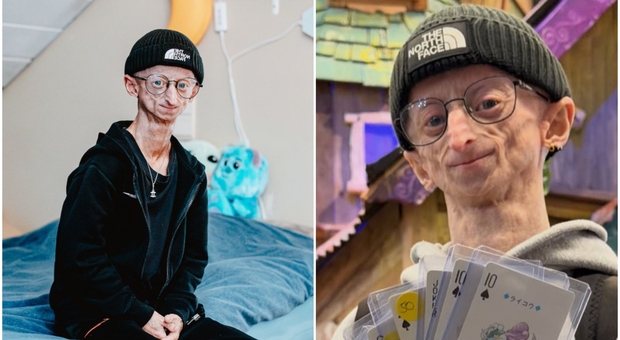
Michiel Vandeweert, the Belgian content creator who spent much of his life raising awareness about a rare condition that causes rapid aging, has died at the age of 28.
Doctors reportedly did not expect him to reach adulthood, yet Michiel lived many years beyond those early predictions and used that time to share his life with thousands of people online.
News of his death was confirmed to Belgian media. In a statement shared with Dutch-language outlet VRT News, his family spoke about the impact he had on those who knew him personally and those who had followed his journey from afar.
“Michiel leaves a deep impression and an indelible memory with everyone who knew him or followed his story,” the statement read.
The message also wished strength to his parents, sister, relatives and friends as they deal with his loss.
Michiel Vandeweert lived with progeria, a very rare genetic disorder that causes children to age much faster than usual.

He was diagnosed when he was only two years old.
But as Michiel grew older, he refused to let the diagnosis become the only thing people knew about him.
Instead, he gradually built a large presence online, where he talked openly about his condition while also sharing the ordinary parts of his life. Gaming, friends, hobbies and everyday experiences all became part of the content he shared.
Across Instagram, YouTube and Twitch, Michiel Vandeweert had built a combined following of more than 90,000 people.
His story, however, began reaching audiences long before social media became such a major part of his life.
When he was just 15 years old, Michiel published a memoir called Ik Ben Michiel, which translates to I Am Michiel. In the book, he wrote about growing up with progeria and what it was like to understand, at such a young age, that his life expectancy could be much shorter than that of the people around him.
That knowledge could easily have consumed his life. Michiel chose a different approach.
He became known for talking about what he could do rather than constantly focusing on what his condition prevented him from doing.
Progeria, formally known as Hutchinson-Gilford Progeria Syndrome, is an extremely rare genetic condition associated with accelerated aging in children.
According to the Progeria Research Foundation, the condition is linked to a mutation in the LMNA gene. This gene normally plays an important role in producing a protein that helps maintain the structure and stability of cells.
When that process is disrupted, cells become unstable, contributing to the rapid aging associated with the condition.
Progeria is exceptionally rare. Estimates suggest that it affects roughly one child in every four to eight million births worldwide. Only a few hundred people are believed to be living with the condition at any given time.
Babies with progeria often appear healthy when they are born. Signs generally begin becoming noticeable during infancy or early childhood.
Children may experience slow growth, hair loss, loss of body fat and changes in their skin. They can also develop a head that appears proportionally larger compared with the rest of the body.
The condition does not simply affect someone’s appearance.
One of its most serious consequences involves the cardiovascular system. People with progeria face a significantly increased risk of severe heart and blood vessel problems. Heart attacks and strokes are among the major causes of death associated with the disorder.
There is currently no cure.
Average life expectancy is often reported to be around the mid-teens, which makes the life of Michiel Vandeweert particularly remarkable.
Doctors reportedly believed that he might not live beyond the age of 12.
Michiel reached 28.
He lived approximately 16 years beyond that early expectation, becoming one of the older people known to be living with the condition.
His younger sister, Amber, also has progeria.
Although the genetic mutation responsible for the condition is generally not considered hereditary in the traditional sense, both siblings were diagnosed with it.
Their lives and relationship were explored in the documentary How To Be Alive: Amber and Michiel, which gave viewers another glimpse into what it meant for the brother and sister to grow up with the same extraordinarily rare disorder.
Amber has also built her own audience online. Her TikTok account has attracted close to 200,000 followers as she shares parts of her life and experiences with viewers.
For Michiel Vandeweert, social media was never only about discussing illness.

He wanted people to see the person living behind the diagnosis.
His interests included gaming, go-karting and snowboarding, activities that might surprise people who only knew him through descriptions of his medical condition.
That attitude was also at the center of a TEDxTalk he delivered in 2018.
The title captured his outlook perfectly: Life’s short, make the most of it.
During the talk, Michiel spoke openly about the moment he understood what having progeria actually meant. Learning about a shortened life expectancy at a young age could have shaped every decision around fear.
Instead, he tried to approach it differently.
“Despite me and my sister’s disease, I look on the bright side of life and try to live each day to its fullest,” he told the audience.
His message was simple.
“So don’t complain about the things you’re not capable of, but show the world what you are capable of.”
It was not just something Michiel said on a stage.
It was something he appeared determined to practice.
He snowboarded. He went go-karting. He played games. He spent time with people he cared about. He wrote a book while most teenagers were still trying to figure out what they wanted to do with their lives.
And eventually, he turned his own experience into a platform that helped tens of thousands of people learn about a condition they might otherwise never have heard of.
Michiel also repeatedly acknowledged that he did not do everything alone.
Friends and family played an enormous role in his life, and he credited the people around him with helping him make the most of the years he had.
That may be part of why his story connected with so many people.
There was obviously nothing ordinary about living with such a rare disease. Yet much of what Michiel wanted from life was surprisingly ordinary. He wanted experiences. He wanted hobbies. He wanted to laugh with friends, spend time with family and enjoy himself.
He also wanted people to stop assuming that a diagnosis automatically defined what somebody could accomplish.
For someone who was once reportedly told that he might not live beyond childhood, reaching 28 was already an extraordinary defiance of expectations.
But reducing his story to a number would miss much of the point.
Michiel Vandeweert spent those extra years actually living.
He shared his experiences publicly, spoke about difficult subjects, raised awareness about progeria and allowed people into parts of his life that many would have chosen to keep private.
His death at 28 is undeniably young. Yet his story also leaves behind something much bigger than the circumstances of his illness.
Years before his death, Michiel had already explained how he wanted to approach the limited time available to him.
Life was short, so he intended to use it.
And he did.