

Someone being ‘allergic‘ to her husband sounds unreal until you hear the full story. For one woman and her partner, this shocking discovery explained years of failed attempts to conceive and emotional heartbreak. What seemed like ordinary fertility struggles turned out to be a rare genetic incompatibility that caused her immune system to reject her husband’s DNA.
This story captured public attention after being shared on national television. It revealed how deeply biology can interfere with even the most loving relationships. For this couple, love was never the issue. Science was.
Trying to conceive is often described as a natural process, something that will happen eventually with patience and timing. But for many couples, it becomes a painful journey filled with unanswered questions. This woman’s experience highlights how complex fertility truly is and why some struggles go far beyond what most people imagine.
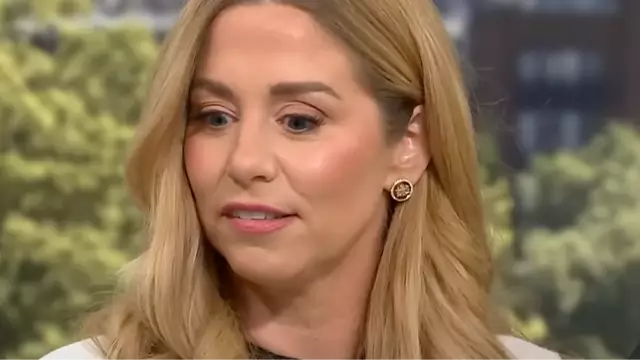
Alex Murphy and her husband, Paul Klein, were excited to start a family. They were in a stable relationship, deeply in love, and felt ready for the next chapter of their lives. Like many couples, they assumed pregnancy would happen naturally with time. When it did not, they initially believed stress or timing might be the problem.
Months passed with no success. Then years. Doctor’s appointments became routine. Tests were done. Lifestyle changes were made. Eventually, the couple turned to fertility treatments, including IVF. Despite every effort, nothing worked.
The emotional weight became overwhelming. Each failed attempt brought disappointment and grief. Friends and family offered encouragement, but without answers, hope slowly faded. They knew something was wrong, but no one could explain why.
At this point, the idea that Alex could be ‘allergic‘ to her husband would have sounded absurd. Yet that was exactly what science would later reveal.
After repeated failures with fertility treatment, the couple decided to explore more advanced testing. They used a blood test designed to examine genetic compatibility between partners. These tests look at how a woman’s immune system responds to her partner’s DNA during conception.
When the results came back, they were stunned. Doctors explained that Alex’s immune system was reacting to Paul’s DNA as if it were a threat. Instead of allowing embryos to develop, her body was attacking them.
This reaction was not an allergy in the traditional sense, but the comparison made it easier to understand. Just like allergies cause the immune system to overreact to harmless substances, her body was overreacting to her husband’s genetic material.
This meant that natural conception was extremely unlikely. Even IVF had a very low chance of success because the immune response occurred so early in the pregnancy process.
What Does ‘Allergic‘ to Her Husband Really Mean

Being ‘allergic‘ to her husband does not mean physical contact caused reactions. It does not involve skin rashes or breathing issues. It refers to a rare genetic mismatch involving immune system receptors.
Alex carries a genetic marker called KIR AA. Paul carries a gene known as HLA C2. When these two meet, the immune system can interpret the embryo as foreign. Instead of supporting pregnancy, the body works against it.
This condition is uncommon, which explains why it often goes undiagnosed. Many couples facing infertility never receive this type of genetic testing. Without it, years can pass without understanding what is happening.
For Alex, finally having an explanation brought mixed emotions. There was relief in knowing the truth, but also grief in realizing how difficult the road ahead would be.
One of the hardest parts of being ‘allergic‘ to her husband was that nothing looked wrong from the outside. Alex was healthy. Paul was healthy. There were no obvious warning signs.
This made public and social pressure even harder to bear. Questions about children came up frequently. Casual comments from strangers carried unexpected pain. People rarely consider that such personal questions may touch on deep emotional wounds.
Alex later spoke openly about how isolating this experience felt. She explained that infertility is often treated as a private issue, yet society feels entitled to ask about it freely. Her story resonated with many people who had faced similar comments.
Sharing her experience publicly helped raise awareness about how complex fertility issues can be. It also reminded people to approach these topics with sensitivity and compassion.
Being ‘allergic‘ to her husband did not weaken Alex and Paul’s bond, but it tested them in ways they never expected. Fertility struggles can put enormous strain on relationships. Feelings of guilt, frustration, and helplessness often surface.
Alex struggled with the idea that her body was the barrier. Paul struggled with knowing his DNA was triggering the problem. Neither was at fault, yet both felt the weight of responsibility.
Open communication became essential. They learned to support each other emotionally while navigating difficult medical decisions. Therapy and honest conversations helped them stay connected during moments of despair.
Their story shows how important emotional support is during fertility challenges. Medical answers alone are not enough. Couples also need understanding, patience, and empathy from each other.
Once the diagnosis was clear, the couple began discussing their options. There is no simple cure for being ‘allergic‘ to her husband, but there are alternative paths to parenthood.
Some couples consider using donor sperm, which can bypass genetic incompatibility. Others explore adoption or surrogacy. In certain cases, immune therapies may be attempted, although success rates vary and risks must be carefully considered.
Every option carries emotional and ethical considerations. What matters most is that couples feel informed and supported in their choices. There is no single right answer.
Alex and Paul are taking time to process their options. They are focusing on their relationship and mental well-being while deciding what path feels right for them.
This story gained attention not because it was sensational, but because it was honest. Fertility struggles are far more common than people realize, yet many remain silent due to shame or fear of judgment.
By speaking openly about being ‘allergic‘ to her husband, Alex helped normalize conversations around infertility. Her story encouraged others to seek deeper testing and to advocate for themselves when answers are not clear.

Medical professionals also emphasize the importance of awareness. While this condition is rare, understanding immune-based fertility issues can help more couples find clarity sooner.
Public stories like this remind us that not all fertility struggles fit a simple narrative. They are often complex, layered, and deeply personal.
One of the most damaging myths surrounding fertility is the idea that effort guarantees success. Eat better. Relax more. Try harder. These messages can unintentionally blame individuals for circumstances beyond their control.
Alex did everything she was told to do. She followed medical advice. She remained hopeful. None of it changed her genetic reality.
Being ‘allergic‘ to her husband shows that fertility is not always something that can be fixed through determination alone. Sometimes biology creates limits that require acceptance and alternative paths.
Understanding this can help reduce guilt and self-blame among those facing similar struggles.
Despite the pain of their journey, Alex and Paul have found strength in sharing their truth. Their honesty has sparked conversations and helped others feel less alone.
They continue to support each other and build a life filled with purpose beyond traditional expectations. Their story is not defined by what they cannot do, but by how they respond to unexpected challenges.
Being ‘allergic‘ to her husband changed their plans, but it did not define their love.
This story offers an important lesson for everyone. Questions about children may seem harmless, but they can carry heavy emotional weight. Leading with compassion costs nothing and can mean everything to someone struggling silently.
Fertility journeys are rarely simple. Behind every couple is a story that deserves respect.
Alex’s experience reminds us that science can be complex, bodies can be unpredictable, and love often requires resilience in the face of uncertainty.
While the future remains uncertain, Alex and Paul continue to move forward together. They are informed, united, and open to possibilities they never imagined before. Their journey is not over. It has simply taken a different path.


