Bed Rotting TikTok Trend Sparks Worry Regarding Gen Z Student


Bed rotting has become a popular topic among college students, especially on TikTok. It started as a phrase, but now it is changing how young people talk about rest, stress, and daily life.
If you scroll through media, you will see a lot of posts about people staying in bed all day, wrapped in blankets and avoiding the outside world. This sounds simple. The meaning behind it is deeper than it seems.
Trends on the internet move fast, and TikTok is the platform that leads the way. One week, it is a dance challenge; the next, it is a lifestyle idea.
Bed rotting fits into this pattern. It feels relatable and easy to understand. It is actually comforting for people who have felt overwhelmed. A lot of people saw the term. Thought, “I have done that before, ” even if they did not have a name for it.
At first, the phrase itself was confusing. Some people thought bed rotting meant not washing your sheets or not cleaning your room. Others thought it meant being lazy or avoiding responsibilities.
Because there was no definition, it was open to interpretation, which helped it spread faster. Everyone could make it mean what they wanted based on their experience.
Once the trend started to get popular, the definition became clearer. Bed rotting is basically spending the day in bed, often without a reason.
It is about staying under the covers, scrolling on your phone, watching shows, or just lying there while the day goes by. There is no rush, no need to be productive, and no pressure to interact with the world.
For people, bed rotting feels like a small escape.
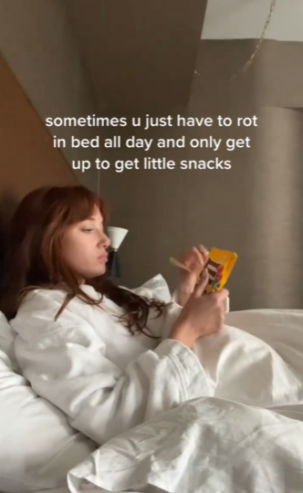
Life has become really intense for students who are balancing school, work, and personal expectations. With the rising cost of living and constant comparison, it is easier to understand why people choose to disconnect. Staying in bed can feel like pressing pause on everything that feels too much to handle.
There is also a way to describe this behavior called “soft living.” It suggests a gentler way of living life. In that sense, bed rotting is not always seen as a thing. Some people see it as a form of self-care a way to recharge without feeling guilty. This perspective has helped make the behavior more acceptable in the media.
However, the conversation does not end there. Experts have started to share their thoughts, offering a nuanced view. Dr. Jessi Gold, an Assistant Professor of Psychiatry at Washington University, talked about bed rotting directly on TikTok. She said that while it is healthy to rest, staying in bed all day repeatedly can be a sign of something deeper.
According to Dr. Gold, bed rotting often happens when someone feels emotionally drained or overwhelmed. It is not always about being lazy. In some cases, it is a response to stress, anxiety, or lack of proper rest. When the mind feels overloaded, the body tends to shut down, and staying in bed becomes a way to cope.
This perspective changes the way we should look at bed rotting. Rather than judging it, it is more important to understand it. Why do you feel the need to stay in bed all day? What are you trying to avoid? These questions matter because they can reveal issues that are easy to ignore in a busy routine.
Dr. Gold also said that bed rotting is not something you always need to fight. Sometimes your body really needs rest. However, the key is being aware. If it becomes frequent or starts interfering with life, then it may be time to look deeper into what is causing that behavior.
Many people recognize themselves in this pattern. A week of poor sleep or emotional burnout can lead to a full day of bed rotting without much thought. It feels harmless in the moment, even necessary. When it turns into a regular habit, it can slowly affect motivation, productivity, and overall well-being.
At the time, the rise of bed rotting started a bigger debate about work ethic, especially between generations. Some older generations see it as a sign of declining discipline.
They think it is about avoiding responsibility rather than managing stress. This difference in perspective has fueled discussions online.
A recent example added tension to this conversation. A Twitter user shared an image of a sign outside a store, which quickly spread on Reddit in the r/antiwork community.
The post triggered reactions with many linking it to attitudes toward work, rest, and generational expectations. In that context, bed rotting became part of a cultural argument.
For Gen Z, however, the story feels different. Many young people argue that bed rotting is not about being lazy. Instead, it reflects how exhausting modern life can be.
Constant connectivity, financial pressure, and social expectations create a level of stress that older generations may not fully understand. Staying in bed becomes a way to cope, not to avoid life.
There is also something about how openly people talk about bed rotting. In the past, these behaviors might have been. Labeled negatively. Now they are shared, discussed, and even normalized. That openness can help reduce stigma around health, which is a positive shift.
So balance remains important. Occasional bed rotting can feel restorative. Relying on it too often can lead to isolation. It can create a cycle where avoiding stress only makes it harder to face later. That is why understanding the difference between rest and avoidance is crucial.
Bed rotting is more than a trend. It reflects how people are responding to the pressures around them. It shows a desire to slow down to disconnect and to find comfort in a world that often feels overwhelming. Whether seen as self-care or a warning sign, it opens up a conversation that’s worth having.
What matters most is being aware. If bed rotting helps you reset and regain energy, it can be a tool. If it becomes your main way of dealing with life, then it may be time to pause and ask why. Understanding that line can make all the difference in how this trend shapes daily habits moving forward.