

Bonnie Blue stunt conversations have taken a darker turn after a young content creator revealed that her involvement left her deeply affected emotionally. What once looked like a playful and viral online collaboration has now been described as a traumatic experience that continues to impact her mental health months later.

The story centers on Julia Filipo, a 22-year-old OnlyFans creator who joined Bonnie Blue in what was promoted as a shocking and record-breaking online challenge. While the stunt generated massive attention and financial success, Julia now says the emotional consequences were far more serious than she ever expected.
A few months before Julia spoke out, Bonnie Blue announced a live-streamed adult content challenge that she boldly described as the biggest group event in history. The Bonnie Blue stunt quickly gained attention across social media, with many viewers drawn in by the shock value and bold promotion.
Bonnie openly explained that the event would be live-streamed and created specifically for her OnlyFans audience. At the time, her announcement sounded confident and unapologetic. She spoke about the challenge casually, presenting it as another extreme but planned content idea.
Julia Filipo was one of the creators selected to join Bonnie for the event. Publicly, the interaction between the two women appeared friendly and supportive. Julia shared a photo from the filming, and Bonnie responded warmly, thanking her for participating and complimenting her.
From the outside, everything looked consensual, planned, and even celebratory. But behind the scenes, Julia says the reality was very different.
Before the Bonnie Blue stunt, Julia Filipo already had a strong presence online, even if her name was not widely known to mainstream audiences. She worked as an OnlyFans creator and had built a loyal following across multiple platforms.
On Instagram, Julia had more than 700,000 followers. On TikTok, her audience was even larger, surpassing 3 million followers. Her rapid growth showed how quickly creators can gain visibility in the digital space, especially when participating in viral moments.
Despite her popularity, Julia was still young and relatively early in her career. Many viewers assumed she fully understood what she was signing up for. Julia now suggests that while she agreed to participate, she did not fully grasp the emotional impact of what she would witness.
How the Bonnie Blue Stunt Was Framed Online

Leading up to the event, Bonnie Blue shared content that framed the situation as playful and exciting. In one video, she joked about teaching Julia how to lose her innocence, positioning herself as a guide in the experience.
The caption suggested a lighthearted dynamic between the creators, and many viewers interpreted Julia as being enthusiastic about the opportunity. The men involved were shown casually socializing with the creators before the challenge began.
At the time, nothing about the public posts suggested distress or discomfort. Everything appeared to align with the bold branding that Bonnie Blue had built around herself.
However, Julia later explained that this online presentation did not reflect her internal experience.
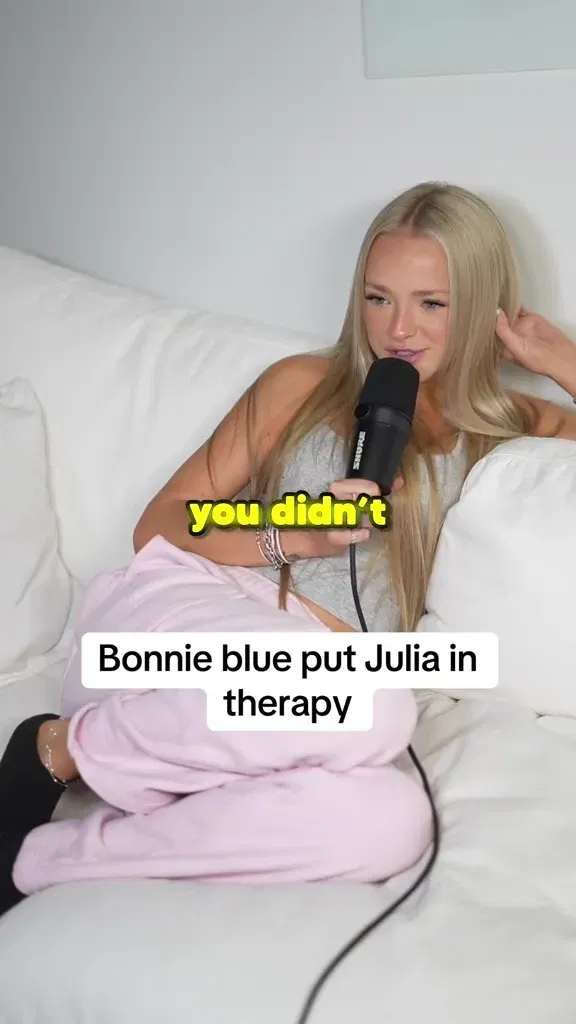
Julia eventually opened up about the Bonnie Blue stunt during a conversation with fellow creator Camilla Araujo. Her tone was noticeably different from the playful energy seen in earlier posts.
During the discussion, Julia admitted that the experience left her traumatized and that she was now in therapy to cope with what she went through. This marked a significant shift in how the event was being discussed publicly.
Camilla responded honestly, telling Julia that she was glad she chose not to participate after seeing how deeply affected Julia still was. She pointed out that therapy was necessary for a reason and acknowledged the emotional toll the situation had taken.
This exchange made it clear that the effects of the stunt were not temporary or exaggerated for attention. Julia was still processing what happened long after the cameras stopped rolling.
Julia went on to describe her behavior during the filming itself. She explained that in clips from the event, she could be seen visibly panicking and feeling overwhelmed.
According to Julia, she was not calm or detached during the experience. Instead, she was internally distressed and struggling to cope with what she was witnessing. Her voice in later videos reflected lingering anxiety and discomfort.
She openly admitted that she regretted agreeing to the Bonnie Blue stunt. While she expressed affection for Bonnie and appreciation for her management team, she emphasized that the emotional damage remained.
Her honesty resonated with many viewers who began to reassess how they viewed viral adult content collaborations.
Following her public statements, some other creators claimed they had seen Julia actively participating in the acts filmed during the stunt. Julia firmly denied these claims.
She clarified multiple times that she did not take part in the sexual acts shown. Instead, she said she was present primarily to offer emotional support to Bonnie during the challenge.
Julia even explained that her role involved small, supportive gestures, such as brushing Bonnie’s hair, rather than participating in the acts themselves. She stood by this explanation despite ongoing speculation online.
This clarification was important to Julia, as she wanted to separate her emotional trauma from assumptions about physical participation.
As Julia continued to speak openly, many viewers expressed sympathy and concern in the comments on her posts. One commenter wrote that while Julia had agreed to be there, she likely did not understand what she would be exposed to.
Others emphasized her age, noting that at 22, she may not have had the emotional tools to process such an intense environment. Many people hoped she would eventually find peace and healing.
The reaction highlighted a broader conversation about consent, preparedness, and the psychological impact of extreme online content. While agreements may be made on paper, emotional consequences are not always predictable.
In another video, Julia revealed a detail that complicated public perception even further. She shared that she earned over 890,000 dollars from the shoot connected to the Bonnie Blue stunt.
She described it as her best financial month to date. This admission sparked mixed reactions online, with some people questioning how financial success could coexist with emotional trauma.
Julia did not deny that the money was significant. However, she made it clear that the income did not erase the psychological impact of the experience. For her, the financial reward did not outweigh the lasting emotional cost.
Her honesty challenged the assumption that high earnings automatically equal satisfaction or empowerment.
The Bonnie Blue stunt serves as a reminder that viral success often hides complex emotional realities. Online audiences typically see curated clips, captions, and promotional posts, not the mental strain behind them.
Julia’s experience shows how quickly an opportunity can turn into something deeply unsettling. Even when participation is voluntary, the environment itself can become overwhelming.
Her story adds to a growing number of creator testimonials that highlight burnout, regret, and trauma behind highly viewed content. These stories are reshaping conversations around digital labor and personal boundaries.
While Julia expressed love and respect for Bonnie Blue, her story has raised questions about responsibility within creator collaborations. How much preparation is enough? How should emotional risks be addressed?
The Bonnie Blue stunt was promoted as extreme entertainment, but its aftermath suggests that more care may be needed when involving young creators in high-intensity scenarios.
This does not place blame on any single person. Instead, it highlights the need for clearer conversations about mental health, expectations, and aftercare.
Julia has made it clear that therapy is now a crucial part of her life. She continues to work through the emotional effects of the experience while maintaining her online presence.
By speaking openly, she has helped others feel less alone in their own regrets and struggles. Her willingness to discuss trauma challenges the idea that creators must always appear strong or unaffected.
The Bonnie Blue stunt may have brought her financial success, but it also brought lessons that came at a high personal cost.
The story of Julia Filipo and the Bonnie Blue stunt reveals the complex reality behind viral content. What looks exciting online can feel overwhelming in real life.
Julia’s regret and ongoing therapy remind audiences that creators are human first. Their experiences do not end when the livestream does.
As conversations continue, her story may encourage more thoughtful approaches to collaboration, consent, and emotional well-being in the digital world.


