

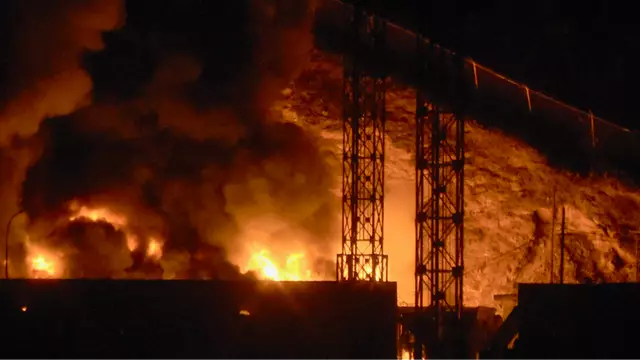
Caracas Explosions shook the Venezuelan capital in the early hours of January 3, 2026, in what has become one of the most intense and controversial international confrontations in recent years. Caracas explosions were reported around 2 a.m. local time when residents heard powerful detonations and saw aircraft flying low overhead. These blasts occurred amid emerging reports of a significant United States military operation in Venezuela’s territory.
Eyewitnesses in Caracas described a terrifying scene as loud crashes echoed across neighborhoods and flames rose near key military facilities. People across the city rushed out into the streets in confusion and fear, uncertain of what was unfolding around them as the darkness was pierced by repeated blasts. The Caracas explosions were heard in multiple districts, prompting widespread alarm in a city already tense from political and economic pressures.
In response to the blasts, smoke was visible above sites such as La Carlota air base, where military infrastructure is concentrated, and power outages were reported in sections of southern Caracas. Residents captured video showing intense flashes in the night sky accompanied by the rumble of explosions that shattered the calm of the early morning hours, making this one of the most dramatic crisis moments in Venezuela’s recent history.
Reports soon linked the Caracas explosions to a broader United States military strike that targeted several sites across northern Venezuela.
President Donald Trump announced that U.S. forces had carried out a “large-scale strike” and claimed that Venezuelan President Nicolás Maduro and his wife were captured and taken out of the country. This assertion added to the shock and controversy surrounding the unfolding events.
According to U.S. statements, the operation involved elite military units in a coordinated action described as unprecedented against a sitting head of state in the region. The captured Venezuelan leaders were said to be headed to the United States to face longstanding legal charges, including accusations linked to narcotics and terror conspiracies. These claims, however, have been met with denial and fierce opposition from the Venezuelan government and its supporters.
In stark contrast to the U.S. version, Venezuelan authorities condemned the operation as a grave act of aggression. The Caracas explosions were officially described as attacks on both civilian and military installations across several Venezuelan states. Government officials called on supporters to mobilize and reject what they labeled an imperialist assault on Venezuela’s sovereignty, asserting that their national defense plans were fully activated in response to the crisis.
The Venezuelan government declared a state of external disturbance, a designation that gives expanded authority to implement emergency measures and direct armed forces throughout the country. Vice President Delcy Rodríguez urged the public to demand proof of life for President Maduro and his wife, as official information about their status remained unclear in the immediate hours after the explosions.
International reaction to the Caracas explosions and the associated U.S. military action has been swift and highly polarized. Leaders and governments around the world weighed in with strong statements that both support and condemn the U.S. action. Many Latin American countries called for calm and dialogue, while others denounced what they viewed as a dangerous precedent that threatens global norms of national sovereignty and nonintervention.
Foreign ministers from neighboring nations expressed alarm at the escalation, highlighting the risk of broader instability across the region. Some called for emergency sessions at the United Nations to address the implications of the strikes and seek diplomatic solutions to de-escalate tensions. These calls reflected deep concerns that the Caracas explosions and the subsequent military developments could ignite wider conflict.
European nations also reacted, with several governments urging restraint and emphasizing the importance of respecting international law. Some expressed support for diplomatic avenues that aim to avoid further bloodshed while addressing the complex political and humanitarian issues facing Venezuela. The contrasting international positions underscored the deep divisions over how best to resolve the crisis ignited by the Caracas explosions.
Amid this charged global environment, public sentiment in Venezuela varied widely. Many Caracas residents responded to the explosions with fear and uncertainty, as the sudden violence disrupted daily life and intensified worries about safety and stability. People shared videos and firsthand accounts on social media, illustrating the chaos and confusion that followed the detonations.
Some Venezuelans expressed hope that the dramatic developments might lead to an end to the country’s prolonged economic hardship and political strife, hoping that a leadership change could open a path toward recovery. Others feared that the violence and the contentious nature of the U.S. involvement could further deepen divisions and suffering for ordinary citizens.
The military dimension of the operation included low-flying aircraft stirring fear in Caracas neighborhoods. Witnesses reported hearing multiple passes by airborne vehicles shortly before and after the explosions. The sight and sound of these aircraft heightened the sense of crisis and contributed to the perception of a broad and intensive military engagement.
Power disruptions that followed the blasts exacerbated the disruption. Neighborhoods without electricity struggled with communications and access to essential services. The darkness that hung over parts of the city after the Caracas explosions reinforced the suddenness and severity of the events, leaving residents to confront uncertainty about what would come next.
The aviation response to the situation included warnings by international aviation authorities. The U.S. Federal Aviation Administration issued a notice prohibiting U.S. aircraft from entering Venezuelan airspace due to the ongoing military activity, citing safety concerns. This added an international safety dimension to the crisis, indicating broader implications beyond immediate military engagement.
The historical backdrop to the Caracas explosions and the U.S. strike is rooted in longstanding tensions between Washington and Caracas. Over recent years, disputes over governance, allegations of corruption, and disagreements on issues like human rights and drug trafficking have strained relations. The latest military escalation represents one of the most dramatic confrontations in decades.
Prior to this moment, the U.S. had faced persistent challenges in its approach to Venezuela, balancing sanctions, diplomatic pressure, and targeted operations against alleged drug smuggling. The military presence in the Caribbean and the eastern Pacific grew as part of sustained efforts to counter narcotics activities, and these moves contributed to rising tensions that culminated in the events tied to the Caracas explosions.
Critics of the U.S. action labeled the strikes illegal and lacking congressional authorization, arguing that the military engagement could set a dangerous precedent for international intervention. These critics included lawmakers and analysts who pointed to past conflicts where military action was taken without broad international support or a clear legal mandate.
Supporters of the U.S. approach, however, framed the action as necessary to counter alleged criminal activities and to support efforts aimed at removing entrenched leadership that they claim is responsible for widespread corruption and instability. This debate reflected larger ideological rifts both within the United States and internationally over how to address complex foreign policy challenges.
Humanitarian concerns also emerged as a central focus in the wake of the Caracas explosions. International aid organizations expressed worry about the potential impact on civilians, including access to food, medical care, and shelter. The possibility of displacement and increased hardship for vulnerable populations was highlighted by relief groups urging all parties to protect noncombatants.
In the hours following the explosions, emergency services and volunteers worked to assist those affected by the blasts and power outages. Hospitals and clinics in parts of Caracas prepared for potential casualties, even as information remained fluid and fragmented. Reports of injuries began to circulate, though precise figures were difficult to confirm due to the chaos and restricted communications in some areas.
As Caracas and the rest of Venezuela grapple with the immediate aftermath of the explosions and the shifting political landscape, questions remain about the future course of events. Whether diplomatic negotiations can emerge from this crisis or if tensions will continue to escalate into wider conflict remains uncertain. Analysts around the world continue to monitor developments closely.
The January 3, 2026, explosions in Caracas will likely be remembered as a defining moment in Venezuela’s history, shaping political debate and international relations for years to come. The combination of military action, leadership capture claims, global controversy, and community impact creates a complex and evolving story that continues to unfold in real time.


