

Choking alone can feel terrifying because it cuts off your ability to breathe, and there may be no one nearby to help you. When something gets stuck in your throat or windpipe, air cannot reach your lungs, and oxygen cannot get to your brain. This can lead to unconsciousness in minutes and even death if the blockage is not cleared quickly. The risk of choking is real for many people, especially while eating meals, and it often happens when you least expect it. Statistics show that thousands of people die from choking each year, highlighting how serious the situation can be if you are unable to get help from others.
Choking can occur with a wide range of foods or small objects. Large pieces of food, like chunks of meat or bread, are common culprits, but even small items can become lodged in your throat. The danger increases when you are alone because you cannot rely on someone else to notice that you are struggling or to call emergency services for you. Being alone while choking means you must act quickly and confidently to free your airway before time runs out.
Recognising the signs that you are choking is crucial. If you cannot speak, cough effectively, or breathe, the airway is most likely blocked. Your face might turn red or blue from lack of oxygen, and panic can set in fast. Knowing what steps to take when you are choking alone empowers you to stay calm and focus on clearing the blockage, which can save your life.

Step One: Call for Help Immediately
The very first thing to do if you are choking alone is to call emergency services. In many countries, this is 911 or your local emergency number. If you have a phone or smart device within reach, dial for help right away. Even if you cannot speak because your airway is blocked, in some places the emergency operator can detect that a call is from someone in trouble and dispatch help.
Having emergency services on the way gives you the best chance of survival while you try to clear the blockage yourself. It means trained professionals are prepared to arrive and take over if your own efforts are not successful. Emergency dispatchers may also be able to give you verbal guidance while you try to perform self–rescue techniques.
If you cannot reach your phone or are unable to dial, do not waste time trying to call. Move on to the physical steps that can help dislodge the object, because every second matters when you are choking alone. The priority is to get air moving again, and physical action often needs to follow quickly after or alongside the attempt to contact emergency services.
Step Two: Perform Abdominal Thrusts on Yourself
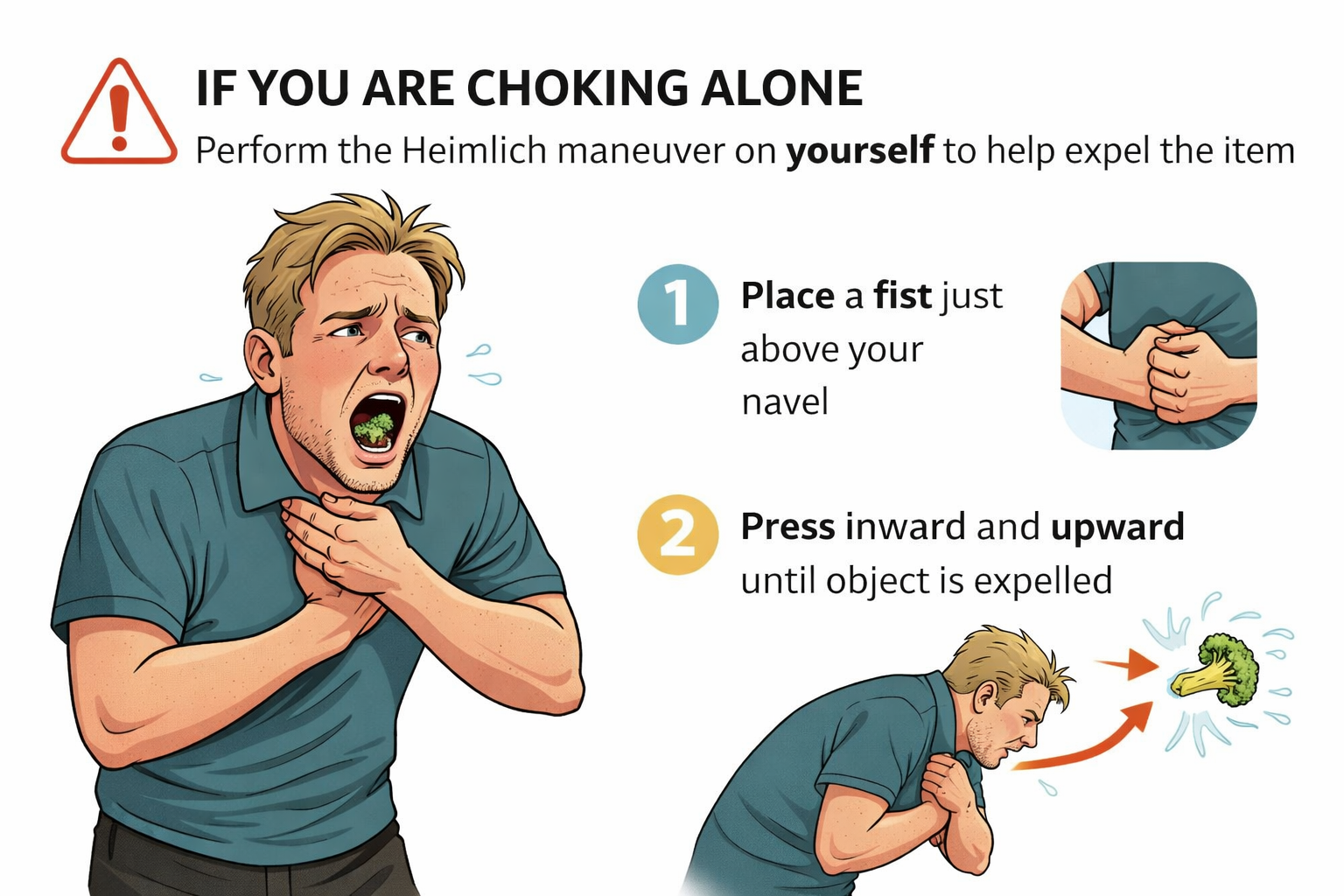
Once you have attempted to call for help, or if calling is not possible, the next step when you’re choking alone is to try to clear the obstruction from your airway yourself. One of the most effective techniques recommended for adults who are choking is to perform abdominal thrusts on yourself. This is similar to the Heimlich manoeuvre that is used on others, but adjusted so you can do it alone.
Here is how to perform self-abdominal thrusts: first, make a fist with one hand and place it above your belly button and below your rib cage. Then, take your other hand and grasp your fist, positioning your hands so you can push inward and upward in a firm motion. The goal is to squeeze the air from your lungs in a forceful way that can push the object out of your throat.
You should use strong, quick inward thrusts, pressing your fist into your upper abdomen with enough force to try to dislodge the blockage. In many cases, performing three to five solid thrusts can create the necessary pressure to force the object upward out of the airway. If the object does not come out on the first try, continue to repeat this motion until it is free or until help arrives.
Step Three: Use a Chair or Edge to Increase Pressure
If you are unable to perform effective self-abdominal thrusts with your hands, you can use the edge of a chair, countertop, or other sturdy object to help dislodge the obstruction when choking alone. This method uses a hard surface to mimic the inward and upward force of hand thrusts, and it can be especially helpful if your strength is limited or if you cannot position your hands properly.
To use this technique, stand or sit near a solid chair back or table edge that will not move easily. Lean forward so the top of the backrest or edge sits just above your belly button, then push your upper abdomen forcefully into the edge. The pressure created against the solid surface can help push the blocked object out of your airway, the same way as using your hands.
This method may not work on the first attempt, but repeating the motion with firm pressure increases the chance that the object will be expelled. Many people find it easier to generate a strong force using a fixed surface than with their hands alone, making this a valuable technique to know when you are choking alone.
The self techniques described for choking alone are designed to complement each other. The earlier you can call for help, the better your odds, but physical action is what will free your airway. Abdominal thrusts on yourself and the use of a chair or edge both aim to squeeze the diaphragm and lungs so they generate enough internal pressure to push the obstruction out.
In many cases, simply coughing forcefully can remove the blockage, especially if the airway is not fully blocked. If coughing is effective, you may not need to use the other methods. However, if coughing does not work and you are unable to breathe, quick and decisive action with self thrusts or using a chair can be lifesaving.
It is important to act with confidence and not waste time when choking alone. Seconds count when oxygen cannot reach your lungs and brain. By practising these techniques mentally and understanding each step, you are more prepared to react quickly and improve your chances of survival.
What to Avoid When Choking
When you are choking alone, it can be tempting to try risky or ineffective actions in a panic. One thing you should not do is stick your fingers into your throat to try to remove the object. If you cannot see the object clearly, this can push it deeper into your airway and make the situation worse. Emergency guidelines from major health organisations strongly advise against this action.
Also, avoid taking overly slow or hesitant action. While it is important not to panic, delay costs time and oxygen. Move deliberately through the steps outlined above so you can clear the airway before losing consciousness. Quick and focused action is essential when you are choking alone.
While no one expects to need these steps regularly, knowing what to do if you are choking alone gives you valuable peace of mind. Take some time to visualise each step and understand how to perform self-abdominal thrusts and how to use a chair or edge effectively. Reading about these techniques and even watching instructional resources can help solidify your understanding so you are ready if an emergency ever occurs.
In addition, keeping your phone nearby when you eat or engage in risky activities means you can call for help faster. Routine habits like cutting food into smaller pieces and chewing thoroughly reduce the chance of choking in the first place, though even careful eaters can experience choking unexpectedly.
Choking alone is a terrifying emergency, but knowing what to do gives you a significant advantage in surviving it. Acting fast by calling emergency services, performing self-abdominal thrusts, and using a chair or edge for added force can all help you clear an obstruction and regain your ability to breathe. The fear of choking on your own can feel overwhelming, but preparation and knowledge of these steps can help you stay calm and take decisive action when it matters most.
By understanding these strategies and practising them mentally, you are giving yourself the best possible chance to react with confidence and protect your own life during a choking emergency.


