

Coca-Cola’s recipe has been at the heart of one of the biggest soft drink mysteries in the world, and now a creator on YouTube says he may have figured out how to make a version that tastes almost the same. This revelation has caught attention across the internet because the real formula has been hidden and guarded for more than a century.
For generations, Coca-Cola has been one of the most popular drinks on the planet, known for its unique flavour that millions enjoy every day. But the company has always kept its exact recipe a closely guarded secret. Only a tiny number of people within the company are said to know the full, real Coca-Cola recipe, and they are not allowed to reveal it publicly. That secrecy has made the drink the subject of decades of speculation, attempts to reverse engineer it, and fascination from fans and critics alike.
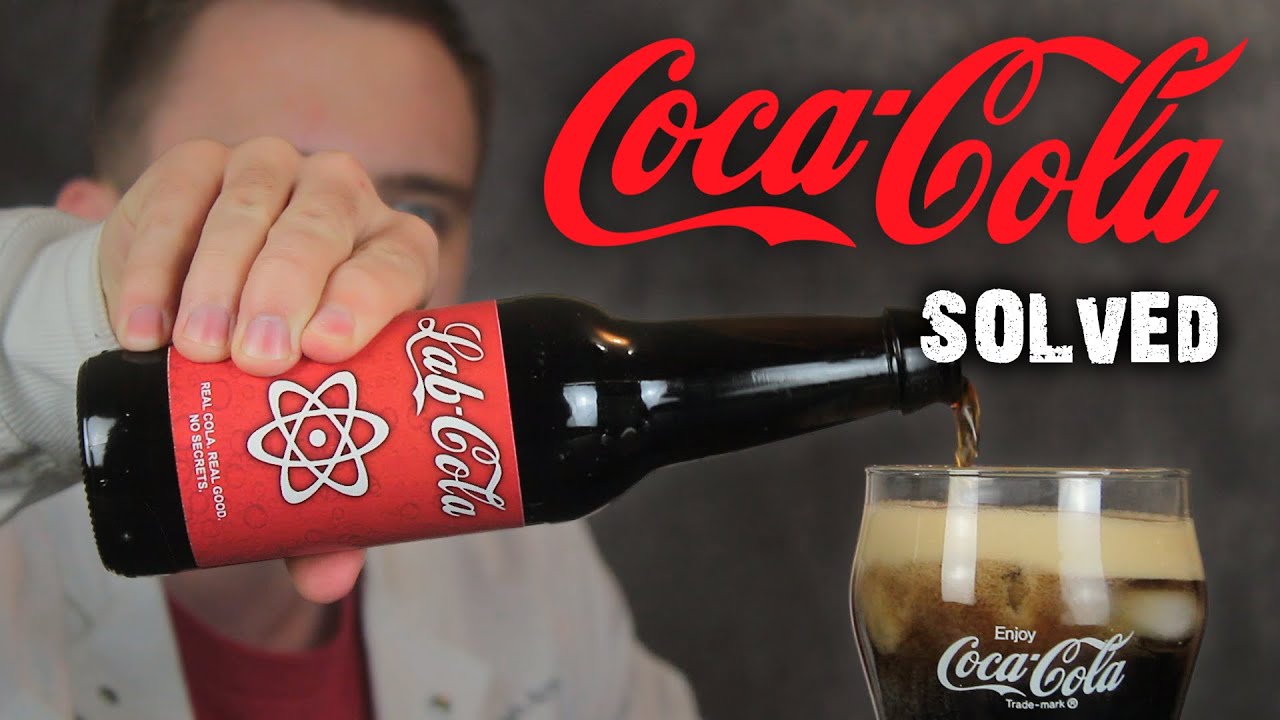
In recent days, a science-focused YouTube creator named LabCoatz shared a video that has blown up online. In it, he explains how he spent over a year analysing and experimenting with different combinations of flavours and ingredients to produce a drink he claims is essentially the same as the real thing. His version has already been viewed millions of times and stirred debate about whether the original formula has finally lost its mystique.
The creator at the centre of this story is known online as LabCoatz, a YouTuber with a background in science experiments and engineering projects. He has built a following by breaking down complicated ideas into fun and accessible videos that mix lab tools with curiosity. For this project, he tackled one of the most famous trade secrets in consumer culture.
LabCoatz spent more than a year working on the Coca-Cola recipe in his own way. He combined tools like mass spectrometry, chromatography, and blind taste tests to analyse what makes the drink taste the way it does. The process involved both scientific measurements and human taste testers to see how close his version could get to the original.
This kind of analytical approach is unusual for a YouTube project, especially one focused on something as beloved and as guarded as Coca-Cola. That helped his video spread quickly as curious viewers tried to judge for themselves whether his version really tastes like the drink they know.
To understand why this claim is so remarkable, it helps to know how Coca-Cola treats its recipe. Unlike some products that protect their formulas with patents, Coca-Cola keeps its recipe as a trade secret. That means it is not publicly available and is only shared with a tiny number of trusted people. The company believes that keeping the recipe out of public view helps protect its brand and its market position.
The formula for Coca-Cola syrup is the basis of the soft drink that is mixed with carbonated water to make the final beverage. The list of ingredients on every bottle or can includes familiar items like sugar, caffeine, phosphoric acid, and caramel colour. But the mystery comes in the small percentage of “natural flavours” that give it its unique profile. Those flavours are the closely guarded part of the Coca-Cola recipe that most people have never seen.
The story of how Coca-Cola has kept the formula secret goes back to the 19th century. Founder John Pemberton created the drink in 1886 and did not publish the full details. Later, business owners placed the only written copy in banks and then moved it to vaults. In modern times, the Coca-Cola Company says only a handful of people know the full recipe at any given time, and those insiders are carefully controlled so they cannot travel together or share what they know. That tradition has kept people guessing for decades.
What makes the recent Coca-Cola recipe claim noteworthy is the scientific effort behind it.
LabCoatz did not simply mix random ingredients and hope for a similar taste. Instead, he relied on methods like mass spectrometry to identify the chemical composition of the drink. Mass spectrometry is a technique used to measure molecules and see what is present in a sample. It allowed him to identify many of the major and minor components that make up the flavour and texture of the drink.
Beyond mass spectrometry, he used chromatography and repeated blind taste tests to refine his mixture. Blind taste tests are tests in which taste testers do not know which sample they are trying. These tests helped him see whether people could tell the difference between his version and the original drink. According to his report, some testers could not reliably tell them apart and, in some cases, even preferred his version.
The scientific tools and methods placed this project at a level far beyond simple kitchen experiments. They combined analytical chemistry with taste experience to try to make a version that matched the Coca-Cola recipe closely enough to stand beside it in a blind comparison. That is a major reason why his claim has sparked interest and discussion across social media and news sites.
LabCoatz shared the recipe details in his video and explained what his version includes. The base of the drink is similar to the original product, with carbonated water, sugar, caffeine, phosphoric acid, and caramel colour for the familiar colour and sweetness. These are the core ingredients that every consumer sees on the label of Coca-Cola products.
But the more intriguing elements are in what he calls the flavour solutions. One part of his mixture was made by diluting a blend of essential oils to mimic the complex flavour that the real drink has. This included oils like lemon, lime, and orange. Some of these components help give the drink its citrus notes, which are widely associated with cola flavour profiles.
Another part of his flavour solution was made using tea tree oil. This was used as a stand-in for the “decocainized” coca leaf extract that is believed to be part of Coke’s original recipe. Coca-Cola historically used coca leaf extracts that had the cocaine removed as part of its flavour mix. That ingredient is not easy to obtain legally for most people, so his substitution was a creative step in replicating the taste without sourcing restricted items.
LabCoatz also used other components like cassia cinnamon oil, nutmeg oil, and coriander oil to fill out the spice profile of the drink. These are combined and aged to create a concentrated flavour oil blend. To balance this with the rest of the drink, a water-based solution with glycerin, wine tannins, vanilla extract, and acetic acid was added. Together, these elements form a liquid that can be diluted with carbonated water to produce a drink with a flavour profile very close to the original taste.
One of the most interesting parts of this story is how people responded when tasting the drink. The blind taste tests LabCoatz conducted involved people sampling his version and the real Coca-Cola without knowing which was which. According to his video, many testers could not reliably distinguish between them. Some even said they would buy his version if it were sold in stores.
These results do not prove definitively that his recipe is identical to the real Coca-Cola recipe, because the company has never publicly confirmed it. But they do show that he may have captured enough of the key flavour elements to satisfy many familiar with the drink. That is what makes his claim so compelling and why people have been sharing and discussing the video across platforms.
As of now, Coca-Cola has not publicly confirmed or denied the specifics of LabCoatz’s findings. The company’s official stance has long been that its secret formula remains one of its most valuable and closely protected assets. It has been carefully guarded for generations.
The company’s strategy of keeping the recipe secret is part of its brand history and identity. This is one reason why people have been fascinated by the idea of someone outside the company figuring out how to make something that tastes so similar. Even if his formula is not the same as the real thing, the public reaction shows how curious people are about secrets and about trying to replicate iconic products.
When the video dropped on YouTube, it quickly gained millions of views. Many people were amazed that someone attempted to recreate the Coca-Cola recipe with this level of scientific detail. Some commenters praised the creator for putting so much work into understanding and breaking down what makes the drink taste the way it does.
Others were more sceptical, noting that even if his drink is close in flavour, that does not necessarily mean it is literally the same recipe Coca-Cola uses. True believers in the original recipe argue that small differences could be significant and that, without the company confirming it, it is still speculation. That debate has made the story even more engaging online.
The reaction to this Coca-Cola recipe claim highlights how science and curiosity can come together in interesting ways. People are genuinely intrigued when creators use real scientific tools to explore things that have been hidden from public view. Whether this means more DIY food science projects will emerge remains to be seen, but it shows a growing interest in understanding how beloved products are made.
Some observers hope that this might encourage others to take complex questions and break them down with both analytical methods and real-world testing. Others point out that without official confirmation from brands, these kinds of experiments remain educated recreations rather than definitive reveals.
For now, the story of the Coca-Cola recipe and whether it has been truly cracked continues to spark conversation. LabCoatz’s video and analysis have certainly brought attention to how close a replica can come using modern tools and careful experimentation. Whether or not this means the Coca-Cola recipe is no longer a secret, the project has given millions something to talk about.
Some people may be inspired to try similar experiments, while others will view this as an entertaining deep dive into food chemistry. And for fans of the drink, it is another chapter in the long and fascinating history of one of the world’s most recognizable beverages.
If Coca-Cola ever responds publicly to this claim, that may add another layer to the story. For now, many people will continue to enjoy both the real drink and the discussion about how closely a recreated version can match the original taste.


