
Study Says AI Data Centers May Be Creating Alarming Heat Islands

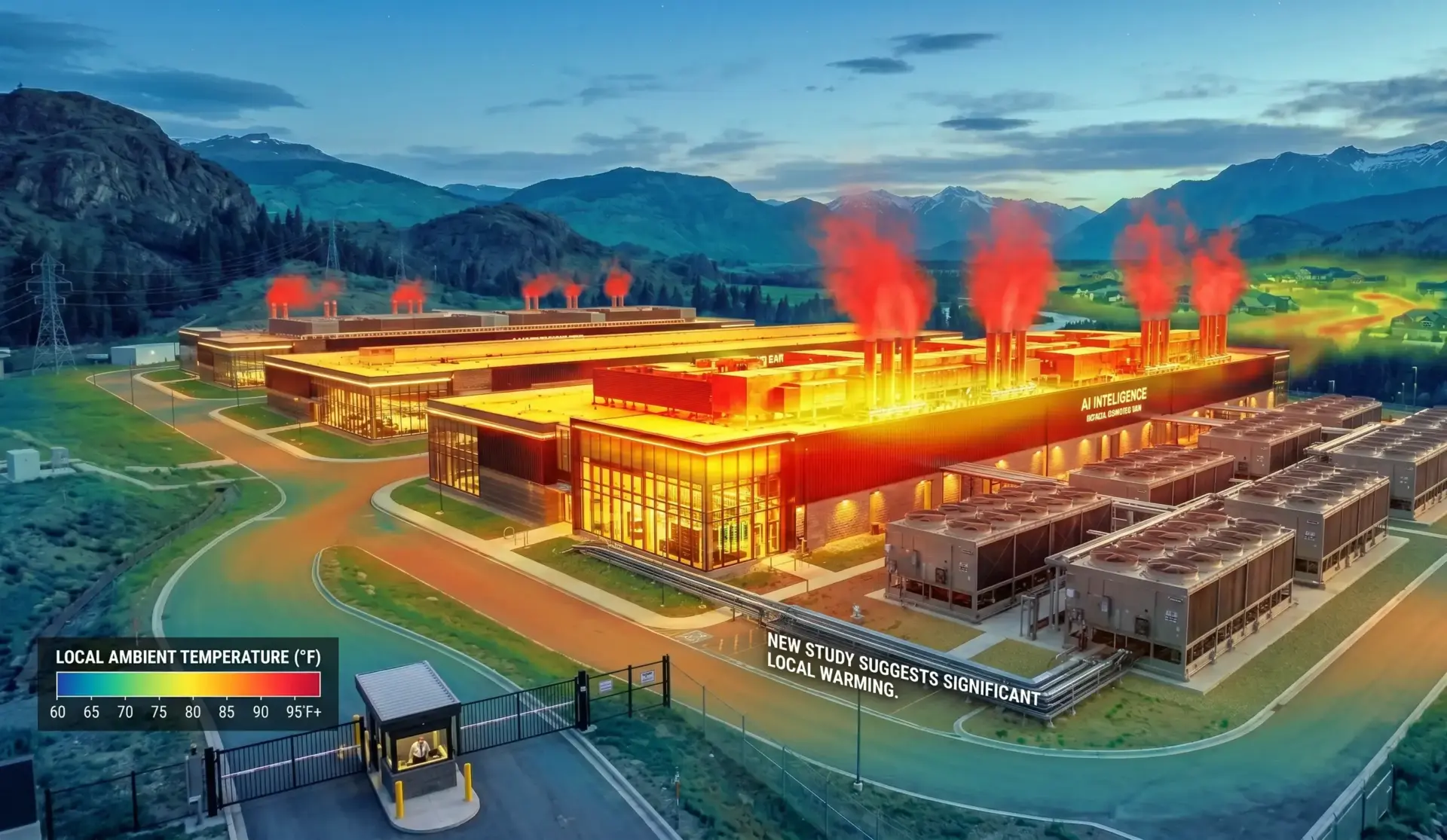
Scientists are beginning to question whether the massive data centers powering artificial intelligence could be warming nearby communities far more than expected.
AI tools have exploded in popularity over the past few years. From chatbots to image generators and smart assistants, companies are racing to integrate artificial intelligence into almost everything people use online.
But behind the scenes, all of that technology depends on enormous data centers packed with servers running nonstop.
These AI data centers consume huge amounts of electricity, and they also generate a surprising amount of heat.
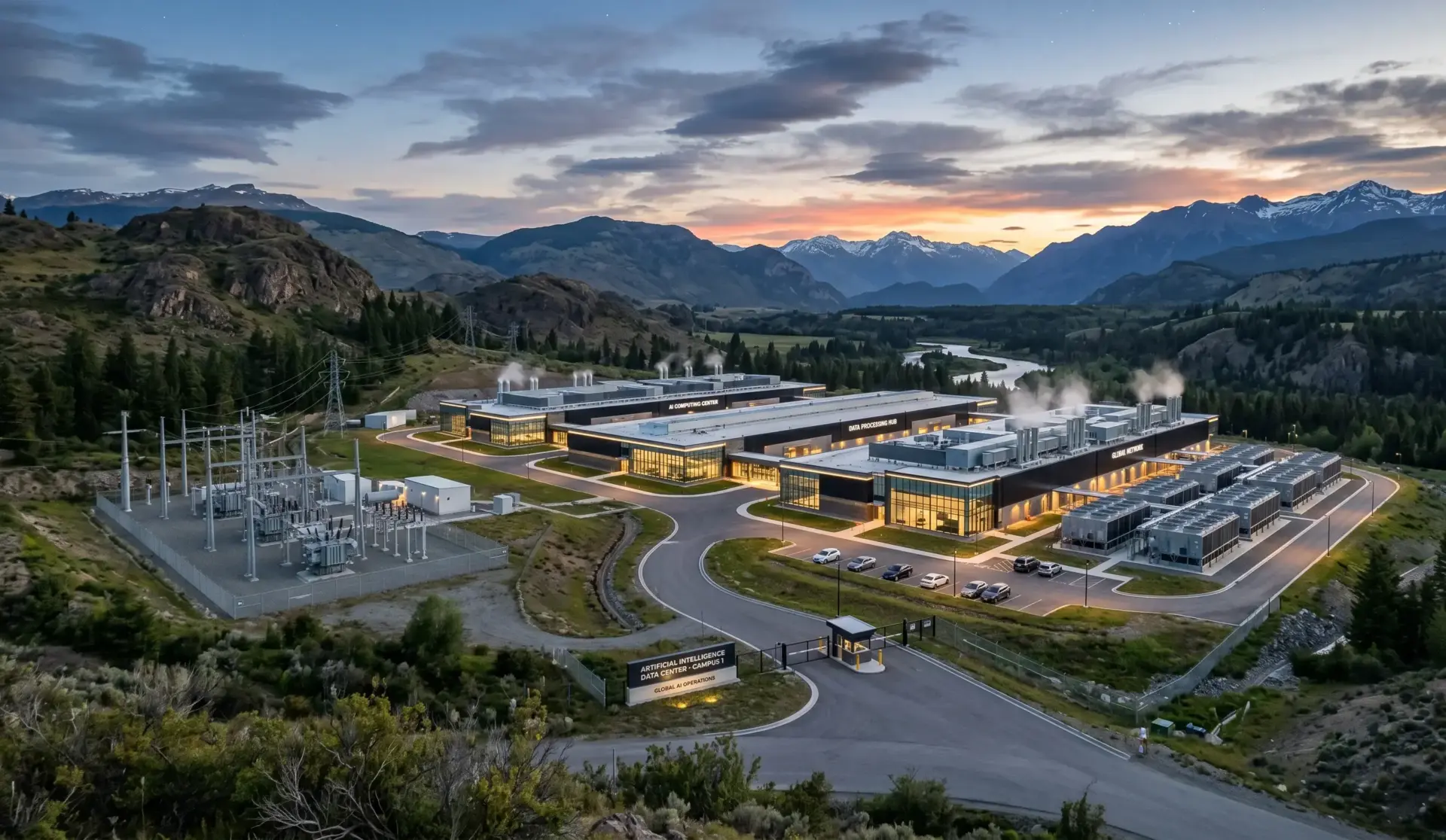
Now, a new study suggests the impact may be affecting local temperatures in ways researchers are only starting to understand.
According to scientists from the University of Cambridge, some AI related data centers may be contributing to “heat islands” that push temperatures significantly higher in surrounding areas.
In the most extreme cases studied, local temperatures reportedly increased by as much as 16 degrees Fahrenheit.
The findings are drawing attention because AI infrastructure is growing at an incredible pace worldwide. More demand for artificial intelligence means more computing power, more servers, and ultimately more heat being released into the environment.
Researchers say the issue could potentially affect hundreds of millions of people globally, especially as new data centers continue appearing near residential and industrial regions.
Andrea Marinoni, an associate professor involved in the research, told CNN that experts still have major gaps in their understanding of how these facilities affect the environment long term.
That uncertainty is part of what makes the findings concerning. Scientists believe AI usage will continue rising rapidly over the next decade, which means the number of data centers is likely to increase too.
To investigate the issue, the Cambridge team studied temperature patterns over a 20 year period in areas where AI focused data centers had been built more recently.
The researchers specifically examined around 6,000 facilities located outside dense urban centers. They chose those locations carefully because cities already produce excess heat from traffic, factories, buildings, and other infrastructure.
By focusing on less crowded areas, they hoped to isolate the impact linked more directly to the data centers themselves.
The team also tried to eliminate other variables that might distort the results. Seasonal changes and broader global warming trends were factored into the analysis so researchers could better identify the temperature shifts connected to the facilities.
On average, they found local surface temperatures increased by about 3.6 degrees Fahrenheit after the data centers opened.
Some areas showed much larger spikes.
In the most severe examples, researchers recorded increases reaching 16.4 degrees Fahrenheit, a figure that immediately sparked debate among experts.
Not everyone is fully convinced yet.
Deborah Andrews, emeritus professor of design for sustainability at London South Bank University, said the findings are important but should still be approached carefully.
Since this is one of the first studies examining the issue at this scale, she noted that more validation and follow up research will be necessary before drawing firm conclusions.
Still, Andrews warned that the rapid expansion of AI may be happening faster than sustainable systems can realistically keep up with.
She described the current situation as a kind of “rush for AI gold,” suggesting companies may be prioritizing growth and competition over long term environmental planning.
Other experts have also raised questions about the highest temperature estimates reported in the study.
Ralph Hintemann, another researcher familiar with the topic, called the extreme numbers “interesting,” but also unusually high. He suggested additional studies will be needed to confirm whether similar results appear elsewhere.
Even so, the broader concern around AI’s environmental footprint is becoming harder to ignore.
To many people, artificial intelligence feels invisible because it exists mostly through apps, websites, and software tools. But the physical systems powering those services are enormous.
Data centers occupy huge buildings filled with equipment that must stay cool constantly to avoid overheating.
That cooling process itself requires energy, creating a cycle where more computing leads to more electricity use and more heat output.
Researchers involved in the study also discussed possible ways to reduce the environmental impact.
One proposed solution involves carbon aware software systems. In theory, these programs could shift computing tasks toward cleaner energy sources or schedule energy intensive processes during periods when electricity demand is lower.
It would not eliminate the problem entirely, but researchers believe smarter energy management could help reduce waste.
There is also growing pressure on technology companies to rethink where data centers are built. Some experts believe cooler climates may become more attractive because they naturally reduce cooling demands. Others argue future facilities should rely more heavily on renewable energy instead of traditional power grids.
The conversation arrives during an already tense global debate around climate policy and environmental responsibility.
In the United States especially, climate issues remain politically divisive. Different administrations have taken sharply different approaches toward environmental regulations, renewable energy investment, and emissions targets.
Against that backdrop, the rapid expansion of AI infrastructure is becoming another topic scientists and policymakers are being forced to confront.
For nearby communities, the concerns are more immediate.
Residents living close to large industrial facilities have long dealt with issues like noise, increased traffic, and pollution. Now, some researchers believe excess heat may need to be added to that list.
While scientists still disagree on the scale of the problem, the study highlights how quickly AI infrastructure is reshaping the physical world around it.
What makes the issue especially complicated is that AI itself is not slowing down. Businesses continue investing billions into artificial intelligence, and consumers are using AI powered tools more every day. That creates enormous pressure to build faster, larger, and more powerful data centers.
At the same time, researchers say society is only beginning to understand the environmental trade offs tied to that growth.
For now, the study does not provide all the answers. But it does raise important questions about the hidden cost of the AI boom.