
Does Penis Size Really Matter? Study Reveals the Shocking Truth

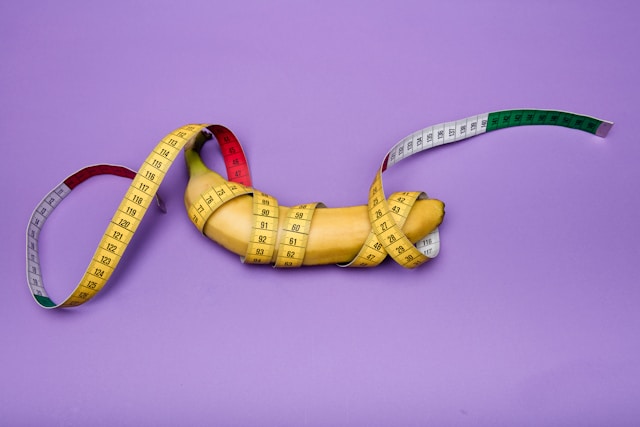
Penis size is a topic that has sparked curiosity, insecurity, and endless debate for years. Many people quietly wonder how much it actually influences attraction, confidence, and satisfaction in relationships. While society often exaggerates its importance, research offers a clearer and more grounded perspective on what truly matters.
For a long time, penis size has been treated as a defining factor of masculinity.
Movies, jokes, and cultural conversations have reinforced the idea that bigger automatically means better. This belief has shaped how many men see themselves and how they think they are perceived by others. However, when researchers began studying real preferences and behaviors, the results revealed a more nuanced reality.
One key study explored how women perceive penis size in different contexts. Instead of relying on assumptions, researchers used realistic 3D models to better understand preferences. This approach allowed participants to make choices in a controlled and visual way, removing guesswork. The findings showed that while penis size does play a role, it is not as dominant as many believe.
The study revealed that women tend to prefer slightly larger than average sizes, but only within a moderate range. Extreme sizes were not favored. This challenges the common narrative that bigger is always better. In reality, balance and proportion were more important factors in attraction. This suggests that penis size matters to some extent, but only within reasonable limits.
Another interesting detail from the research was the difference between short-term and long-term preferences. For short-term encounters, women showed a slightly stronger preference for larger penis size. This may be linked to physical attraction or curiosity. However, when it came to long-term relationships, the importance of penis size decreased significantly. Emotional connection, trust, and compatibility became far more important.
This shift highlights something essential. While physical traits can attract attention initially, they rarely sustain a relationship over time. Penis size may contribute to first impressions, but it does not define long-term satisfaction or emotional bonding. People tend to prioritize qualities that support stability and connection.
Researchers also found that overall body proportions influenced perception. Penis size was evaluated in relation to height, shoulder width, and other physical features. This means that it was not judged in isolation. A person’s overall appearance played a role in how attractive they were perceived to be. Again, this points to the idea that context matters more than a single physical trait.
Confidence also plays a critical role. Many individuals assume that penis size alone determines desirability, but confidence can significantly influence how someone is perceived. A confident person often appears more attractive regardless of specific physical characteristics. This psychological factor can outweigh physical measurements in real-life interactions.
The conversation around penis size often ignores emotional and relational aspects of intimacy. Satisfaction is not based on size alone. Communication, understanding, and emotional connection contribute heavily to positive experiences. People who focus only on physical attributes may overlook these more impactful elements.
Another important takeaway from the study is that preferences vary widely. Not all individuals prioritize penis size in the same way. Some may consider it important, while others barely think about it. This diversity in preferences means there is no universal standard that defines attractiveness or satisfaction.
Cultural influences also shape perceptions. In many societies, penis size is exaggerated as a symbol of power or dominance. These narratives can create unrealistic expectations and unnecessary pressure. However, scientific research tends to present a more balanced and realistic view, reducing the impact of cultural myths.
It is also worth noting that anxiety around penis size can affect confidence and performance. When individuals become overly concerned, it can lead to stress and self-doubt. This, in turn, may impact relationships more than size itself. Addressing these psychological factors can improve overall well-being and satisfaction.
The study’s findings suggest that penis size is only one piece of a much larger puzzle. Attraction and satisfaction involve a combination of physical, emotional, and psychological elements. Focusing on one aspect alone does not provide an accurate picture of what people truly value.
Another layer to consider is communication between partners. Open and honest discussions can lead to better understanding and improved experiences. When partners feel comfortable expressing their needs and preferences, physical attributes become less central to the overall experience.
Media representation has played a major role in shaping expectations. Unrealistic portrayals can distort perceptions and create unnecessary comparisons. Many people measure themselves against exaggerated standards that do not reflect reality. This can lead to dissatisfaction even when there is no real issue.
The research also emphasizes that average sizes are generally preferred over extremes. This reinforces the idea that moderation is key. Extreme differences may not align with comfort or preference, especially in long-term relationships. Again, this contradicts the belief that bigger always equals better.
Emotional intimacy continues to stand out as a dominant factor in satisfaction. People who feel connected to their partners tend to report higher levels of fulfillment. This connection cannot be replaced by physical traits alone. It is built through shared experiences, trust, and mutual understanding.

Another important point is that attraction is multidimensional. Physical appearance, personality, humor, and behavior all contribute to how someone is perceived. Penis size is just one small component within a much broader framework. Reducing attraction to a single factor oversimplifies human relationships.
The study also highlights that preferences can change over time. What someone values in a partner may evolve based on experiences and priorities. This further reduces the long-term importance of physical traits like penis size. Emotional compatibility tends to become more significant as relationships develop.
In addition, satisfaction is often linked to effort and attentiveness. People who are attentive to their partner’s needs and responsive to feedback tend to create better experiences. This has little to do with physical measurements and more to do with behavior and communication.
It is clear from the findings that penis size has some influence, but it is far from being the most important factor. The emphasis placed on it by society does not align with what research shows. Real-life preferences are more balanced and less extreme.
Understanding this can help reduce unnecessary pressure and insecurity. When individuals recognize that they are not defined by a single trait, they can focus on developing qualities that truly matter. Confidence, communication, and emotional intelligence become more valuable.
The study ultimately provides a more realistic perspective. Penis size matters to a certain degree, but it is not the defining factor in attraction or satisfaction. People value connection, compatibility, and overall presence much more than a specific measurement.
Penis size continues to be a topic of curiosity and concern, but research offers reassurance. While it may play a minor role in initial attraction, it does not determine long-term success in relationships. A balanced combination of physical, emotional, and psychological factors creates the foundation for meaningful and satisfying connections.