EBU Urged to Avoid Camera Angles That Can Sexualize Female Athletes

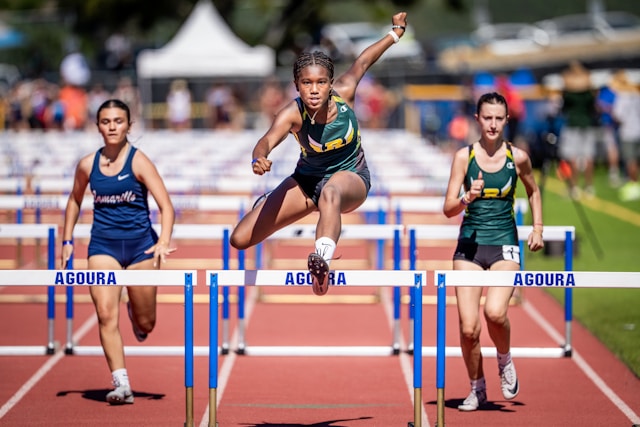
Television viewers have become used to seeing every moment of a competition of female athletes from multiple angles.
But according to European sports officials, not every camera shot tells the story of the sport. Some can unintentionally shift attention away from athletic performance and toward an athlete’s body instead.
That concern has prompted the European Broadcasting Union (EBU) and European Athletics to release a new set of recommendations aimed at the television industry.
The document, titled “Raising the Bar: Guidelines for Respectful Media Coverage in Women’s Athletics,” encourages production crews to think more carefully about how women’s events are filmed, replayed, and presented to audiences around the world.
Rather than introducing strict rules or banning specific shots, the guidance asks directors, camera operators, and replay teams to make editorial decisions that prioritize the competition itself.
The recommendations come after years of discussion about how female athletes are portrayed on television. While cameras are meant to capture the drama of competition, certain angles have repeatedly drawn criticism for focusing on athletes in vulnerable or revealing positions that have little to do with the sporting action.
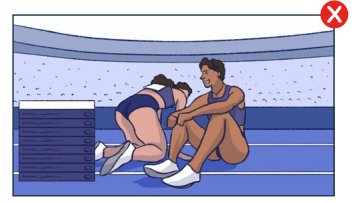
The report includes 13 illustrated examples comparing camera positions that are encouraged with those that should generally be avoided.
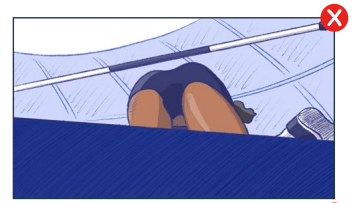
Among the examples highlighted are extremely low camera positions beneath high jumpers, tight shots taken from directly behind athletes, prolonged close-ups of awkward landing positions, and footage showing competitors while bending over or adjusting equipment between attempts.
According to the report, these moments rarely provide viewers with useful information about the event itself. Instead, they can unintentionally create images that become the focus of attention long after the competition has ended.
Despite headlines suggesting broadcasters have been handed a list of prohibited camera angles, the EBU stresses that this is not the case.
The organization says the document is intended as practical guidance rather than a set of broadcasting rules. Cameras are not being removed, nor are directors being told to avoid showing athletes’ bodies altogether.
Instead, broadcasters are encouraged to ask a simple question before choosing a shot.
Does this angle help viewers understand the performance of the athletes?
If the answer is yes, the shot serves a purpose. If the answer is no, and the camera mainly highlights part of an athlete’s body without adding context, producers are encouraged to switch to another available angle.
That philosophy, the report argues, allows sporting coverage to remain just as dynamic while placing the athlete’s skill back at the center of the broadcast.
Modern athletics broadcasts use dozens of cameras positioned around a stadium.
Because so many viewpoints are available, directors can usually choose between multiple angles showing exactly the same moment. A wider side view, a front-facing camera, or a shot following an athlete’s approach can often explain the event more effectively than an extreme close-up.
For example, when covering the high jump, a side-on camera allows viewers to follow the athlete’s run-up, takeoff, body position over the bar, and landing in one continuous sequence.
By comparison, a camera positioned directly underneath the athlete offers little technical insight while creating a perspective many viewers would consider intrusive.
The report argues that choosing the side view benefits both the audience and the athlete.
Live footage is only part of the discussion.
The EBU also points to editing decisions made after the action has happened. A shot lasting less than a second during live competition can take on a very different meaning when replayed several times in slow motion.
According to the report, excessive slow-motion replays of revealing positions often add very little educational or technical value.
Instead, they can isolate a single frame that was never meant to be the focus of the event.
“The sexualization of women athletes through selective camera angles and editing choices continues to be a significant concern across many sports broadcasts,” said Glen Killane, Executive Director for EBU Sport.
Killane said the purpose of sports broadcasting should always be to explain athletic performance. Camera choices should help audiences understand speed, power, technique, timing, and execution, rather than drawing attention to moments that could easily be taken out of context.
One of the examples included in the report does not involve an athlete competing at all.
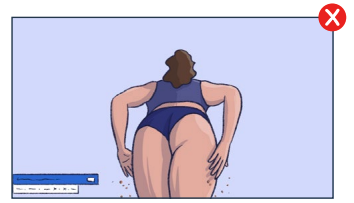
Instead, it shows a competitor bending forward near another athlete while recovering between attempts.
Nothing unusual is happening. Athletes often stretch, catch their breath, speak with teammates, or adjust clothing and equipment during breaks.
The concern is not the movement itself.
It is the decision to frame the moment with a tight camera positioned behind the athlete, making her body the primary subject of the image.
The report suggests that simply stepping back with a wider lens or moving the camera slightly to one side would still show the interaction between competitors without creating a compromising image.
It is a small adjustment, but one that illustrates the broader philosophy behind the guidance.
Several of the examples focus specifically on the high jump.
One discouraged angle places the camera directly beneath the bar as athletes pass overhead.
While visually dramatic, the report argues that the perspective contributes very little to viewers’ understanding of the jump itself.
From underneath, audiences cannot properly judge the athlete’s approach, timing, or body mechanics.
Instead, the shot primarily captures a revealing upward view.
The issue becomes even more significant when broadcasters replay that footage repeatedly in slow motion after the jump has finished.
What lasted only a split second during live competition can quickly become a still image shared across social media, often stripped entirely of its sporting context.
The report says broadcasters can avoid that outcome without sacrificing production quality.
A side view captures the full sequence of the jump while giving commentators far more useful material to analyze.
Another illustration shows an athlete from directly behind using an extremely low camera position.
The athlete’s lower body fills most of the frame while the actual competition almost disappears.
The report notes that athletes constantly move during events. They stretch, crouch, bend over, tie shoelaces, adjust clothing, or prepare mentally before competing.
Camera operators cannot predict every movement.
What they can control is how long they remain on a shot that no longer contributes to the broadcast.
Switching to another camera or widening the frame allows viewers to continue following the competition without unnecessarily focusing on a private or awkward moment.
The recommendations make it clear that full-body footage is not the issue.
Rather, it is the decision to linger on a tight rear angle when better storytelling options are readily available.
Another example highlighted in the guidance focuses on athletes landing after a jump.
In events such as the high jump and pole vault, competitors naturally land on their backs before lifting their legs into the air. It is simply part of the technique. However, the report says problems arise when broadcasters zoom tightly into that moment or repeatedly replay it after viewers have already seen whether the attempt was successful.
A wider camera angle can still capture everything that matters, including the landing mat, the crossbar, and the athlete’s movement, without isolating a split second that may appear more revealing than it actually was during live competition.
According to the guidance, the concern is not the landing itself. It is the editorial decision to freeze or repeatedly show the most awkward frame when it offers no additional explanation of the performance.
“This is not a list of restrictions,” the report states. “Across high jump, pole vault, horizontal jumps and running events, the report demonstrates how the most compromising shots can be avoided with no loss of storytelling or visual quality.”
As news of the recommendations spread online, reactions were mixed.
Some users argued that broadcasters cannot realistically avoid every uncomfortable frame in sports where athletes sprint, jump, bend, stretch, and wear fitted competition uniforms.
“So no more sports, just headshots of females probably playing sports,” one user wrote on X.
Another questioned whether the discussion should focus on uniforms instead, commenting: “Why not give female athletes proper shorts instead?”
Others echoed similar opinions, suggesting different clothing would solve the issue.
However, the EBU’s recommendations place responsibility on broadcast decisions rather than on what athletes wear.
Track and field uniforms are designed to allow unrestricted movement and maximize performance. Regardless of whether an athlete wears briefs, fitted shorts, or longer clothing, an intrusive camera angle can still produce an image that draws attention away from the competition.
The report argues that thoughtful camera placement is a more effective solution than expecting athletes to change what they wear.
One Reddit user even joked, “Going to be tough for them to show beach volleyball at Olympics at all.”
The guidance does not suggest replacing action shots with constant close-ups of athletes’ faces.
Instead, it provides several examples of camera positions that showcase both the athlete and the sport.
One recommended angle follows a runner from the side, allowing viewers to clearly see stride length, running form, posture, and speed.
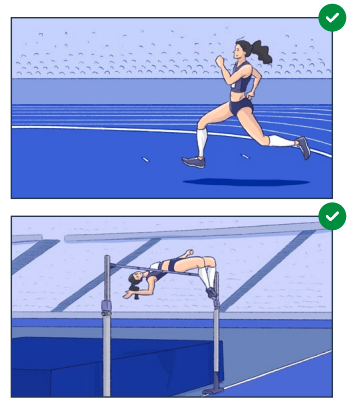
Another shows a high jumper clearing the bar from a side perspective, making it easier to appreciate both the height achieved and the technique used throughout the jump.
The long jump example takes a similar approach.
Using a wide side-on view, the camera captures the athlete’s flight, the landing pit, the sand mark, and the distance markers all within the same frame.
That angle gives audiences the information officials actually use to measure the jump while avoiding an unnecessary close-up as the athlete begins to get back to her feet.
If broadcasters want to capture an athlete’s emotional reaction afterward, they can simply cut to a facial close-up once the attempt has finished.
Athletes Say the Change Is Long Overdue
Among those supporting the recommendations is Team GB pole vaulter Holly Bradshaw, who says athletes have experienced the consequences of questionable broadcast choices for years.
Bradshaw noted that some television coverage relies on zoomed-in slow-motion replays showing competitors in undignified positions rather than highlighting the technical skill required in their events.
For her, the issue extends well beyond the live audience.
Once a replay appears on television, it can easily be copied, cropped, and shared across social media with no reference to the competition itself.
“I first-hand have received social media abuse and witnessed inappropriate videos online of myself and colleagues when slow-motion content of us competing is captured,” Bradshaw said.
She believes broadcasters have plenty of opportunities to educate viewers instead.
In pole vault, for example, the final approach, stride rhythm, pole plant, and takeoff explain far more about a successful jump than the landing ever could.
By focusing cameras on those stages, broadcasters can provide richer analysis while naturally avoiding angles that may later be taken out of context.
Serbian long jumper Ivana Španović also welcomed the guidance.
She warned that lingering or intrusive camera shots can affect athletes long after the competition has ended, particularly when clips are reposted online or turned into sexual content without consent.
According to Španović, those experiences can have lasting effects on an athlete’s confidence and mental well-being, adding another layer of pressure to already demanding competitions.
Ultimately, the EBU says the recommendations are not about censoring sport or hiding athletes from view.
They are about making sure broadcasts celebrate athletic achievement rather than unintentionally creating moments that overshadow it.
With modern productions already using dozens of cameras around a stadium, broadcasters have more than enough options to capture speed, strength, technique, and emotion without relying on angles that place athletes in compromising positions.
For supporters of the guidance, that simple shift in perspective keeps the focus where it has always belonged: on the performance, not the screenshot.