Lab-Grown Teeth Breakthrough Offers Hope for Patients

Lab-grown teeth have been getting attention lately, and not in a quiet way. It keeps coming up. Articles, discussions, even casual conversations.
At first, it sounds like one of those ideas that belongs somewhere in the future. But the more you look into it, the less distant it feels.
For a long time, the options were pretty straightforward. Lose a tooth, replace it with something artificial. Implants, dentures, bridges. They help, no doubt.
But they are still replacements. You can usually tell the difference, even if everything is done perfectly.
That difference is what researchers are trying to close.
The whole idea behind lab-grown teeth is actually simple when you strip it down.
Instead of putting something into the mouth, they want the body to grow it. A real tooth. One that comes from living cells, not manufactured materials. It sounds ambitious, maybe even a bit unrealistic at first, but the research says otherwise.
And honestly, it makes sense why people care about this.
Losing a tooth is not just about how it looks in photos. It changes small, everyday things. Eating feels slightly off. You notice it when you chew. Talking can feel different too, especially at the beginning. And then there is the confidence part. People do not always say it out loud, but it is there.
Current solutions fix the problem on paper. In real life, it is a bit more complicated.
Implants involve surgery. Dentures can move when you least expect it. Even when everything works fine, it still does not feel exactly like your own tooth. That is where lab-grown teeth start to feel interesting, because they are trying to solve that exact gap.
To get there, scientists had to take a step back and really understand how teeth form in the first place. And it turns out, it is not a simple process. Teeth are not just hard surfaces. There is structure inside, layers, nerves, all working together.
Recreating that outside the body has always been the difficult part.
Then stem cells entered the picture.
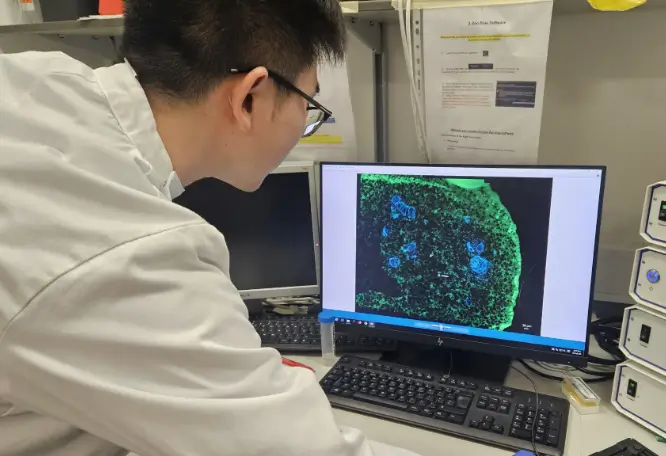
These cells are different because they can become other types of cells. Under the right conditions, they change. Researchers figured out how to guide them toward forming tooth structures. Not perfectly, not instantly, but enough to see something real happening.
And that changed things.
Instead of theory, they had something physical. Early forms that actually resembled the beginning of a tooth. It was not complete, but it was enough to prove the direction made sense.
In some studies, scientists even combined human cells with animal cells to understand the process better. It might sound strange, but it helped them figure out what triggers growth. What they saw was promising. Small structures forming. Roots beginning to develop. Even early enamel in some cases.
Still far from a finished tooth, but definitely not nothing.
The next step is where things get more complicated.
Growing something in a lab is one thing. Getting it to work inside the human body is another. The goal is to place these developing teeth into the jaw so they keep growing there. If that works, lab-grown teeth could connect to nerves and blood supply like natural teeth do.
That is the part that really matters.
Because if they behave like real teeth, not just look like them, then everything changes.
But there are still problems to solve, and some of them are quite practical.
One of the biggest issues is control. Teeth need to fit properly. The size, the shape, even the position. If something is slightly off, it creates new problems instead of fixing one. And since every person is different, lab-grown teeth cannot be one standard model.
They need to be adjusted case by case.
Then there is the time problem. Teeth do not grow quickly. In the body, it takes years. That is not realistic for treatment. So now researchers are trying to speed things up, but without affecting the quality. That balance is not easy.
And of course, safety.
Before lab-grown teeth become something people can actually get, they need to be tested carefully. Cells are unpredictable if not controlled properly. Researchers need to be sure there are no risks, like abnormal growth or rejection. So far, things look stable, but it is still early.
Even with all that, the potential is hard to ignore.
If this works, it could remove the need for artificial replacements completely. No metal. No removable pieces. Just a real tooth forming where it should be.
That alone would be a big shift.
There is also the long-term side of it. Natural teeth respond to pressure, temperature, daily use. Artificial ones do not really adapt. Lab-grown teeth, being living structures, might behave more like natural ones. That could mean fewer complications later on.
For dentists, this changes the way treatment is approached.
Instead of replacing something, the idea becomes restoring it. Helping the body rebuild what it lost. It is a different mindset, and it could reshape how dentistry works over time.
Some patients would benefit more than others. People who cannot get implants, for example. They often have limited options. Lab-grown teeth could give them something new.
Cost is still unclear. Realistically, it will not be cheap in the beginning. New technology rarely is. But over time, as the process improves, things usually become more accessible.
There is also growing curiosity around this.
People are naturally interested in the idea of regrowing parts of the body. Teeth are a practical place to start. They are visible, easier to monitor, and less complex compared to other organs.
There is also a psychological side to it.
Some people are not fully comfortable with artificial materials in their body. Even if they work well, they still feel like replacements. Lab-grown teeth feel different. More natural. That matters more than people think.
Another point that comes up is the environmental side. Traditional dental materials require production and disposal. Lab-grown teeth rely more on biological processes. It is still too early to measure the impact, but it could move things in a better direction.
Right now, this is not something you can ask your dentist for.
Most of the work is still happening in labs and universities. But progress has been steady. That usually means something is moving in the right direction.
Some experts believe early human testing could happen within the next decade. Small trials at first. Carefully monitored. If those go well, things could expand from there.
Moving forward, collaboration will be important. This is not just dentistry. It involves biology, medicine, and research working together.
Patients will also need clear explanations. This is very different from traditional treatments. Understanding it will help people feel more comfortable when the option becomes available.
If you step back and look at the bigger picture, lab-grown teeth are part of a larger shift. Medicine is slowly moving toward regeneration instead of replacement.
For now, it is still developing. There are promising results, but also unanswered questions.
Still, it changes how we think about tooth loss.
What used to feel permanent might not stay that way.