

Marcos Alberti created a fascinating photo series that captures how people change after drinking wine. His project follows real individuals as they go from sober to having one, two, and then three glasses, showing clear differences in mood, expression, and behavior. The result is a visual story that feels both relatable and revealing, highlighting how alcohol can influence people in a social setting.
Marcos Alberti based his idea on a well-known saying about wine. The quote suggests that the first glass is about food, the second is about love, and the third leads to chaos. This idea sparked his curiosity, and he wanted to test whether this progression could actually be seen in real life.
Instead of relying on opinions or assumptions, Marcos Alberti chose to document it through photography.
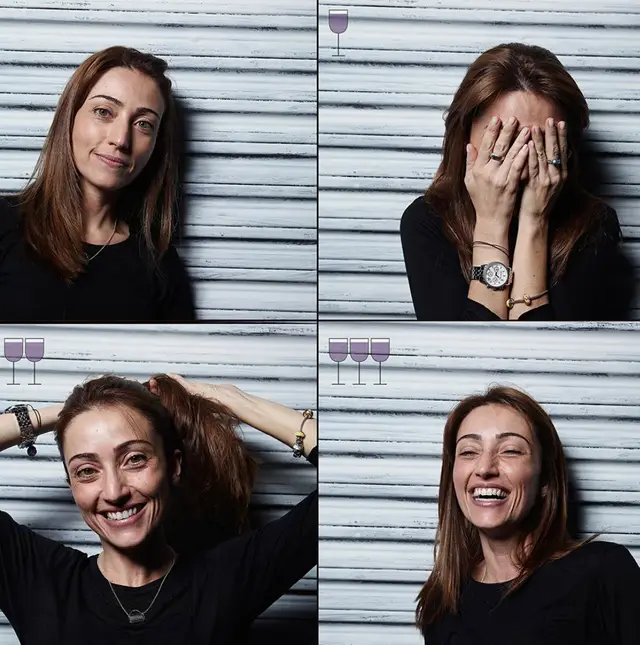
He wanted to observe real reactions and capture them simply and honestly. His goal was not to exaggerate but to show authentic changes as they naturally happened.
To bring this idea to life, Marcos Alberti invited several of his friends to participate. He started by photographing them as soon as they arrived at his studio. Many of them came directly from work and had just dealt with heavy traffic, so they often looked tired, stressed, or slightly drained.
This first image was important because it showed their natural state before any alcohol was involved. Marcos Alberti made sure not to give them time to relax or adjust to the environment. He wanted to capture genuine expressions without any influence.
After that, each participant was given a glass of wine. Marcos Alberti then took another photo. Even after just one glass, subtle differences started to appear. People looked more relaxed, their expressions softened, and some began to smile.
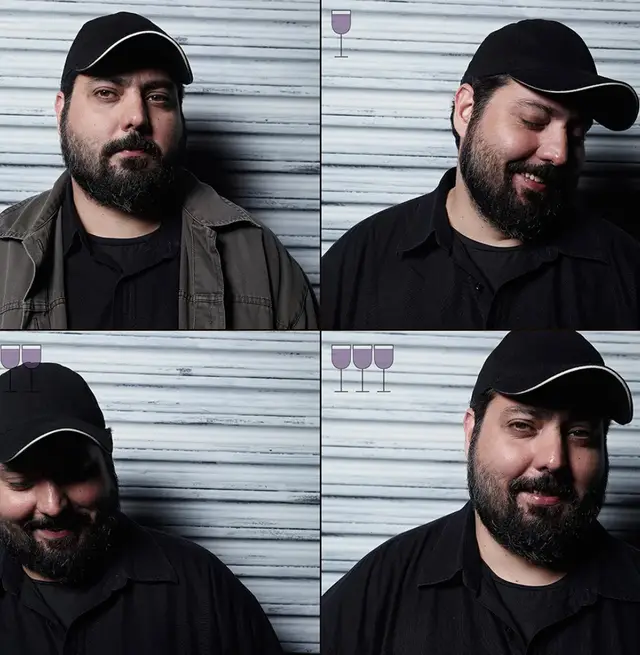
Marcos Alberti continued the process by photographing his subjects after each additional glass of wine. The second glass often brought noticeable changes. People seemed more open and comfortable, and their body language became less rigid.
By the third glass, the transformation was clear. Many participants were laughing, smiling widely, or making playful expressions. Some closed their eyes, others winked, and a few pulled funny faces. The sense of restraint that appeared in the first image was no longer present.
Marcos Alberti kept the setup very simple for every shot. Each photo featured just a face against a plain wall. There were no distractions, no complex lighting changes, and no dramatic staging. This consistency made it easier to focus on the emotional and behavioral shifts.
According to Marcos Alberti, the project began as something lighthearted. It was initially just a fun idea among friends. However, as he continued working on it, the results became more interesting and meaningful.
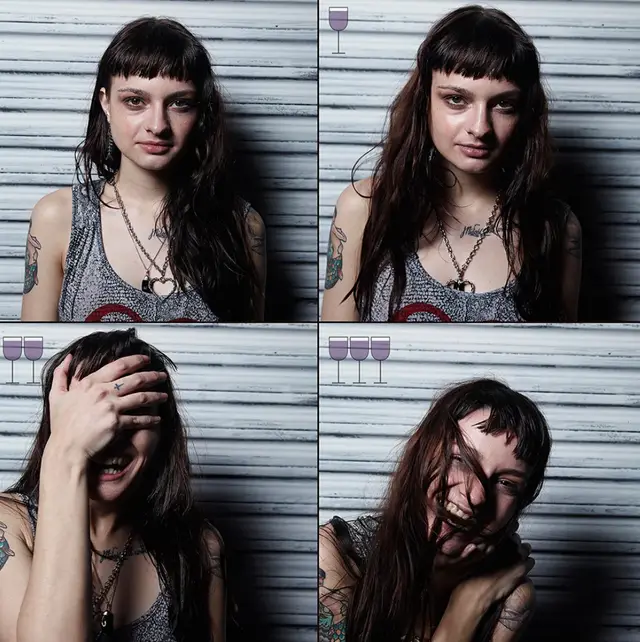
What started as a joke quickly turned into a successful photo series. People connected with the images because they recognized the behavior being shown. The progression from serious to relaxed to playful felt familiar to many viewers.
Marcos Alberti titled the series “The Wine Project.” He completed it over the course of six nights, carefully documenting each participant’s experience.
Marcos Alberti also had a clear intention behind the project. He noticed that when people search for alcohol online, most of the content focuses on negative effects. He wanted to present a different perspective.
Through his work, Marcos Alberti chose to highlight the positive side of drinking in a controlled and friendly environment. The project shows people enjoying themselves responsibly, sharing moments, and connecting with others.
He described the images as similar to portraits taken during a happy hour. The focus was on friendship, laughter, and genuine interaction rather than excess.
One interesting detail about Marcos Alberti’s approach was how he selected participants. He invited people from different social circles, meaning many of them had never met before.
At the beginning, this created a slightly awkward atmosphere. People were reserved and unsure of each other. This is clearly visible in the first set of photos, where expressions are more serious and controlled.
As the evening progressed and the wine was shared, the dynamic changed. Conversations started, laughter followed, and connections formed. By the end of the session, many participants had become friends.
Marcos Alberti observed this transformation closely. He found it fascinating to see how people interacted before and after drinking wine. The shift was not only visible in their faces but also in their behavior toward one another.
The strength of Marcos Alberti’s project lies in its simplicity. By keeping every element consistent, he allowed the viewer to focus entirely on the subject.
In the first images, most participants appear composed. Some look serious, others slightly uncomfortable. Their posture is controlled, and their expressions are neutral.
After one glass, the change is subtle but noticeable. Faces begin to relax, and small smiles appear. There is a sense of ease that was not present before.
With the second glass, the shift becomes more obvious. People seem more engaged and expressive. Their eyes show more emotion, and their faces reflect a growing sense of enjoyment.
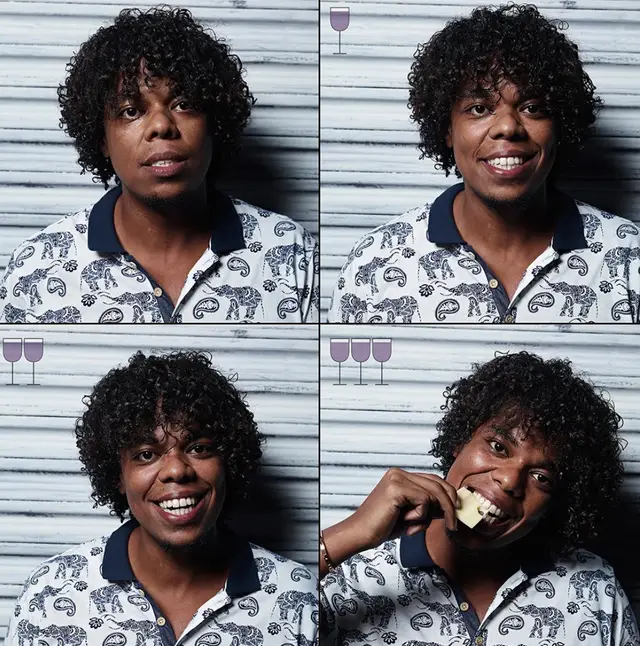
By the third glass, the transformation is complete. Participants are visibly happier, more playful, and less self-conscious. The photos capture genuine moments of joy and spontaneity.
While Marcos Alberti focused on visual storytelling, there is also a scientific explanation behind these changes. When alcohol is consumed, it enters the bloodstream and travels through the body.
It reaches major organs such as the heart, brain, kidneys, and liver. The liver is responsible for breaking down alcohol, and it typically takes about an hour to process one unit. However, this can vary depending on factors like age, weight, and whether food has been eaten.
Alcohol begins to affect the brain quickly. It can reach the brain within five minutes and start influencing behavior within ten minutes. This explains why even the first glass can lead to noticeable changes.
As more alcohol is consumed, its effects become stronger. Blood vessels widen, which can cause physical reactions like blushing and a feeling of warmth. However, this also leads to heat loss and a drop in body temperature.
With higher levels of alcohol in the system, coordination starts to decline. Speech may become less clear, and vision can become blurred. These effects are not always visible in early stages but become more noticeable over time.
If someone drinks on an empty stomach, alcohol enters the bloodstream more quickly. Eating beforehand slows this process, which can reduce the intensity of the effects.
Marcos Alberti’s work stands out because it captures something very familiar. Many people recognize the progression shown in the images, even if they have never seen it documented so clearly.
The project does not rely on exaggeration or staged reactions. Instead, it presents real moments that unfold naturally. This honesty is what makes the series engaging and easy to connect with.
By focusing on simple portraits, Marcos Alberti created a powerful visual narrative. Each set of images tells a small story, and together they form a broader picture of how alcohol can influence behavior.
There is a reason why Marcos Alberti’s series gained attention. It combines humor, honesty, and a clear concept. Viewers can see themselves or people they know in these images.
The progression from stress to relaxation to joy is something many have experienced. Marcos Alberti managed to capture this journey in a way that feels authentic and easy to understand.
The project also highlights the social aspect of drinking. It shows how shared experiences can bring people together and break down barriers.
Marcos Alberti successfully turned a simple idea into a compelling visual story. By documenting people before and after drinking wine, he revealed how quickly behavior and expression can change.
The project remains consistent in its approach, focusing on real people and real reactions. It avoids unnecessary complexity and instead relies on clarity and authenticity.
Through “The Wine Project,” Marcos Alberti offers a unique perspective on social drinking. His work captures moments of transformation that feel genuine, relatable, and engaging, making the series memorable for anyone who views it.


