
Teacher McKenna Kindred’s Explicit Text Scandal with Her Student Revealed in Court

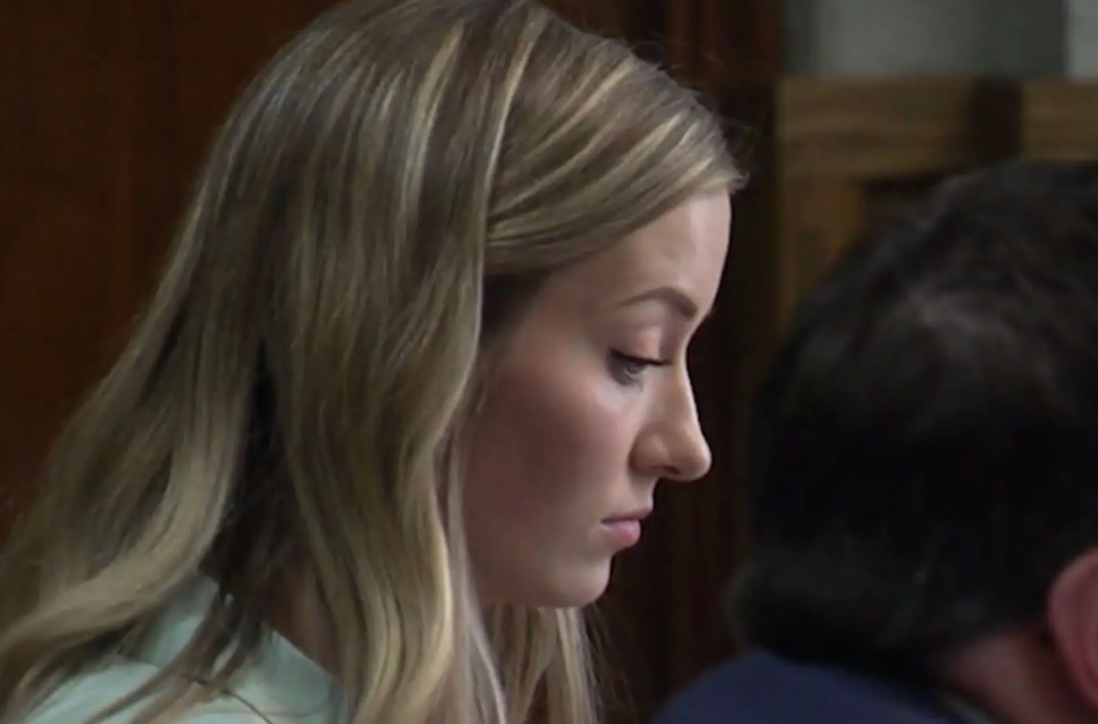
McKenna Kindred became a shocking name after a court revealed disturbing text messages she sent to a student during their illegal relationship. The former teacher’s actions drew widespread attention and led to legal consequences, including probation and registration as a sex offender. This case has stirred strong emotions and raised serious questions about abuse of power, professional responsibility, and the harm caused to a young person in her care.

McKenna Kindred was a teacher at Central Valley High School in Spokane Valley, Washington, when her inappropriate conduct began to unravel. According to court documents, the troubling situation started in June 2022 when a 17-year-old student followed her on social media and began exchanging messages with her that crossed all professional boundaries. Over time, these conversations became explicit, involving sexually charged comments, photos, and discussions that should never have taken place between a teacher and her student.
At that time, McKenna Kindred was 23 years old and married. Students and staff at the school had no immediate awareness of how deep the situation would go, as Kindred continued teaching while secretly engaging in these inappropriate exchanges outside of school hours. In her texts, she even referenced school scenarios, saying things like being upset when other girls talked about the student in class or noting moments when they almost got caught by others. These messages revealed a pattern of crossing lines that are strictly enforced in educational environments.
The inappropriate relationship escalated beyond texts. In November 2022, while her husband was away on a hunting trip, the minor visited Kindred’s home. The teen told investigators that he arrived between early evening hours and stayed late into the night. What started as watching a movie turned into kissing and then progressed into sexual activity, with the encounter said to have continued for several hours. Afterward, they reportedly spent time together in the living room and even showered before the teen left the house later that night.
When classmates became aware of odd messages between Kindred and the student, a friend of the teen accessed his social media account, took screenshots of the exchanges, and brought them to another teacher’s attention. Those screenshots were then shown to school officials, which triggered an internal review and notification to law enforcement. The inappropriate interactions that had taken place over months were suddenly exposed to the authorities.
Once law enforcement was involved, a full investigation began, including forensic examination of Kindred’s phone and communication records. The evidence gathered showed a timeline of escalating contact between the teacher and the teen that went well beyond casual conversation. Messages included personal and sexual content that clearly violated professional and legal standards.
In court, McKenna Kindred admitted to her actions and pleaded guilty to charges related to second-degree sexual misconduct and communication with a minor for immoral purposes.
During her sentencing, she addressed the judge, the student, and the family, expressing remorse. She stated that her actions had caused immense stress and highlighted the personal and professional losses she faced, including losing her teaching career and freedoms that she once took for granted. Her emotional apology noted that the repercussions of her choices went far beyond herself.
Despite the seriousness of the misconduct, Kindred did not serve jail time. Instead, the court ordered her to serve two years of probation and pay fines totaling $700. An additional requirement was her placement on the sex offender registry for a decade, a consequence that carries long-term social and legal consequences. These penalties reflect the legal system’s balance between punishment and rehabilitation in cases involving adults who exploit minors in their care.
After her conviction, Kindred resigned from her teaching position and surrendered her teaching license. Her career in education was effectively over, and she faced the reality of her professional reputation being permanently damaged. It was reported that she and her husband relocated to another state following the sentencing, attempting to move past the intense scrutiny that followed the case. However, her future employment status remains unclear.
The student involved in this tragic situation also faced deep emotional impacts. His mother spoke during the legal proceedings about the harm inflicted, noting that his trust and sense of safety had been shaken. The inappropriate relationship affected his ability to carry on normal school life, socialize comfortably with peers, and focus academically. These kinds of psychological effects can linger long after formal legal matters are concluded.
Across the community, the case prompted discussions about how adults in positions of authority should be monitored and what safeguards are necessary to protect students. Educators are expected to uphold a high standard of conduct, and when those standards are violated, it can erode trust not only between teacher and student but also between families and schools. Many questioned what warning signs were missed and how early intervention might have prevented such harm.
Some reports also noted that even after the misconduct became public, Kindred’s husband remained with her. The couple’s move to a new home in another state shortly after the legal proceedings raised eyebrows and sparked additional conversation about the personal consequences for those connected to the scandal. However, the central focus of community concern remained on the student’s welfare and the failure of an adult entrusted with responsibility to uphold their duty to protect.
In retrospect, the McKenna Kindred scandal highlights the serious nature of teacher-student relationships outside of professional boundaries. When a trusted adult engages in illegal conduct with a minor, the consequences can be profound, affecting everyone from the individual student to the broader school community. It serves as a stark reminder of the necessity for strict adherence to ethical standards in education and vigilant oversight to prevent exploitation.
Throughout this long and difficult case, the name McKenna Kindred remains tied to a disturbing example of abuse of power. Her actions, the way they were uncovered, and the aftermath provide a detailed look at how a relationship that started with inappropriate communication ultimately led to legal accountability and life-altering consequences for those involved. The lasting lesson from this incident is the importance of protecting vulnerable individuals and holding those who violate that trust accountable.