

On March 6, 1981, Marianne Bachmeier walked into a courtroom in Lübeck with visible determination.
Moments later, she pulled a loaded handgun from her purse and fired at 35-year-old sex offender Klaus Grabowski.
Grabowski was on trial for abducting, abusing, and murdering Marianne’s seven-year-old daughter, Anna Bachmeier. Within seconds, he collapsed onto the courtroom floor after being struck by seven bullets. He died there. Marianne was immediately taken into custody. She showed no remorse.
More than four decades later, the woman the media would label “Revenge mom” remains one of Germany’s most polarizing figures.
A Life Marked by Trauma
The loss of a child is often described as the deepest pain a parent can endure. For Marianne, that nightmare became reality on May 5, 1980.
At the time, she was a single mother running a pub in northern Germany. Her own upbringing had been turbulent. Her father had served in the Waffen-SS during Nazi Germany. As a young girl, she suffered repeated sexual assaults. At 16, she became pregnant and placed the baby for adoption. Two years later, she made the same painful decision with a second child.
In 1973, she gave birth to Anna and chose to raise her alone.
Anna was described as cheerful and open-hearted. But in May 1980, after a minor argument with her mother, the little girl skipped school and headed toward a friend’s house. She never arrived.
Grabowski, a local butcher, abducted her. He held her captive in his apartment for hours, abused her, and ultimately strangled her. After killing her, he hid her body in a box near a canal before later attempting to bury it.
He was arrested the same evening at his usual pub after his fiancée alerted police.
Grabowski was already a convicted sex offender. He had previously served prison time for assaults against two girls. While incarcerated in 1976, he underwent voluntary castration. Two years later, he began hormone treatments in an effort to restore sexual function so he could maintain a relationship with his fiancée.
He confessed to killing Anna but denied sexually abusing her. During trial proceedings, he went further — claiming that the seven-year-old had tried to seduce and extort him. He alleged she demanded money and threatened to tell her mother he had touched her inappropriately.
The court rejected this version of events.
But for Marianne, hearing her daughter blamed for her own murder was unbearable.

The Shooting in Court
On the third day of the trial, March 6, 1981, Marianne carried out what she had evidently prepared for. She managed to bring a handgun past courtroom security.
Shortly after entering, she removed a Beretta M1934 from her handbag, aimed at Grabowski, and fired repeatedly. Seven of eight shots hit him. He died instantly.
After the gunfire stopped, she dropped the weapon and said:
“He killed my daughter… I wanted to shoot him in the face, but I shot him in the back … I hope he’s dead.”
According to officers present, she also called him a “pig.”
She was arrested at the scene and initially charged with murder.
During her 1982 trial, Marianne claimed she had acted in a dream-like state, envisioning her daughter in the courtroom. However, expert witnesses testified that the precision of the shooting suggested preparation and prior practice.
When doctors later requested a handwriting sample, she wrote: “I did it for you, Anna.” She decorated the note with seven hearts — interpreted by many as representing each year of her daughter’s life.
Trial, Sentence, and Public Division
The case attracted enormous media attention across Germany and internationally. Many members of the public sympathized with her, viewing her act as understandable — even justified — retribution against a repeat child sex offender.
In 1983, she was convicted not of murder but of premeditated manslaughter and illegal possession of a firearm. She received a six-year sentence but was released after serving three years.
Public opinion was sharply divided. A survey conducted by the Allensbach Institute showed that 28 percent considered the sentence appropriate, 27 percent believed it was too severe, and 25 percent thought it was too lenient.
Initially portrayed as a grieving mother pushed beyond endurance, Marianne’s image later became more complicated as journalists examined her past, including the adoption of her first two children and aspects of her lifestyle.
Later Years and Final Reflections
After her release, Marianne relocated to Nigeria, where she married a German teacher. The marriage ended in divorce in 1990. She later moved to Sicily before eventually returning to Lübeck after being diagnosed with pancreatic cancer.
In 1994, she gave a rare radio interview in Germany, stating:
“I think there is a very big difference if I kill a little girl because I’m afraid I then have to go to prison for my life. And then also the ‘how’, so that I stand behind the girl and, strangle her which is taken literally from his statement: ‘I heard something come out of her nose, I was fixated, then I could not stand the sight of her body any longer,’”
In a 1995 interview with the German broadcaster Das Erste, she acknowledged that she had shot Grabowski deliberately, stating she wanted to stop him from continuing to spread lies about Anna.
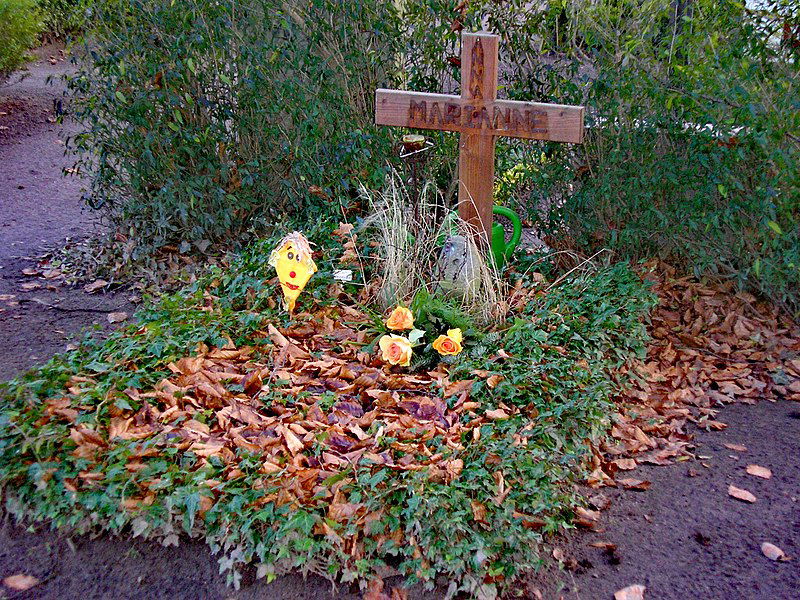
On September 17, 1996, Marianne Bachmeier died in a hospital in Lübeck. She had hoped to return to Sicily but never made the journey. She was buried beside her daughter.
A Case Still Debated
Her actions continue to provoke debate in Germany. For some, she represents a mother driven beyond reason by grief and humiliation in the face of a justice system that required her to endure her child’s killer’s testimony. For others, she crossed a line that should never be crossed — taking the law into her own hands instead of allowing the court to deliver judgment.
More than 40 years later, the question remains unresolved in the public conscience: was it vengeance — or justice?


