
Simin Taheri, the Pilot Who Flew Both Boeing and Airbus Says Which Is Better

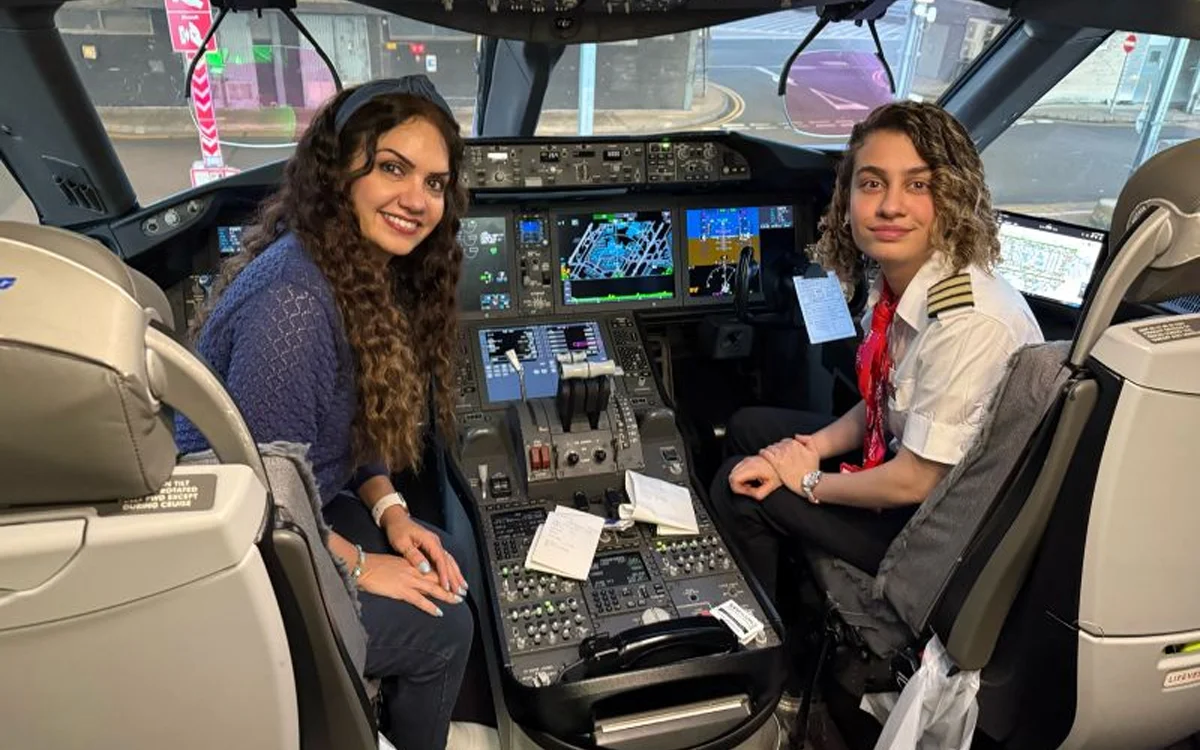
One pilot, Simin Taheri, who has spent years flying Boeing aircraft recently had the chance to experience the other side of the cockpit.
After testing an Airbus simulator, she shared her thoughts on how the two manufacturers compare and which one she believes is better for pilots starting their careers.
For decades, Boeing and Airbus have been the two giants of commercial aviation. Together, their aircraft make up the vast majority of passenger planes flying around the world today.
While travelers may not notice much difference between the two, pilots often have very strong opinions.
Simin Taheri, better known online as CaptainCroft, currently works as a First Officer flying the Boeing 787 Dreamliner for British Airways.
With thousands of hours spent operating Boeing aircraft, she has become well acquainted with the company’s approach to flying.
Recently, however, Taheri stepped into an Airbus A320 simulator at Brighton Airport in the United Kingdom. The experience was part of a YouTube series where she exchanged perspectives with Airbus pilots and explored how the two aircraft families differ.
According to Simin Taheri, the biggest contrast isn’t necessarily the aircraft themselves. It’s the philosophy behind how they’re designed.
She explained that Airbus and Boeing take very different approaches when it comes to pilot control and automation.
One of the things that stood out to her was how much responsibility is shared with the aircraft’s computer systems in an Airbus cockpit.
With Airbus, pilots spend a significant amount of time managing automated systems and monitoring how the aircraft responds. Boeing, on the other hand, tends to leave more authority in the hands of the pilots themselves.
Simin Taheri pointed to stall protection as a good example of this difference.
In an Airbus, built-in protections prevent the aircraft from entering certain dangerous flight conditions. In simple terms, the system is designed to stop pilots from accidentally stalling the aircraft.
Boeing takes a different route.
Rather than physically preventing a stall, Boeing aircraft provide warnings and alerts, but ultimately expect the pilot to recognize the situation and take corrective action.
“It’s a different way of thinking,” Taheri explained.
The contrast extends to other controls as well. Certain tasks that Boeing pilots perform manually are automated in Airbus aircraft. One example is trimming, a process that helps balance the aircraft and reduce the forces acting on the controls.
In Airbus aircraft, much of this happens automatically in the background. Boeing pilots, however, remain more involved in managing these adjustments themselves.
That doesn’t necessarily make one aircraft better than the other.
Simin Taheri was quick to point out that both systems come with strengths and weaknesses.
Each manufacturer has built its aircraft around a specific philosophy, and both have proven successful over decades of commercial aviation.
For her personally, she still enjoys Boeing’s more hands-on style of flying.
She likes being actively involved in the aircraft’s operation and appreciates the greater level of direct control that Boeing provides.
At the same time, she admitted that Airbus offers several advantages that are easy to appreciate.
She described the Airbus cockpit as spacious, comfortable, and highly intuitive. For short-haul routes in particular, she believes Airbus aircraft are extremely well suited to the job.
When it comes to new pilots, however, Taheri’s opinion becomes a little more specific.
If she were starting her aviation career today, knowing everything she knows now, she says she would still choose Boeing.
Her reasoning has less to do with brand loyalty and more to do with skill development.
According to Simin Taheri, pilots early in their careers benefit from learning the fundamentals before relying heavily on automated systems.
Building strong stick-and-rudder skills, understanding aircraft handling, and gaining confidence through direct flying experience can provide a valuable foundation that lasts throughout a pilot’s career.
For that reason, she feels Boeing aircraft offer an advantage for newcomers looking to sharpen their flying abilities.
She also acknowledged that personal preference plays a major role.

Some pilots naturally gravitate toward the technology-driven approach of Airbus, while others prefer Boeing’s more traditional style.
In many cases, the choice comes down to which philosophy feels more natural to the individual sitting in the cockpit.
Still, if the goal is to develop strong manual flying skills during those critical first years, Simin Taheri believes Boeing has the edge.
She noted that aircraft such as the Boeing 737 may feel older, smaller, and more cramped compared to modern Airbus cockpits, but they also encourage pilots to stay closely connected to the aircraft and its handling characteristics.
That experience, she argues, can be invaluable early on.
Despite her preference, Simin Taheri made it clear that she respects both manufacturers and sees benefits in each approach.
After spending time in the Airbus simulator, she expressed interest in gaining more experience with Airbus aircraft in the future.
For now, though, Boeing remains her favorite place to be.
Simin Taheri continues to share aviation insights through her CaptainCroft YouTube channel, where she regularly explains how commercial aircraft operate, answers common questions from travelers, and helps clear up some of the biggest myths surrounding air travel.