Smallpox Vaccine Scars Explained: What They Look Like and Why They Form

Many people remember noticing a small, unusual mark on the arm of a parent or grandparent and wondering where it came from.
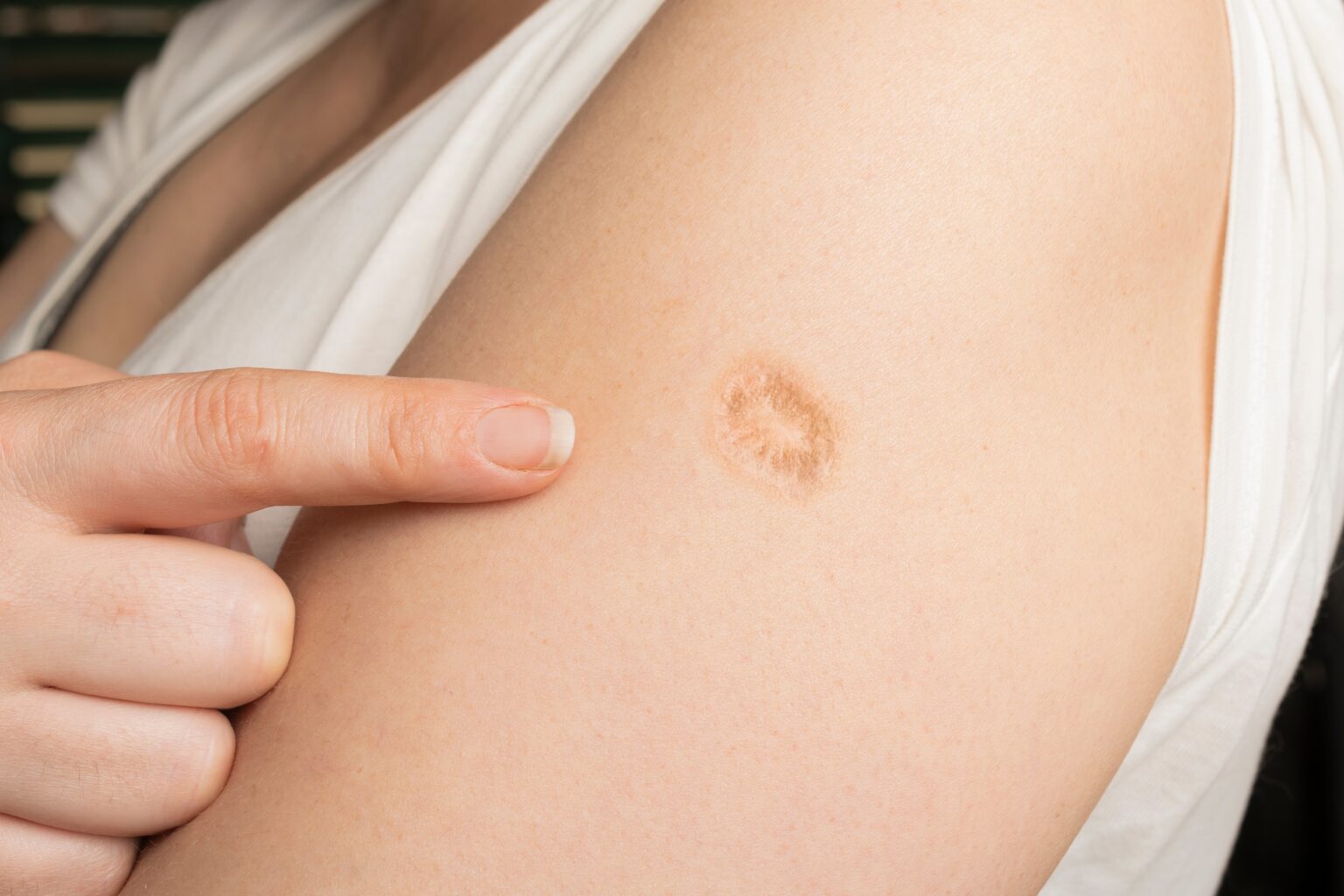
One such memory stayed with a writer who recalls spotting a distinctive scar on his mother’s upper arm when he was a child. The mark sat high near her shoulder and looked like a small circle of tiny indentations surrounding a deeper center point.
He can’t quite remember why the mark fascinated him so much at the time. Like many childhood curiosities, the question faded from his mind over the years. The scar itself, of course, never disappeared, but the mystery behind it slowly slipped into the background.
That curiosity resurfaced unexpectedly years later during a train journey. While helping an elderly woman step off the train, he happened to notice the exact same type of scar in the exact same spot on her arm. The discovery immediately caught his attention, but with the train about to depart, there was no time to ask her about it.
Instead, he called his mother.
She explained that she had actually told him the story more than once before—though apparently it hadn’t stuck. The mark, she said, was left behind by the smallpox vaccine.
Smallpox was once one of the most feared infectious diseases in human history. The virus caused high fever and a severe rash that spread across the body. During major outbreaks in the 20th century, it killed about three out of every ten infected people, according to the Centers for Disease Control and Prevention. Many of those who survived were left with permanent scarring or disfigurement.
Fortunately, a massive global vaccination effort changed the course of history. In the United States, the disease was declared eliminated in 1952. By 1972, routine smallpox vaccinations were no longer part of standard immunization schedules.
Before the early 1970s, however, nearly every child received the vaccine. Unlike most modern vaccinations, this one left behind a clear physical reminder—a small, round scar. In a way, it served as a visible proof that someone had been vaccinated against smallpox.
That same mark is the one the writer remembers seeing on his mother’s arm—and it’s shared by many people from her generation.
Why the smallpox vaccine left a scar
The reason for the scar lies in the way the vaccine was administered and how the body healed afterward.
Instead of a single injection like most modern vaccines, healthcare workers used a special two-pronged needle. The needle made multiple small punctures in the skin, delivering the vaccine directly into the dermis, the layer beneath the outer skin.
Once inside the body, the virus used in the vaccine triggered a localized reaction. Small round bumps formed at the injection site, which later turned into fluid-filled blisters known as vesicles. Over time, these blisters burst, dried out, and formed scabs.
When the scabs eventually fell away, they often left behind the recognizable circular scar that many older adults still carry today.
For millions of people, that tiny mark remains a lasting reminder of one of medicine’s greatest victories—the successful fight against smallpox.
Are you old enough to have a scar from the smallpox vaccine? Let us know in the comments.