

In a hushed Montreal operating room, over a hundred medical experts stood vigil as a surgical team embarked on a grueling, thirty-hour marathon. Forgoing sleep and comfort, the team meticulously labored over a 64-year-old man whose life had been fractured by years of agonizing physical pain and profound social isolation.
By the time the sun rose on the completion of the procedure, Canada had carved its name into medical history.
The specialists at Hôpital Maisonneuve-Rosemont successfully executed the nation’s first-ever face transplant—a feat so technically demanding it has only been achieved a few dozen times globally. Spearheaded by plastic surgeon Dr. Daniel Borsuk, the team’s years of rigorous preparation culminated in a moment that offered the patient far more than a new appearance; it offered him his life back.
The Accident That Changed Everything
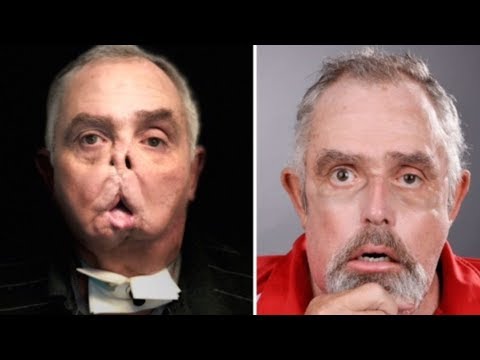
Seven years prior, the patient’s world was shattered by a catastrophic gunshot wound to the face. The injury destroyed bone and tissue alike, turning basic survival into a grueling ordeal. Simple acts like breathing, swallowing, and speaking became monumental challenges.
Despite undergoing numerous traditional reconstructive surgeries, the limits of conventional medicine were reached. The man remained dependent on a tracheostomy to breathe and found even the simplest conversation or meal to be an exhausting struggle.
However, the invisible scars were perhaps the deepest. Once a social and outgoing individual, he retreated into a life of solitude, hiding away from a world that often met his disfigurement with stares or discomfort. This isolation eventually led his medical team to propose a radical solution: a face transplant.
Preparing for One of the Most Complex Surgeries in the World
A face transplant is a massive undertaking involving surgery, psychology, and ethics. Dr. Borsuk and his colleagues at the University of Montreal spent years analyzing global cases and assembling a multidisciplinary powerhouse of ENT, maxillofacial, and plastic surgeons.
Utilizing cutting-edge 3D modeling and virtual planning, they mapped every nerve, vessel, and bone connection with microscopic precision. Despite the high-tech preparation, the risks remained immense—including the constant threat of organ rejection, infection, and a lifetime of heavy medication. For the patient, however, the gamble represented his only path back to normalcy.
The Surgery That Lasted More Than Thirty Hours
The operation required a synchronized effort from over 100 professionals. Over the course of a day and a half, surgeons transplanted the donor’s facial structure, including skin, muscles, jawbones, and the nose.
Under microscopes, they painstakingly stitched together blood vessels and aligned nerves, hoping to restore both blood flow and future sensation. Dr. Borsuk later described the monumental effort as a perfect marriage of science, engineering, and art.
The Long Road to Recovery
Recovery from such a procedure is measured in months and years. Four months post-operation, the patient’s progress was staggering. He regained the ability to breathe without a tube, chew with his new jaw, and smell through his new nose.
While these milestones seem mundane to most, for a man who had lived in a state of physical and social confinement, they were revolutionary. He no longer had to fear the public eye; he could finally begin the slow process of rejoining society.
The Donor Family Who Made It Possible
The miracle of this surgery was only made possible through the profound generosity of a donor family. In the depths of their own grief, they chose organ donation, a decision coordinated by Transplant Québec. The surgical team has remained steadfast in their gratitude, noting that the success of the operation is as much a testament to this family’s selflessness as it is to medical skill.
Why Face Transplants Are So Rare
Since the first partial transplant in 2005, only about 40 have occurred worldwide. The rarity stems from the astronomical costs, the complexity of finding a perfect donor match, and the psychological toll on the recipient. Furthermore, the lifelong requirement for immunosuppressant drugs carries its own set of risks. Yet, for those with severe injuries, the functional restoration of expression and sensation offers a quality of life that traditional surgery simply cannot replicate.
The Surgeon Behind the Historic Operation
Dr. Daniel Borsuk, a specialist in cranio-maxillofacial surgery, led the historic charge. Having trained with world-class teams in the United States, Borsuk has dedicated his career to innovative reconstruction. His mission has always been clear: to restore the human being, not just the anatomy.
More Than Surgery — Restoring a Life
The true victory of a face transplant isn’t cosmetic; it is functional. The goal is to return the “human” elements of existence: the ability to smile, to eat in a restaurant, and to walk down a street unnoticed. This is why many practitioners refer to this field as “life-restoring” surgery.
A Historic Moment for Canada and Medicine
This milestone signaled a massive leap forward for Canadian medicine. It demonstrated the power of collaborative science and proved that procedures once deemed “impossible” are now within reach.
The Future of Face Transplant Surgery
As 3D printing and nerve regeneration research evolve, these surgeries are expected to become safer and more effective. While they remain rare for now, each success provides a blueprint for a future where severe facial trauma is no longer a life sentence of isolation.
A Story About Hope, Not Just Medicine
Ultimately, this is a narrative of human resilience. It is the story of a patient who refused to stay hidden, a medical team that refused to give up, and a donor family that gave the ultimate gift. It serves as a powerful reminder that the most significant breakthroughs happen when compassion and technology work hand-in-hand.
Tell Us What You Think
This historic achievement highlights the incredible potential of modern medicine and human empathy. We’d love to hear your thoughts on this breakthrough—feel free to share this story of hope and second chances with your community.


