The Rifleman Bloopers That Still Surprise Fans Today

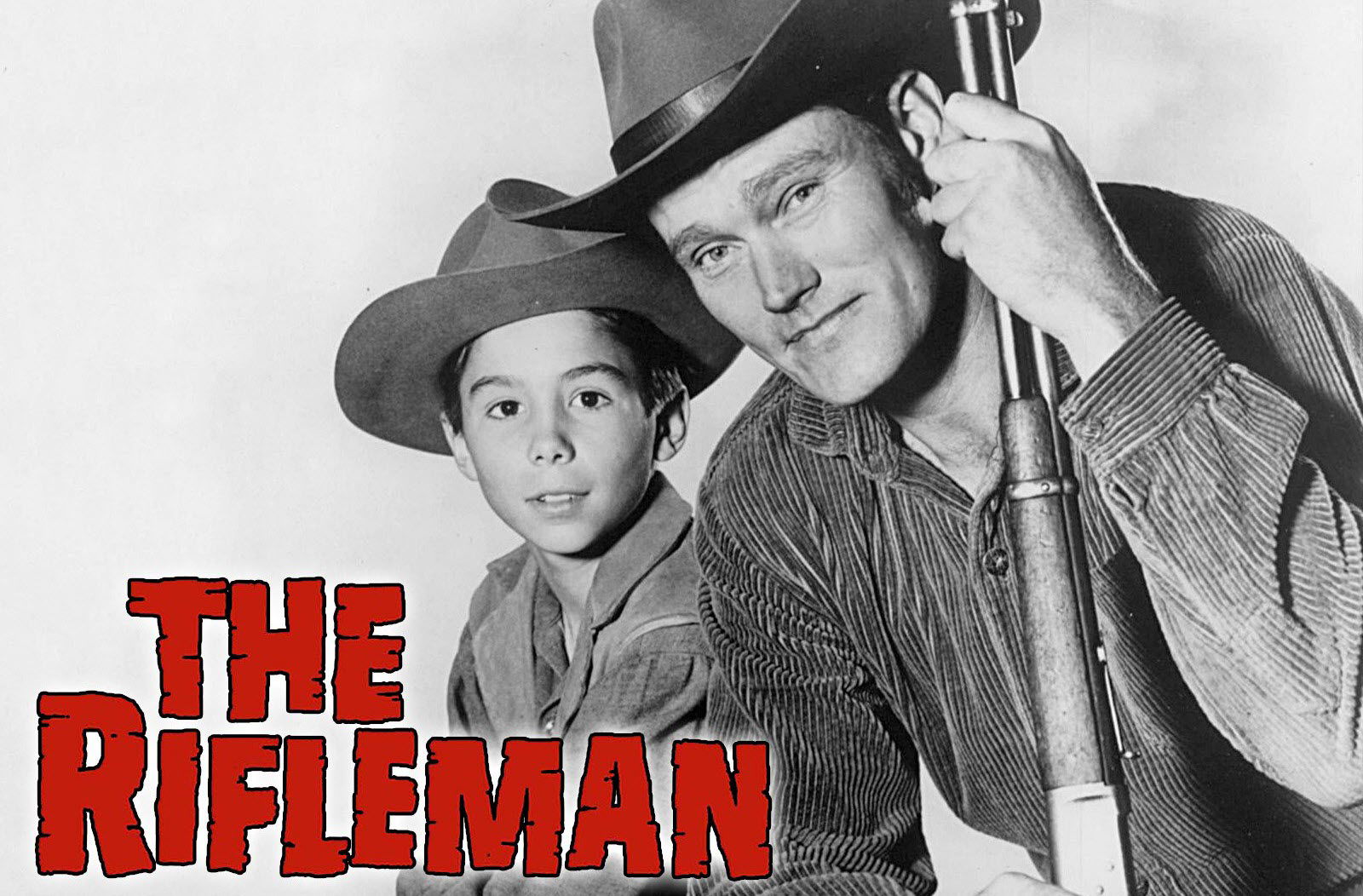
The Rifleman remains one of the most emotionally powerful television series ever made, and its influence has lasted for generations. From the first episode, the show captured audiences with its quiet strength, moral clarity, and deeply moving father-son relationship that felt genuine and timeless.
Premiering in the late 1950s, The Rifleman quickly became a staple in American homes. Families gathered around their televisions not just for Western action but for stories that carried meaning. Each episode delivered lessons about responsibility, respect, honesty, and compassion. Unlike many shows of its time, The Rifleman slowed things down and focused on character rather than spectacle.
Yet even with its strong storytelling and iconic status, The Rifleman was not without its flaws. Like many early television productions, it included historical inaccuracies, continuity errors, and casting quirks that most viewers never noticed. These details were never meant to distract from the story, but today they offer a fascinating look behind the scenes of a beloved classic.
What follows is a detailed exploration of little-known mistakes, bloopers, and surprising facts from the Rifleman that only dedicated fans tend to discover.
The emotional core that defined The Rifleman
At the center of the Rifleman was Lucas McCain, a widowed rancher raising his son Mark in the fictional town of North Fork. Their relationship felt honest and deeply human. Lucas was firm but fair, while Mark was curious, thoughtful, and sensitive. Together, they represented a type of family dynamic rarely shown on television at the time.
The Rifleman was the first network series to focus on a single father raising a child on his own. This made the show groundbreaking and emotionally rich. Viewers connected with the bond between Lucas and Mark because it felt real, not forced or sentimental.
Because the emotional storytelling was so strong, most viewers never questioned the details surrounding it. This is why many of the rifleman’s mistakes remained unnoticed for decades.
A cowboy ahead of his time in denim
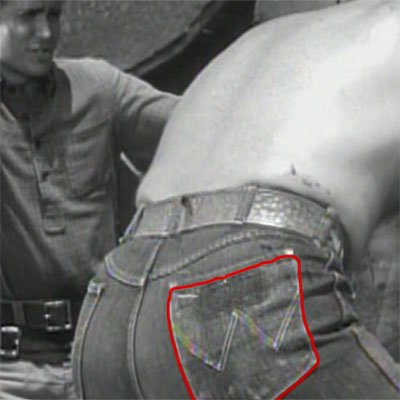
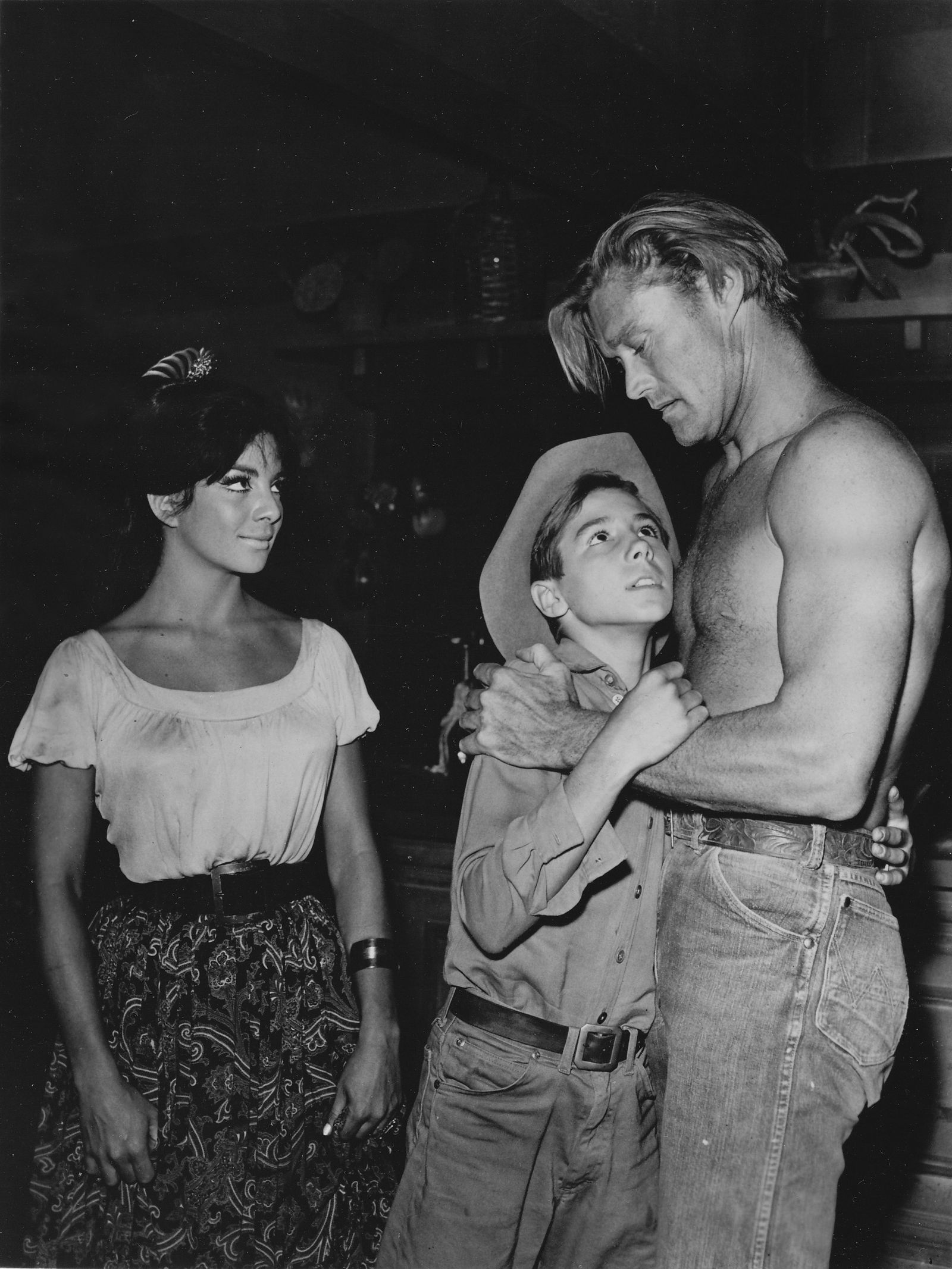
One of the most interesting visual mistakes in The Rifleman appears in an early episode titled End of a Young Gun. In a scene where Lucas McCain repairs a wagon wheel without a shirt, observant viewers can spot a stitched letter on the back pocket of his jeans.
The jeans are clearly Wrangler brand.
The issue is simple. The Rifleman is set in the eighteen eighties, but Wrangler jeans did not exist until the nineteen forties. This places Lucas McCain roughly sixty years ahead of his time in fashion.
While this detail is technically incorrect, it adds an unintentional layer of charm. Rather than ruining the scene, it gives modern viewers something fun to notice and talk about.
A real family connection on screen
Family themes were not limited to the script. One touching behind-the-scenes detail involves the actor who played Lucas McCain and his real-life son.
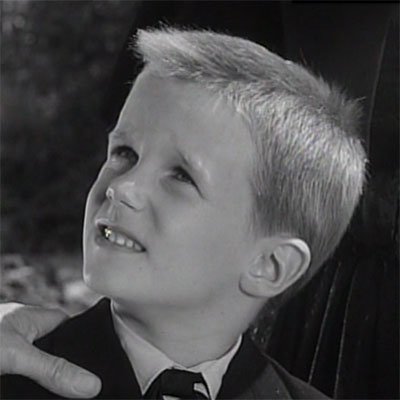
In the episode Tension, Lucas and Mark attend the funeral of a close friend. Among the mourners is a young boy dressed in black. That child was played by Jeff Connors, the real-life son of the actor portraying Lucas McCain.
Jeff had only two lines in the episode, but his appearance made the scene more personal. Sadly, he passed away in twenty fourteen, making his brief role a lasting piece of television history.
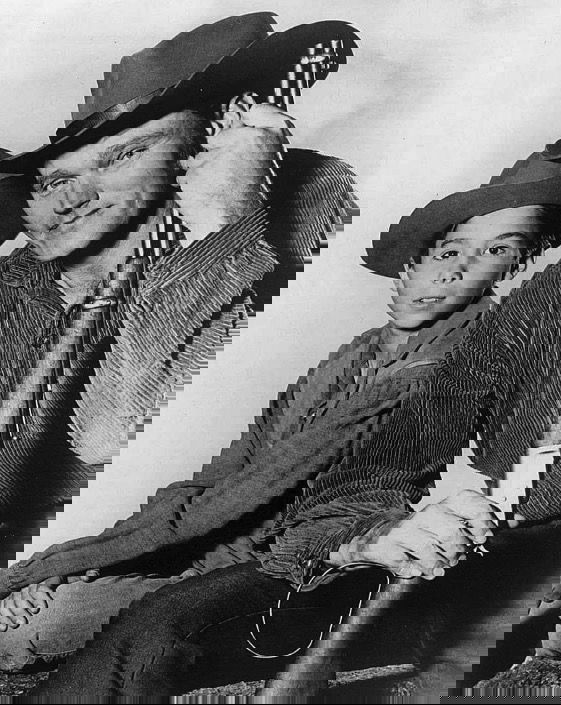
Getting cast as Lucas McCain was not easy.
It is difficult to imagine anyone else playing Lucas McCain, but casting him was far from guaranteed.
The actor competed against more than forty others for the role. Even after impressing producers, he initially turned it down because the salary was lower than what he could earn as a freelance actor.
Everything changed after the producers took their children to see the film Old Yeller, where he played a strong father figure. The children were immediately drawn to him. Their reaction convinced the producers that he was perfect for the role of Lucas McCain.
They returned with a better offer that included partial ownership of the show. That decision changed the future of the Rifleman and secured its success.
The rifle that should not have existed yet
The opening sequence of The Rifleman is one of the most iconic in television history. Lucas McCain fires a rapid series of shots, spins his rifle, reloads with ease, and stares directly into the camera.
Many viewers assumed this scene relied on camera tricks. It did not.
The actor was genuinely skilled and performed the sequence himself. His athletic background gave him the coordination needed to handle the rifle so smoothly.
However, the rifle itself presents a major historical issue. The weapon used was an eighteen ninety-two Winchester. The Rifleman is set earlier than that, making the rifle impossible for the time period.
Despite this, the rifle became one of the most recognizable elements of the show.
A famous rifle with a past life
The story of the rifle goes even deeper.
Before appearing in the Rifleman, the same Winchester rifle had been used in the nineteen thirty nine film Stagecoach. It was originally handled by a legendary Western film star.
Later, the rifle was reused for the Rifleman, connecting two iconic Westerns through a single prop. While historically inaccurate, this reuse added to the rifle’s legendary status in Hollywood.
A hotel with a confusing identity
Throughout the series, the Madera Hotel is a central location in the town of North Fork. It appears in many episodes and feels like a permanent landmark.
However, in the pilot episode, the same building is called the California House.
No explanation is given for the name change. The show never addresses whether the ownership changed or if the name was simply altered. This continuity issue remains one of the quieter mistakes in the Rifleman.
A childhood acting mishap
The actor who played Mark McCain began acting at a very young age. At just three years old, he appeared in a film as one of several refugee children.
During filming, a scene involving chocolate bars had to be reshot. The young actor refused to give back his chocolate for the second take. As a result, the scene was cut.
Years later, he joked that this incident got him blacklisted. While that clearly did not last, it remains a humorous story from early Hollywood.
The challenge of adding romance
Although the Rifleman focused primarily on fatherhood, romance occasionally entered the story.
In the third season, Lucas McCain appeared to be forming a relationship with Milly Scott. This storyline ended abruptly when the character left town with little explanation.
Producers then faced the challenge of finding a new female lead who had genuine chemistry with Lucas. The process was long and difficult. Dozens of actresses were considered before the right match was found.
Eventually, the role went to an actress whose presence felt natural and balanced. Still, the struggle highlights how carefully the show handled relationships.
A real baseball legend appears.
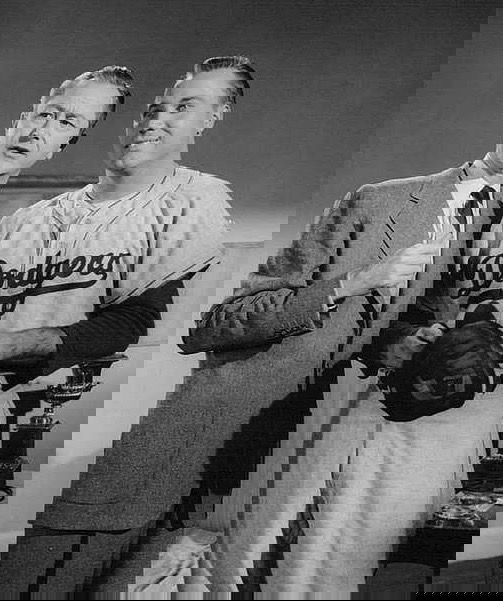
Lucas McCain was portrayed as an excellent baseball player, but the show took this even further by featuring real-life athletes.
A famous baseball star appeared in one episode, playing a character with a quiet strength similar to Lucas. Another professional baseball player also made a guest appearance.
These casting choices added authenticity and paid subtle tribute to the athletic background of the actor playing Lucas.
A sibling joins the cast.
Family connections extended beyond one household.
The brother of the actor who played Mark McCain appeared in an episode titled Second Witness. His performance was strong enough to earn critical recognition.
Both brothers received award nominations in the same year, an impressive achievement that highlighted their talent and chemistry.
Protecting a child star
The actor portraying Lucas McCain was known for being extremely protective of the young actor playing his son.
Off-screen, he shared stories, recited poetry, and offered guidance that went far beyond acting. Their relationship became a defining part of the young actor’s life.
Another cast member, who played the town marshal, was equally protective. Having survived a childhood gun accident himself, he took weapon safety very seriously and made sure the child actor was always safe on set.
A strange casting age detail
One episode featured a well-known comedic actor playing the father of a character who was actually older than him in real life.
The age difference was small, but noticeable once known. This type of casting was not unusual in Hollywood at the time, but it stands out today as an amusing detail.
When a baby girl was actually a boy
In one episode, a baby girl plays a central role in the story. The character was portrayed by a baby boy.
This was a common practice in television production, but it remains a surprising fact for fans who assume otherwise.
A different original concept
The pilot episode of The Rifleman was originally developed for a different Western series.
In that early version, the main character had a different name, no children, and relied on a pistol rather than a rifle. The concept was later reworked, leading to the iconic version audiences came to love.
This change helped define the unique identity of the Rifleman.
A legendary entertainer surprises the crew.
One episode featured a famous entertainer playing an outlaw. Known primarily for singing and stage performance, he also proved highly skilled with firearms.
All of his stunts were performed without assistance. His professionalism impressed the cast and crew and added credibility to his role.
Hairstyles that broke historical accuracy
Despite being set in the eighteen eighties, many characters in The Rifleman wore hairstyles popular in the nineteen fifties and sixties.
Wardrobe choices also reflected modern styles rather than historical ones. Button-down shirts appeared frequently, even though they were not common during the time period depicted.
These visual inaccuracies are among the most noticeable mistakes in the series today.
The actor who portrayed Lucas McCain lived a physically demanding life and had a rare athletic career before acting.
Later in life, illness took its toll, and he passed away in the early nineteen-nineties. He was laid to rest with symbols honoring both his sports and acting careers.
The Rifleman is remembered not for its mistakes, but for its heart.
The small errors, historical inaccuracies, and behind-the-scenes quirks only make the show more human. They remind viewers that it was created by people working within the limits of their time.
Even today, the Rifleman stands as a powerful example of storytelling rooted in values, family, and emotional truth. That is why it continues to be loved, discussed, and rediscovered by new generations.