Trump and Epstein Statue Mimicking Titanic Scene Appears in Washington

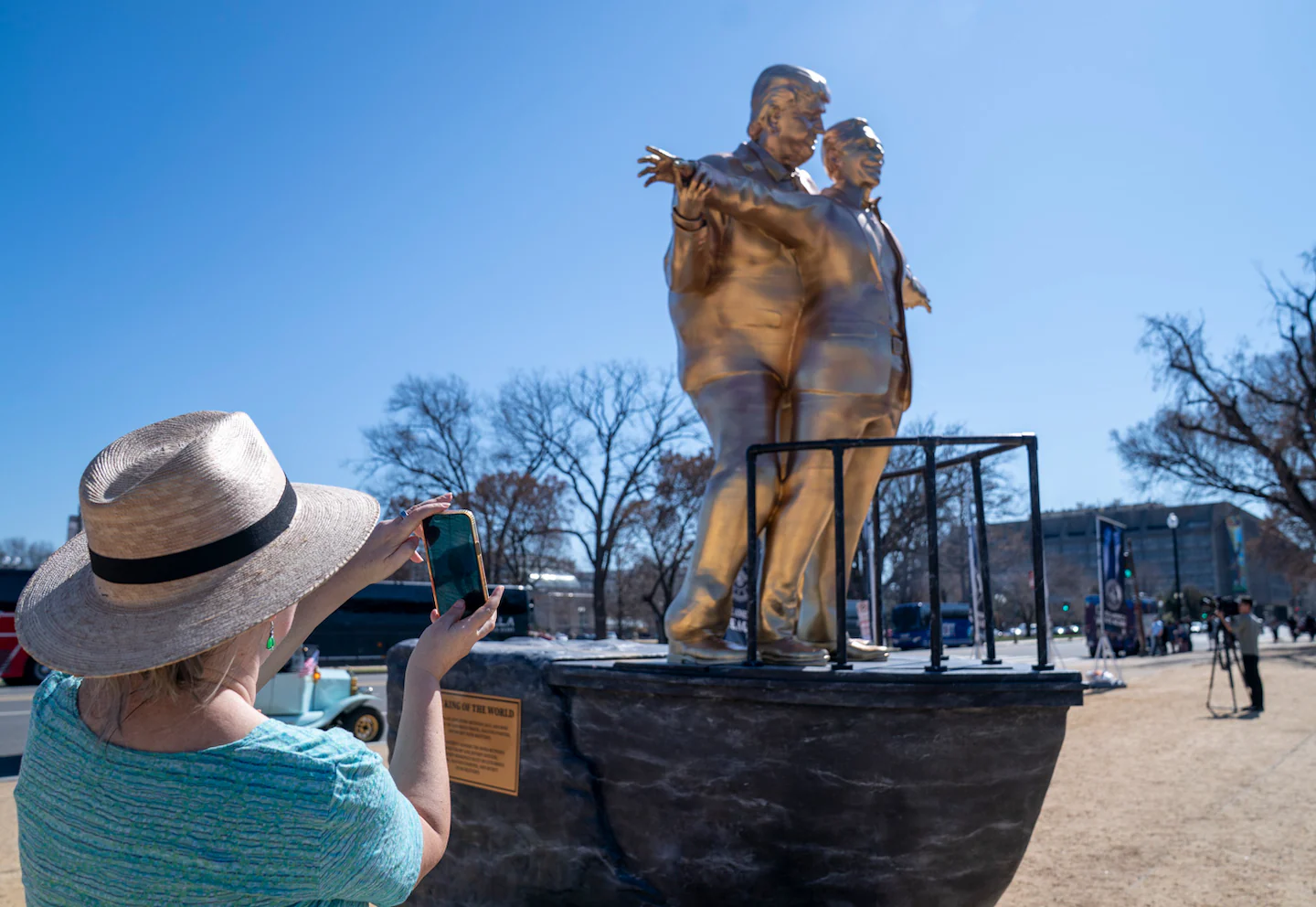
Statue installations in Washington, D.C. often attract attention, but one particular piece has stirred intense debate across the country. A large sculpture depicting Donald Trump and Jeffrey Epstein in a scene inspired by the famous Titanic movie suddenly appeared on the National Mall, leaving tourists, locals, and political observers stunned. The unexpected statue quickly went viral online as people shared photos and reactions across social media platforms.
The unusual statue portrays the two men recreating the well-known scene from the 1997 film Titanic.
In the sculpture, Trump stands behind Epstein with his arms stretched outward, imitating the moment when the film’s characters Jack and Rose stand together at the front of the ship. The piece is painted gold and rises to nearly twelve feet tall, making the statue difficult to ignore for anyone visiting the area.
The statue appeared on the National Mall in Washington, D.C., one of the most symbolic public spaces in the United States. Visitors walking near the Washington Monument were surprised to see the artwork placed in such a prominent location. Because of its striking appearance and controversial subject matter, the statue immediately drew crowds who wanted to see it for themselves, as per the Washington Post.
Photos of the statue quickly spread online. Tourists gathered around it, taking pictures and posting them on social media. Within hours, the statue had become one of the most talked-about political artworks in recent memory.
Many people initially believed the statue might be an official installation or a museum project. However, it soon became clear that the sculpture was actually created by an anonymous collective of artists known as The Secret Handshake. The group has previously created provocative art pieces that comment on politics and public figures.
The statue was designed to parody the famous Titanic scene while making a broader political statement. Beneath the sculpture, a plaque references the fictional romance between the film’s characters, Jack and Rose. The text draws a sarcastic comparison between the movie’s dramatic love story and the historical relationship between Trump and Epstein.
According to the plaque displayed at the base, the statue suggests parallels between the fictional romance and what the artists describe as a friendship built around luxury travel, lavish parties, and secret sketches.
The message of the statue is intentionally provocative. By combining a famous movie moment with real-life figures, the artists appear to be using satire to comment on past associations and political controversies.
As with many forms of protest art, the statue is designed not only to entertain but also to spark conversation. Whether viewers find the sculpture humorous, offensive, or thought-provoking, the goal of the statue seems to be generating discussion.
The statue has drawn strong reactions from different sides of the political spectrum. Some viewers see the artwork as a bold example of political satire. Others believe the statue crosses a line and is disrespectful.
The controversy is largely tied to the history between Donald Trump and Jeffrey Epstein. Epstein, a wealthy financier who died in 2019 while awaiting trial, had connections with numerous powerful figures. Over the years, public attention has focused heavily on his relationships and social circles.
Because of this background, any artistic portrayal involving Epstein tends to trigger strong emotions. The statue amplifies that reaction by placing the two men together in a dramatic pose that resembles a romantic movie scene.
For critics, the statue is inappropriate because of Epstein’s criminal history. For supporters of the artwork, the statue represents freedom of expression and the role of art in political commentary.
The statue was reportedly created by a mysterious group known as The Secret Handshake. The members of the collective have not publicly revealed their identities. Instead, they prefer to let their artworks speak for themselves.
This statue is not the first project the group has produced involving the same figures. In previous years, the collective installed another sculpture showing Trump and Epstein holding hands. That earlier statue was titled “Best Friends Forever.”
Like the Titanic-themed statue, the earlier piece was also intended as political satire. However, it did not remain on display for long before authorities removed it.
The artists appear to specialize in creating temporary installations that generate public attention before disappearing again. This approach allows them to spark debates without maintaining a permanent presence.
The statue itself stands around twelve feet tall and is painted in a bright gold color. The large size ensures that the sculpture can be seen from a distance by visitors exploring the National Mall.
To recreate the Titanic scene, the statue includes a platform that resembles the front of a ship. Trump’s figure stands behind Epstein with arms extended outward, mimicking the iconic cinematic pose.
The use of gold paint adds to the dramatic effect. It also creates a visual contrast with the surrounding monuments and historic buildings in Washington.
Because of its size and unusual design, the statue immediately becomes a focal point for anyone nearby. Even visitors who know nothing about the context of the artwork often stop to take a closer look.
Within hours of its appearance, the statue had spread widely across the internet. Photos circulated rapidly on social media platforms such as X, Instagram, and Facebook.
Users shared the images with a wide range of reactions. Some people laughed at the absurdity of the statue. Others expressed anger or disbelief that such an artwork could appear in such a symbolic national location.
The viral spread of the statue demonstrates how modern political art often relies on the internet to amplify its message. A physical sculpture in one location can reach millions of viewers around the world within minutes.
In this case, the statue quickly became a trending topic in news coverage and online discussions.
Officials and public figures also reacted to the statue once news of it began spreading. Some government representatives criticized the artwork as politically biased.
Others defended the presence of the statue as an example of free speech and artistic expression. The debate reflects a larger conversation in the United States about how public spaces should be used for political commentary.
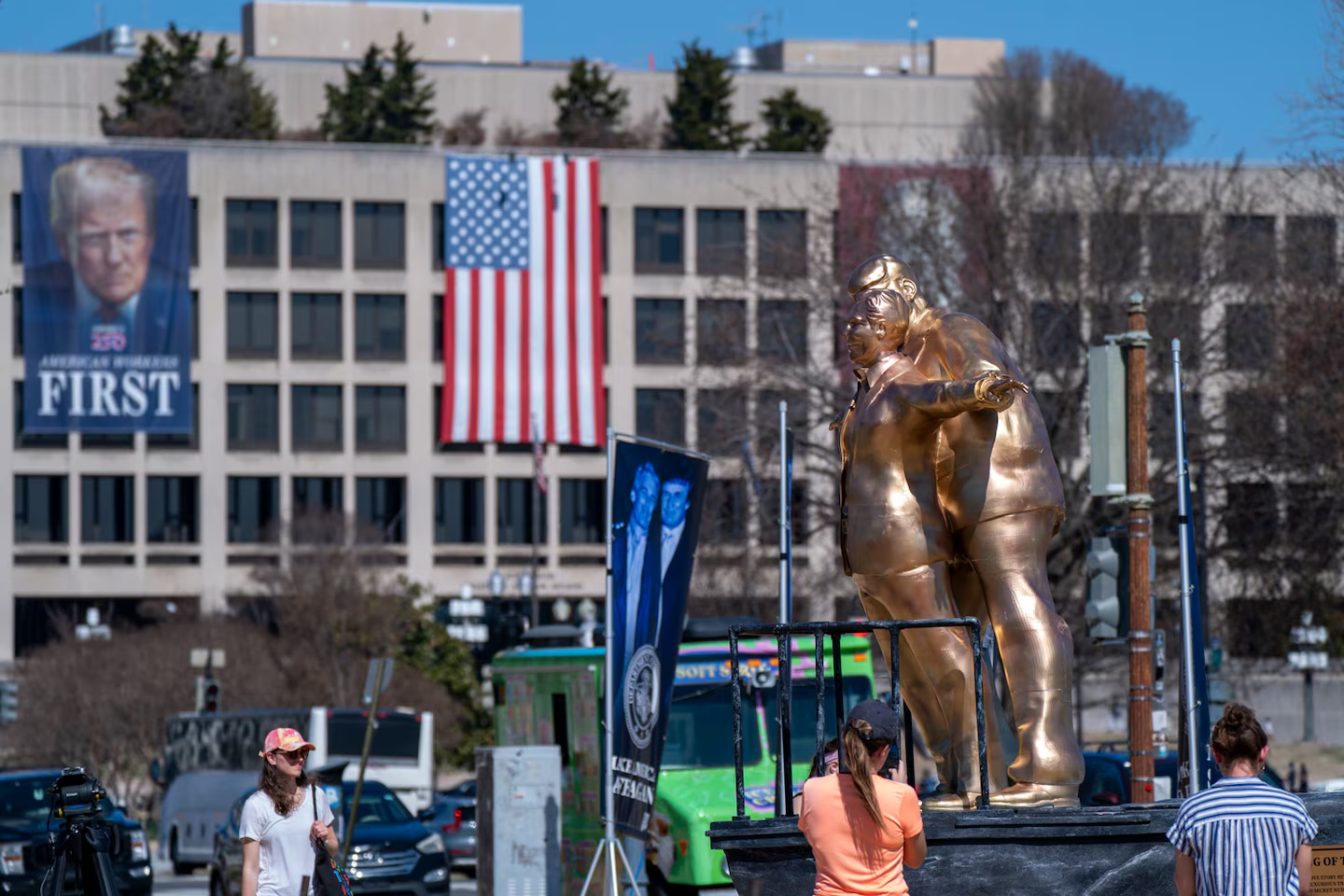
Tourists visiting Washington had mixed reactions as well. Some visitors treated the statue as a humorous photo opportunity, while others felt uncomfortable with its message.
The statue, therefore, became more than just a piece of art. It turned into a symbol of the ongoing tension between political satire, freedom of expression, and public sensitivity.
The appearance of this statue also highlights a broader trend in modern protest art. Artists increasingly use statues and sculptures as a way to make political statements in highly visible locations.
Unlike traditional monuments that celebrate historical figures, these modern statues often challenge or criticize powerful individuals.
Because statues are large and public, they naturally attract attention. When combined with controversial subjects, they can quickly become the center of national conversations.
The Trump and Epstein statue follows this pattern perfectly. Its size, location, and subject matter all contribute to the strong reactions it generates.
Even though the statue may only remain on display for a limited time, its impact has already been significant. By placing the sculpture in a highly symbolic area of Washington, the artists ensured that it would reach a wide audience.
The statue also demonstrates how art can influence political dialogue. A single sculpture placed in the right location can trigger debates that extend far beyond the physical object itself.
Supporters of the statue argue that political satire is an important part of democratic societies. Critics believe certain subjects should be treated with greater sensitivity.
Regardless of where someone stands on the issue, the statue clearly succeeded in drawing attention.
Throughout history, artists have used sculpture to express political ideas. From ancient monuments to modern installations, statues often reflect the values and conflicts of their time.
This particular statue continues that tradition in a very modern way. Instead of honoring a hero or historical event, it uses satire to comment on contemporary politics.
By referencing a famous movie scene, the statue also connects popular culture with political commentary. The result is an artwork that is immediately recognizable while also carrying a deeper message.
For many viewers, the combination of humor, shock value, and political critique is what makes the statue so memorable.
Because the statue was installed by anonymous artists, its future remains uncertain. Temporary installations often remain on display only for a short period before being removed.
Whether the statue stays in place or disappears quickly, its viral spread has already ensured that it will be remembered. Images of the sculpture will likely continue circulating online long after the physical statue is gone.
The discussion sparked by the statue may also continue. Conversations about art, politics, and public expression often last far longer than the artwork that triggered them.
In that sense, the statue has already achieved its purpose. It captured public attention, generated debate, and reminded people that art can still surprise them in unexpected places.
The sudden appearance of the statue on the National Mall shows how powerful visual art can be when placed in the right context. By recreating a famous Titanic scene and involving controversial figures, the artists created a sculpture that was almost guaranteed to attract attention.
For supporters, the statue represents bold satire and the freedom to question powerful figures through art. For critics, the statue crosses a line and trivializes serious issues.
Regardless of opinion, the statue has become one of the most talked-about artworks to appear in Washington in recent years. Its viral images, public reactions, and political implications ensure that the statue will remain part of the ongoing conversation about protest art and public expression.