My Mother in Law Tore My Clothes in My Own House, 24 Hours Later, She Lost Everything!


The sound of silk ripping filled the kitchen so sharply that for a second it felt like the entire room had split apart.
I stood frozen near the doorway, still holding the garment bag, watching my mother-in-law, Linda Hayes, yank a cream-colored blouse off its hanger. She looked at it with pure disgust before tearing it straight down the middle.
“What a waste!” she shouted. “You think you can spend my son’s money on this trash?”
I could barely process what I was seeing.
Yes, the blouse had cost three hundred dollars. But that wasn’t the issue.
The problem was that I had paid for it myself using money from my own salary — deposited into the same account I’d had years before marrying Ethan. The problem was that she stood inside my kitchen, inside a Connecticut home legally owned by me, destroying something I had earned.
“I paid for that,” I said quietly.
Linda laughed.
“Everything you have is because of Ethan. Don’t try to fool me.”
Right then, Ethan walked in from outside. His eyes moved from the ripped blouse to his mother and finally to me. But instead of defending me, he gave the same exhausted reaction he always did whenever conflict appeared.
“Olivia,” he sighed, “Mom didn’t mean it like that.”
But Linda had already grabbed another hanger.
This time it was a navy dress I’d bought for an investor dinner in Manhattan. Before I could stop her, she ripped the sleeve apart.
And suddenly, something inside me shut off completely.
I didn’t yell.
I didn’t cry.
I didn’t argue.
Instead, I calmly placed the garment bag on the floor, pulled out my phone, and started recording everything.

I recorded Linda screaming.
I recorded Ethan weakly saying, “Mom, that’s enough,” while making no effort to stop her.
I recorded my clothes being thrown to the floor and stomped on.
Then Linda said the sentence that changed everything.
“If my son had any sense, he’d take control of everything before you ruin it too!”
Everything.
That word landed harder than anything else she had said.
Because Ethan worked for me.
I owned the majority of Carter Transit Solutions, the logistics company I had spent nine years building from scratch. Ethan held a high-paying position there because I had given him one. But over the last year, he had changed — more arrogant, more careless, and far too comfortable letting his mother treat me like I was some outsider living off his success.
Before dinner even arrived that night, I sent the video to my lawyer, my finance director, and the head of Human Resources.
The next morning, things moved fast.
At 8:30 a.m., Ethan’s access to his company laptop was suspended.
At 9:15, his termination package was finalized.
By 10:00, the joint account was adjusted to reflect only the money he had personally contributed.
The corporate credit card was canceled.
The BMW registered under my company stopped working in the office parking lot after remote access was disabled.
And before noon, the security codes and locks for my Boston townhouse and Connecticut lake house had already been changed.
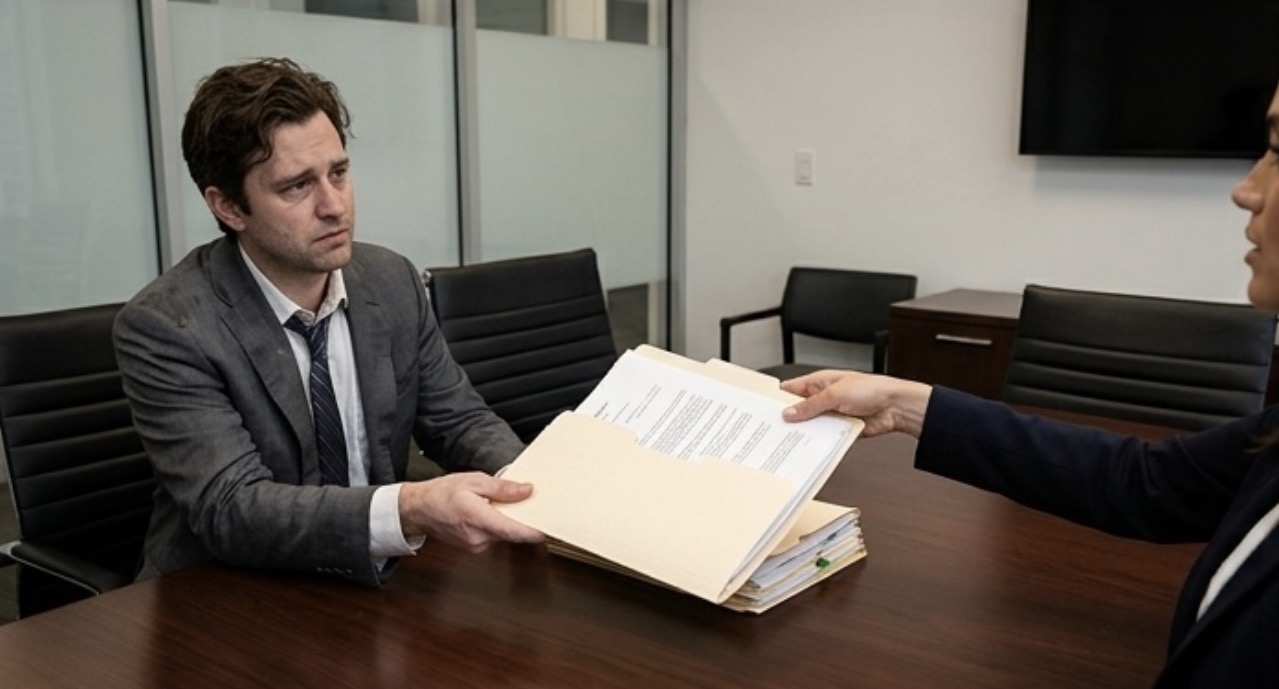
At 2 p.m., I handed Ethan a folder.
Inside were divorce papers, employment termination documents, and property records.
Linda stood behind him reading over his shoulder while the color slowly drained from both their faces.
That night, my phone wouldn’t stop ringing.
For the first time since meeting them, I let them beg.
But the truth is, this didn’t begin with a torn blouse.
That was simply the moment I stopped pretending everything was okay.
The following morning, I sat inside a quiet Hartford law office across from my attorney, Marissa Cole. She believed emotions lose cases, but records win them.
Thankfully, I had years of records.
I handed over everything:
The video.
Old messages full of insults from Linda.
Performance reports documenting Ethan’s failures at work.
For nearly a year, he had been holding a position he no longer deserved.
He missed deadlines.
Ignored repeated warnings.
Tried hiring unqualified friends.
And worst of all, he discussed confidential business information with his mother like company strategy was casual dinner conversation.
I had confronted him before.
Twice.
Each time he apologized. Each time he improved briefly before slipping right back into the same lazy habits, assuming I would always clean up the damage.
Our marriage had slowly become built entirely on my effort and his entitlement.
“And the house?” Marissa asked.
“Mine. Bought before marriage.”
“The Boston property?”
“Also mine.”
“Investments?”
“Protected by the prenup.”
She nodded calmly.
“So he’s uncomfortable,” she said. “Not destroyed. Courts care about that.”
I almost smiled.
Because that was exactly the point.
I wasn’t ruining his life.
I was reclaiming mine.
By noon, Human Resources officially terminated Ethan for sharing confidential information, repeated performance failures, and misuse of company funds.
Linda would later call it cruel.
The board called it necessary.
That afternoon, Ethan cornered me outside the office building.
His suit was wrinkled, his face exhausted.
“Did you fire me?” he asked.
“I fired an employee who became a liability.”
His jaw tightened.
“You’re doing this because of my mother.”
I looked directly at him.
“No. Your mother just forced me to stop ignoring the truth.”
He stepped closer.
“We can fix this.”
“Can you fix the clothes she destroyed?” I asked.
“That’s not the point.”
“Can you explain the company card charges?”
Silence.
“Can you explain why your mother knew confidential business plans?”

That was the moment I finally saw fear in his face.
Because the real problem wasn’t the divorce.
It was the fact that I finally saw everything clearly.
That night he tried every possible approach — flowers, apologies, anger, emotional texts, blame.
Linda called too.
First furious.
Then crying.
Then accusing me of humiliating her son.
I saved every message.
The next week became even worse for them.
A forensic accountant reviewed Ethan’s expenses. The issue wasn’t massive theft — it was smaller, careless spending he assumed nobody would question. Expensive dinners, hotels, golf outings, gifts for people who weren’t even clients.
He behaved like consequences didn’t apply to him.
Meanwhile, Linda started spreading her own version of the story.
According to her, I had become cold, power-hungry, and emotional.
Claire — Ethan’s sister — eventually called me.
“Is any of that true?” she asked carefully.
“No,” I answered. “And I can prove it.”
After a long silence, she sighed.
“I thought so.”
That weekend, Ethan came to the Connecticut house while movers packed his belongings.
He still believed I might change my mind.
I didn’t.
Linda arrived shortly after, perfectly dressed and furious.
“You can’t do this to my son,” she snapped.
“I already did,” I answered calmly.
“That’s his house.”
“No,” I said. “It was his address.”
Ethan looked away without saying a word.
For a second, Linda’s expression cracked.
Then she made one final mistake.
“You think money makes you important,” she shouted.
I met her eyes without flinching.
“No. But it reveals who actually paid for the things you destroy.”
Neither of them had a response.
And when they finally walked away, they weren’t powerful anymore.
They were simply two people locked out of a life they assumed belonged to them.
Three weeks later, Ethan asked to meet.
I refused twice before finally agreeing to thirty minutes in a public hotel lounge in Stamford.
He arrived early.
That alone felt strange.
The confidence was gone. So was the easy smile.
“I was wrong,” he admitted quietly.
I stayed silent.
“I thought everything was stable,” he continued. “I thought none of it mattered. My mom talking, me using the company card sometimes… I assumed you’d always fix things.”
There it was.
The truth.
“You assumed access,” I replied. “You assumed forgiveness.”
“That’s not fair.”
“It’s exactly fair.”
Then he admitted something else.
“She’s making things worse.”
He meant Linda.
Without money and control, their relationship had become tense. She blamed him constantly.
“She says if I had controlled you earlier, none of this would’ve happened.”
Hearing that explained a lot.
But understanding someone doesn’t repair the damage they caused.
“What do you want from me?” I asked.
“A better settlement. Maybe help finding another job.”
Even then, he still believed I would rescue him.
“You already got a fair deal,” I said.
He stared at me.
“You really don’t care anymore.”
“I care enough not to lie to either of us.”
Then he tried one last emotional plea.
“We had good years.”
“Yes,” I answered. “And then you chose her over me.”
He lowered his eyes.
“What ended us wasn’t the yelling,” I told him. “It was watching her treat me like I depended on you while you stood there and let it happen.”
He had no answer for that.
When I stood up to leave, he asked quietly, “That’s it?”
“Yes.”
I walked out into the cold air feeling lighter than I had in years.
The begging continued afterward.
Lawyers tried renegotiating.
Linda called from blocked numbers.
More apologies came.
But I never changed my mind.
Because I hadn’t taken everything from them.
I had simply taken back what already belonged to me.
By summer, the divorce was nearly finalized.
Ethan accepted a lower-paying job in New Jersey.
Linda moved into a much smaller home.
Claire eventually sent me one final message:
“You were right to leave. I’m sorry.”
I thanked her and moved forward.
I kept my company.
My homes.
My peace.
I hired a new operations director, Dana Mercer, who fixed in weeks what Ethan had ignored for months.
The business improved.
The atmosphere improved.
And honestly, so did I.
The last time I saw Linda was outside the courthouse.
She looked older. Smaller somehow.
She opened her mouth as if she wanted to say something, but no words came out.
And that silence said enough.
Because some people only recognize someone’s value after the locks change, the accounts close, and the person they underestimated walks away for good.