Princess Diana Secret Pregnancy Theory Resurfaces Nearly 30 Years Later

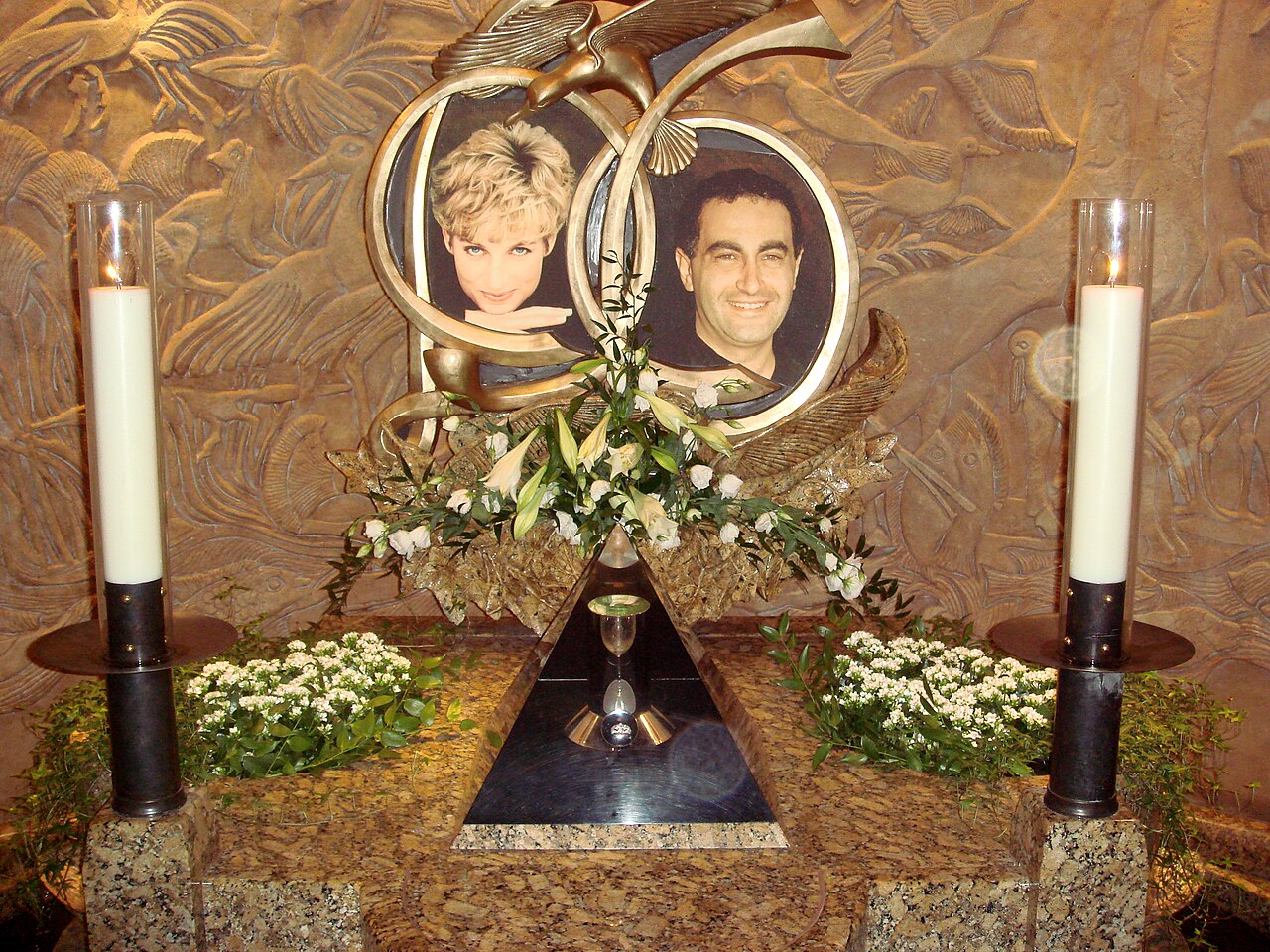
The Princess Diana secret pregnancy theory has returned to the spotlight nearly three decades after her death, reviving one of the most persistent and controversial claims surrounding the Paris crash that killed Diana and Dodi Fayed.
For years, Dodi’s father, Mohamed Al Fayed, insisted Diana had been pregnant with his son’s child when the couple died. He also maintained that their deaths were not simply the result of a tragic car accident.
Diana was 36 when she died on August 31, 1997. She and Dodi were traveling through Paris when their Mercedes crashed inside the Pont de l’Alma tunnel. Their driver, Henri Paul, was also killed.
What happened that night has been examined repeatedly by investigators, courts, journalists and the public. Yet despite extensive investigations, certain theories have never completely disappeared.
Perhaps none has been as enduring as the Princess Diana secret pregnancy claim.
In the years after the crash, Mohamed Al Fayed became one of the loudest voices questioning the official explanation of his son’s death.
His claims went far beyond suggesting that something unusual had happened inside the Paris tunnel.
Al Fayed said Diana and Dodi were planning to marry. More dramatically, he claimed Diana was pregnant with Dodi’s baby when she died.
If true, it would have meant Diana was expecting another child after Prince William and Prince Harry.
But there was a problem.
Investigators needed evidence, and the evidence presented during the British inquest did not support Al Fayed’s version of events.
The Princess Diana secret pregnancy allegation eventually became one of many claims examined in extraordinary detail during the lengthy inquest into the deaths of Diana and Dodi.
And one of the most important witnesses was the doctor who had actually examined Diana’s body.
Dr. Robert Chapman carried out Diana’s postmortem examination following her death.
Years later, he was asked directly whether he had noticed anything suggesting she had been pregnant.
His answer was straightforward.
“No, I did not.”
Chapman said he had seen no physical signs of pregnancy in Diana’s womb or ovaries.
On the surface, that appeared to deal a serious blow to the Princess Diana secret pregnancy story. But his testimony also contained an important detail that would help keep speculation alive.
A pregnancy in its very earliest stages can be extremely difficult to identify through physical examination alone.
Chapman explained that what a pathologist could see would depend heavily on how much time had passed since conception.
During approximately the first seven days, he said, there might be nothing visible at all. Between seven and fourteen days, something might be detectable, although even then it would be unlikely.
As a pregnancy progressed, the chances of finding recognizable changes would increase.
An established pregnancy can produce changes to the uterus and its lining, as well as the development of a gestational sac.
None of those signs were identified in Diana.
Still, the possibility that an extremely early pregnancy might leave little or no obvious physical evidence created a small area of uncertainty.
And for people already convinced that something had been hidden, that uncertainty became significant.
The Princess Diana secret pregnancy story is being discussed again after being revisited in Celebrity Crime Scene: Princess Diana, a FOX special co-produced by TMZ that premiered on August 20.
The program returns to Diana’s final hours and uses virtual reconstruction technology to examine the crash from several perspectives.
It also revisits some of the questions and allegations that have followed the tragedy since 1997.
That inevitably brings the focus back to Mohamed Al Fayed.
Before his death in 2023 at the age of 94, Al Fayed spent years publicly challenging the accepted account of what happened to Diana and Dodi.
He claimed the couple had personally told him they intended to marry and were expecting a child.
But his accusations did not stop there.
One particularly disturbing part of Al Fayed’s theory concerned what happened to Diana’s body after her death.
He alleged that Diana had been embalmed in Paris in an effort to hide evidence that she was pregnant.
The suggestion added another layer to the Princess Diana secret pregnancy conspiracy, but it was directly challenged during the inquest.
Chapman told the jury that the embalming process would not have prevented him from identifying physical evidence of pregnancy in Diana’s womb and ovaries.
In other words, if there had been sufficiently developed physical signs, he said he still would have been able to see them.
That was important because it challenged the suggestion that embalming had somehow erased the evidence.
But Al Fayed believed the alleged pregnancy was only one part of something much larger.
Al Fayed became convinced that Diana and Dodi had been deliberately killed.
He alleged that British security services were involved and eventually accused both MI6 and Prince Philip of being connected to an assassination plot.
His belief was unwavering.
In a 1998 interview with the BBC, Al Fayed said he was 99.9 percent certain the crash had not been an accident.
He insisted there had been a conspiracy and said he would continue searching for answers about exactly what happened.
Those were enormous accusations, particularly because they implicated senior figures and British institutions.
They were also investigated extensively.
The British inquest ultimately found no evidence that Prince Philip, MI6 or another government agency had orchestrated the deaths.
Earlier investigations in Britain and France had also failed to uncover evidence supporting an assassination plot.
Still, the Princess Diana secret pregnancy theory remained especially difficult to put to rest because investigators had to answer a much narrower question.
Was Diana actually going through a secret pregnancy?
PRINCESS DIANA And Dodi 1997 pic.twitter.com/TNScEt1OlL
— Modern History (@modernhistory) June 28, 2025
The inquest did not rely solely on the postmortem examination.
Jurors heard evidence about Diana’s life before the crash, including information about contraception and what she had told the people closest to her.
Evidence presented during the proceedings indicated Diana had been taking contraceptive pills.
There was also no indication that she had told her doctor she thought she was pregnant.
Her relatives, friends and associates apparently had not been told about a pregnancy either.
Considering how significant such news would have been, that absence mattered.
It did not mathematically prove that pregnancy was impossible, but it added another problem for the Princess Diana secret pregnancy claim.
Investigators also turned to scientific testing.
Operation Paget was the Metropolitan Police investigation created to examine the conspiracy allegations surrounding the deaths of Diana and Dodi.
The investigation looked at numerous claims, including the pregnancy allegation.
Blood recovered from the wrecked Mercedes was tested for human chorionic gonadotropin, commonly known as HCG.
HCG is a hormone closely associated with pregnancy and is the same biological marker commonly detected by pregnancy tests.
No HCG was found.
Once again, the result pointed away from the idea that Diana had been pregnant.
The contraceptive evidence, statements from those around Diana, postmortem findings and blood testing were all pushing in essentially the same direction.
But there remained one frustrating detail.
Science could not provide an absolute answer for every possible stage of an extremely early pregnancy.
Lord Justice Scott Baker addressed that issue directly during the inquest.
He acknowledged that, in strictly scientific terms, it might be impossible to prove the pregnancy question one way or another with complete certainty in this particular case.
That statement has continued to attract attention because, when separated from the rest of the evidence, it sounds like the door was left wide open.
It wasn’t.
There is a major difference between saying something cannot be proven with absolute scientific certainty and saying both possibilities are equally supported.
The evidence presented during the inquest overwhelmingly leaned in one direction.
Later, while summing up the case, Baker made that distinction much clearer.
He told the jury that there was “a great deal of evidence that she was not” pregnant.
That conclusion is crucial when looking at the Princess Diana secret pregnancy theory today.
Investigators did not discover evidence establishing that Diana was carrying Dodi’s child. Instead, multiple pieces of evidence suggested the opposite.
Diana’s death was not an ordinary celebrity tragedy.
She was one of the most famous women alive, and she had spent years at the center of enormous public interest.
Her marriage to the future King Charles III had collapsed under intense media scrutiny. Her relationship with the Royal Family remained a constant subject of speculation. Her every public appearance generated headlines.
Then, at only 36, she died suddenly in a Paris tunnel.
That combination created almost perfect conditions for conspiracy theories.
There were unanswered questions immediately after the crash. Information emerged gradually. Different witnesses remembered events differently. And millions of people struggled to accept that someone so famous could simply disappear in a matter of seconds.
Then Mohamed Al Fayed added an explosive alternative explanation.
According to him, Diana wasn’t merely dating his son. She was carrying Dodi’s baby and preparing to marry him.
If people accepted that premise, it became easier to believe the couple might have had powerful enemies.
But accepting the Princess Diana secret pregnancy allegation requires going beyond what investigators ultimately found.
The British inquest examined Al Fayed’s accusations in extraordinary detail.
After months of testimony and evidence, it did not find proof of a plot involving Prince Philip, MI6 or the British government.
French and British investigations had reached similar conclusions.
The pregnancy allegation also failed to gain the evidentiary support Al Fayed believed it deserved.
That does not mean every microscopic possibility could be ruled out with perfect certainty.
Medicine rarely works that way, particularly when discussing a hypothetical pregnancy in its earliest possible stage.
But the absence of absolute certainty is not evidence that the allegation was true.
That distinction often gets lost when old conspiracy theories return online.
The reason the Princess Diana secret pregnancy story keeps returning may have less to do with new evidence and more to do with Diana herself.
Her death still carries an unusual emotional weight.
People remember where they were when they heard the news. Images of flowers outside Kensington Palace became some of the defining pictures of the 1990s. Questions about Diana’s relationship with the monarchy, the press and the people around her continued long after her funeral.
Every few years, a documentary, television special or new account brings those final days back into public conversation.
And inevitably, the old theories return with them.
The pregnancy allegation is especially powerful because it offers an entirely different imagined future.
What if Diana and Dodi had married?
What if they had been expecting a child?
What would that have meant for Diana, William and Harry?
Those questions make compelling stories, but they are not the same thing as evidence.
The Princess Diana secret pregnancy claim was investigated, debated and tested against the information available. The evidence presented at the inquest pointed strongly toward Diana not being pregnant.
The wider allegations of an assassination conspiracy were also investigated and rejected.
Still, one tiny scientific qualification remains. A pregnancy at its earliest stage may not always leave detectable physical signs.
For conspiracy theorists, that gap is enough to keep asking questions.
For investigators, however, the overall picture was considerably clearer.
Nearly three decades after the crash, the Princess Diana secret pregnancy theory remains exactly that: an allegation that became one of the most famous conspiracy theories attached to Diana’s death, but one that the evidence presented during the official investigations did not establish as fact.