Surgeon Turns Children’s Bandages Into Artwork After Surgery to Make Them Happier

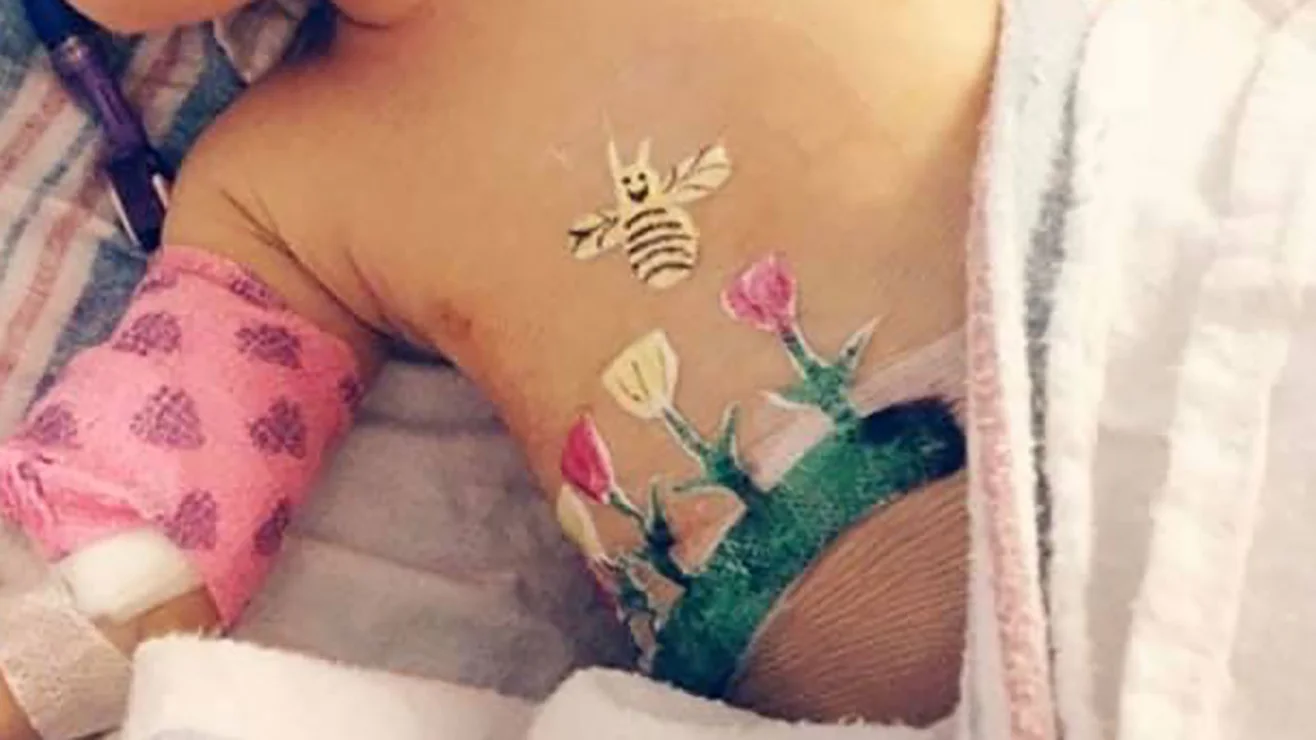
After finishing an operation, this surgeon in Ohio sometimes turns a young patient’s bandage into a piece of artwork made especially for them.
Surgery is scary at any age, but for a child, the experience can feel especially overwhelming, and he found a surprisingly simple way to make those difficult moments a little brighter.
Dr. Robert Parry is a surgeon at Akron Children’s Hospital and also a self-taught artist. Instead of leaving children with an ordinary dressing after surgery, Parry spends a few extra minutes drawing something on it.
The drawings are not medically necessary, of course. They do not change the outcome of the procedure. But to a nervous child waking up after surgery, seeing a butterfly, favorite character, or another playful design where they expected a plain bandage can make the whole experience feel different.
Each piece of artwork reportedly takes Parry only about five minutes to create.
Yet for some of his patients and their parents, those five minutes have become a memory that lasts for years.
Christina Potts Whipkey knows exactly how meaningful such a small gesture can be.
Her daughter Kennedy was seven years old when she needed surgery for a hernia. Understandably, the experience brought plenty of anxiety for the family. But Parry gave Kennedy something else to think about.
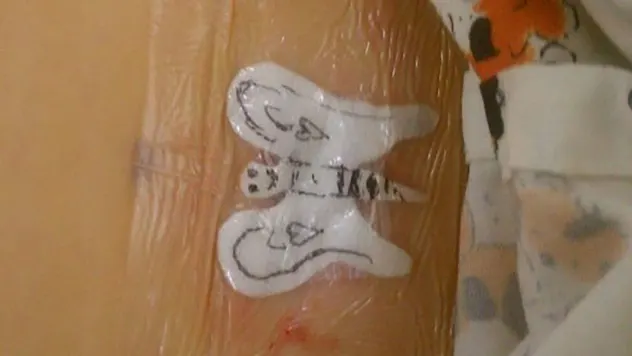
Before the procedure, he told Kennedy and her siblings that she would have a beautiful butterfly waiting for her afterward.
And he kept his promise.
When Kennedy woke up, there was a black-and-white butterfly drawn across her dressing, complete with little hearts decorating its wings.
Nine years later, her mother still remembered it.
Whipkey explained to CNN that having a sick child creates a level of stress that parents often try to hide. There is fear about the procedure itself, worry that something could go wrong, and sometimes financial pressure sitting quietly in the background.
Children do not necessarily see all of that. Parents often do their best to make sure they don’t.
That is why Parry’s artwork mattered.
Instead of waking up and immediately worrying about an incision or scar, Kennedy wanted to see the butterfly she had been promised. Her siblings were curious too. Suddenly, the bandage became something everyone was excited to look at rather than something frightening.
Kennedy was proud of it.
For her mother, that reaction said everything.
Parry joined Akron Children’s Hospital in 2011. According to a hospital profile published several years later, he had already performed more than 10,000 surgeries by that point.
Somewhere along the way, drawing artwork on his young patients’ dressings became his signature.
Children started requesting particular designs, and Parry found himself creating everything from Disney characters to sports team logos.
Some requests required a little more imagination.
One child apparently asked for a bottle of French salad dressing. The joke was perfect considering Parry was drawing it directly onto a surgical “dressing.”
It is the sort of humor that can feel especially welcome inside a hospital.
The children aren’t the only ones who enjoy the tradition, either.
Parents wait to see what Parry has created, and even members of the medical staff have become curious about his latest drawings.
Parry told CNN that nurses in the recovery room often want to see which design a child received. What began as a personal gesture has turned into something that can lift the mood of an entire room.
For Parry himself, creating the artwork is enjoyable too.
That may be part of what makes the gesture feel genuine. He isn’t simply following another hospital routine. He is taking a few minutes after doing an extremely serious job to give a child something unexpected and personal.
Another family experienced that kindness in 2014.
Samantha Manning’s daughter, Rose, was only 11 months old when she was brought to the hospital after being diagnosed with a liver disease that commonly requires a transplant.
Parry was one of the doctors involved in her surgery.
The family did not know about his tradition beforehand, so they weren’t expecting anything unusual when Rose came out of surgery.
Then they saw her dressing.
Parry had covered it with a rose garden.
For a little girl named Rose, the artwork couldn’t have been more fitting.
Manning later recalled how moved the family was by the surprise. To her, the drawing represented something larger about the care they had received. During one of the most frightening experiences a parent can face, someone had still taken the time to think about their daughter as a person, not simply as another patient on an operating schedule.
That small detail lifted their spirits.
And sometimes, those details are the things families remember most clearly.
Hospitals can be intimidating places for children. There are unfamiliar rooms, strange machines, needles, masks, bright lights and adults talking about things they may not fully understand. Even when everyone around them is kind, it can still be frightening.
A little artwork obviously cannot erase all of that.
But it can give a child something positive to focus on.
Instead of looking down and seeing only evidence of an operation, they might see their favorite character. Or a sports logo. Or a butterfly covered in hearts. Or, in Rose’s case, an entire garden created just for her.
Parry’s drawings eventually attracted attention far beyond the hospital.
Akron Children’s Hospital included his illustrations among its top moments of the decade, and a photograph showing him creating one of the designs later made its way to the front page of Reddit.
The online attention is understandable. There is something immediately touching about seeing a surgeon, someone whose work can literally involve life-or-death decisions, taking another five minutes to pick up a marker and draw.
Still, the real value of the artwork probably isn’t measured in likes, shares, or headlines.
It happens in the recovery room.
It is the moment a frightened child wakes up and realizes there is something fun waiting for them.
It is a parent seeing their child smile after spending hours worrying about whether everything would be okay.
It is a nurse stopping for a second to see what today’s drawing looks like.
And it is a reminder that good medical care is not always limited to what happens during an operation.
Sometimes compassion shows up in much smaller ways.
For Parry’s young patients, that might mean going into surgery expecting stitches and a plain bandage, then waking up with a tiny piece of artwork created especially for them.
The surgery may still be frightening. The recovery may still take time.
But at least there is something on that bandage worth smiling about.