Mr. Whitaker’s Hidden Goodbye Changed His Caregiver’s Life Forever

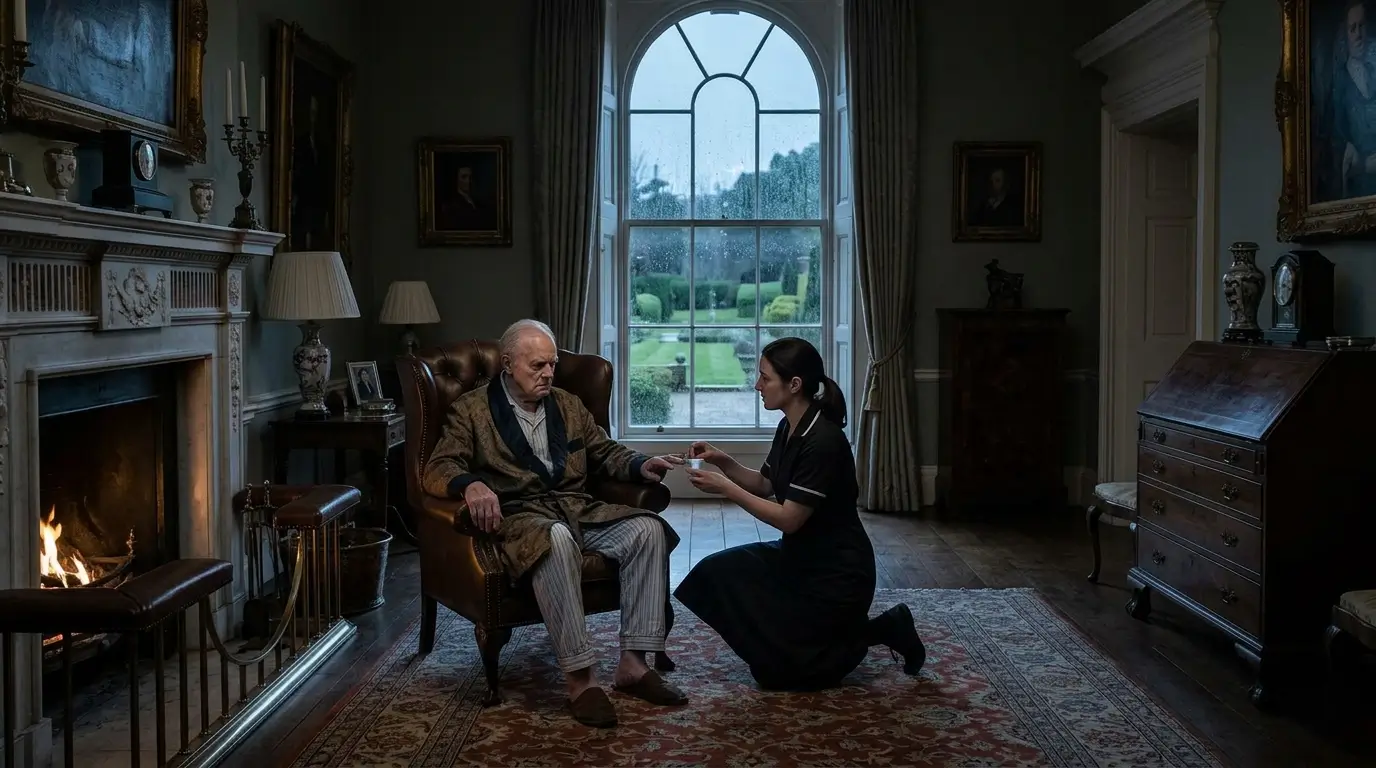
Mr. Whitaker was never the kind of man who made things easy. From the first day I stepped into the Whitaker estate as his caregiver, I understood that quickly.
The house itself felt cold despite its size and beauty. Every hallway carried silence, every room felt carefully controlled, and every interaction with him came with tension I could almost predict before he spoke.
I was hired to help care for him after his health began to decline. His family explained the basics, showed me around the property, and gave me instructions about routines and medications.
Everything was professional and distant. To them, I was simply another employee brought in to handle responsibilities they either could not manage or did not want to manage themselves.
At the beginning, Mr. Whitaker refused almost every form of help. If I reminded him to take his medication, he would tell me he was perfectly capable of remembering on his own.
If I tried to assist him while walking through the estate, he would brush my hand away. Even preparing meals became difficult because he criticized nearly everything placed in front of him.
Still, I stayed.
Most people would have left. Some actually did before me. The staff whispered stories about previous caregivers who lasted only weeks before giving up.
Mr. Whitaker had a reputation for being demanding, proud, and emotionally closed off.
He rarely thanked anyone. He rarely smiled. At times, it seemed like he intentionally created distance between himself and everyone around him.
But I slowly realized something important about Mr. Whitaker. Beneath the frustration and resistance was a man terrified of losing control over his own life.
Aging had stripped pieces of independence from him little by little. His body no longer responded the way it once had. Tasks that used to take seconds now took effort.
The wealthy businessman who once managed large investments and commanded rooms full of people now needed assistance getting through ordinary days. That reality clearly haunted him.
Understanding that changed the way I approached my work.
Instead of taking his harsh words personally, I learned to give him space when he needed it. I stopped trying to force conversations and allowed silence to exist naturally between us. I became patient in ways I had never been before.
Over time, routines formed.
Every morning, I would prepare breakfast exactly the way he liked it. Toast lightly crisped. Coffee strong but not bitter. Fruit sliced neatly on the side.
At first, he never acknowledged the effort. Then one morning, after nearly a year of caring for him, he quietly said, “You finally learned how I like my coffee.”
It was not exactly praise.
But for Mr. Whitaker, it was close.
That small moment stayed with me because it felt like the first crack in the wall he had built around himself.
As the months passed, more moments followed.
Sometimes he would ask me to sit in the study while he read the newspaper. Other times, he would comment on the weather or bring up stories from his younger years. The conversations were never emotional or deeply personal, but they became more human.
I learned that Mr. Whitaker had built much of his fortune through real estate investments. He had spent decades expanding his business while raising a family that eventually became more connected to wealth than to each other. He rarely spoke badly about his children, but there was distance there that could not be ignored.
Most of them visited only when necessary.
Birthdays, holidays, legal matters, and business discussions brought them to the estate. Outside of those occasions, the mansion remained quiet. Phone calls were short. Visits ended quickly. Even during family dinners, conversations felt formal rather than warm.
Meanwhile, I was there every day.
I saw the difficult moments nobody else witnessed. I helped him through sleepless nights when pain kept him awake. I sat nearby during doctor appointments where new health concerns surfaced. I handled emergencies quietly so the household could continue functioning without chaos.
None of it felt glamorous.
Caregiving rarely is.
It is exhausting work that often goes unnoticed. People see the patient, but they rarely see the emotional weight carried by the person providing care. There were days when I felt invisible inside that enormous house.
Yet something kept me there.
Maybe it was responsibility. Maybe it was loyalty. Maybe, deep down, I understood that Mr. Whitaker needed consistency more than he admitted.
Years passed that way.
Season after season, routine became familiarity. Familiarity slowly became trust.
Mr. Whitaker stopped resisting help as much as before. He began asking for my opinion occasionally. He even developed small habits that quietly acknowledged my presence in his life.
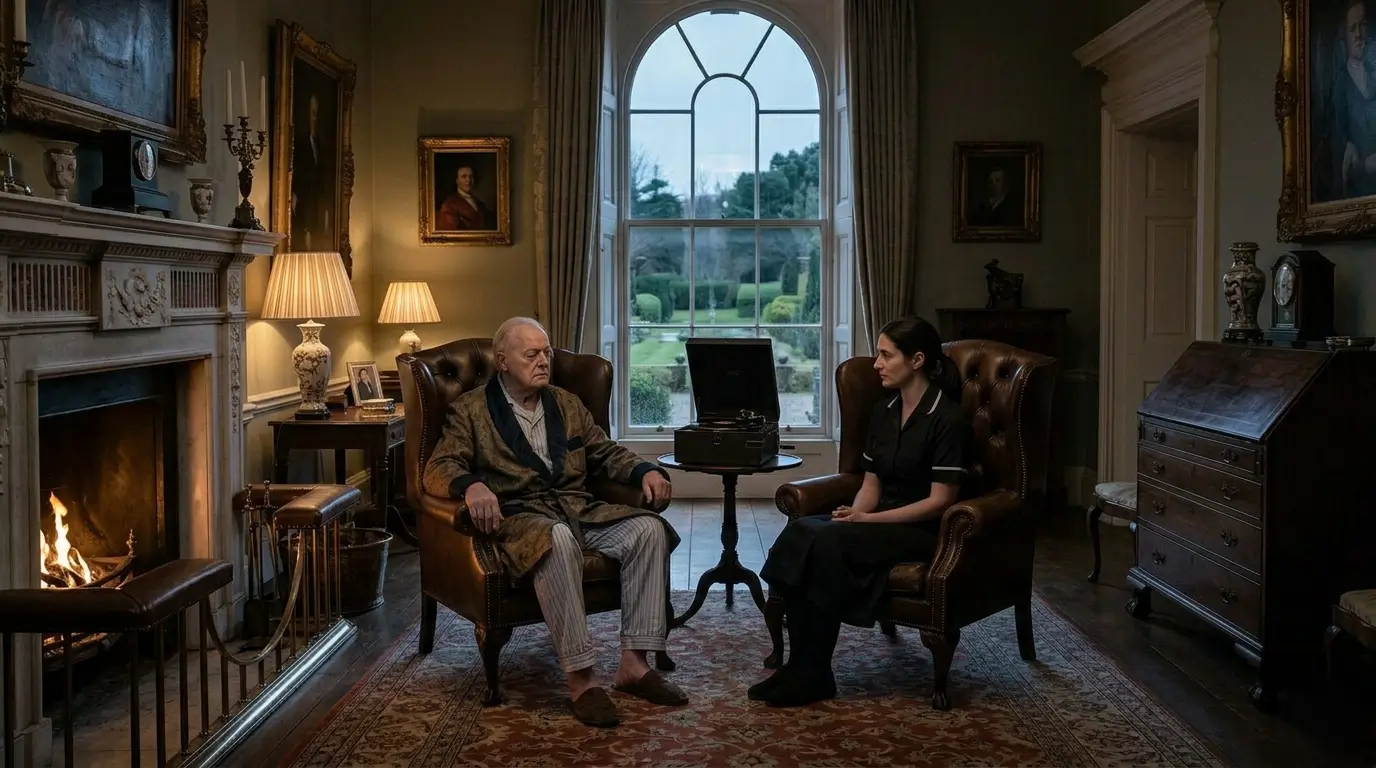
Every evening, for example, he would leave one chair open beside the fireplace while he listened to old jazz records. He never directly invited me to sit there, but the gesture became understood between us.
Sometimes we would sit in silence for nearly an hour.
Oddly enough, those silent evenings became some of the most peaceful moments inside the estate.
One winter night, during a heavy storm, the power briefly went out across the property. The house became dark except for the soft glow of emergency lights. Mr. Whitaker looked unusually unsettled.
I lit candles throughout the main living room and prepared tea while we waited for electricity to return. For the first time since I had known him, he spoke openly.
He admitted he hated feeling dependent.
He said losing independence felt worse than losing money.
Then he looked at me and quietly asked why I had stayed so long when so many others had left.
I remember thinking carefully before answering.
Finally, I told him the truth.
I said that everyone deserves dignity, especially when life becomes difficult.
Mr. Whitaker stared into his cup for several seconds after I said that. Then he nodded once.
After that evening, something changed permanently between us.
The tension that had once defined our relationship faded almost completely. Mr. Whitaker still had difficult days, but there was mutual understanding now. He trusted me with things he trusted almost nobody else with.
He began sharing stories about his life before wealth consumed everything.
He talked about fishing trips from his younger years. He described the small apartment where he and his wife first lived after getting married. He spoke about mistakes he regretted making with his children while focusing too heavily on business.
Those conversations revealed a side of Mr. Whitaker few people probably ever saw.
Behind the expensive suits, luxury estate, and millionaire reputation was a man carrying loneliness he never fully admitted out loud.
The older he became, the more visible that loneliness felt.
His health continued declining during the final years.
Doctor visits increased. Walking became harder. Some mornings he struggled even getting out of bed. Despite his pride, he eventually accepted more assistance from me without argument.
One evening, after I helped him settle into bed, he stopped me before I left the room.

“You stayed when you didn’t have to,” he said.
That was all.
No dramatic speech.
No emotional confession.
Just one simple sentence spoken quietly in the dark.
But hearing those words from Mr. Whitaker carried enormous weight because I understood how difficult acknowledgment was for him.
A few days later, he passed away.
The estate transformed almost immediately afterward.
His children returned within hours. Lawyers arrived. Phone calls filled every room. Conversations centered around documents, inheritance details, properties, investments, and legal arrangements.
The atmosphere became cold in a completely different way.
During those days, I moved carefully through the house trying not to interfere. I continued helping where needed, though it became increasingly clear my presence was no longer viewed as important.
Nobody asked how I was handling the loss.
Nobody acknowledged the years I had spent caring for Mr. Whitaker.
To them, my role had ended the moment he died.
One afternoon, one of his children informed me that my services were no longer required. The conversation lasted less than five minutes.
I was thanked politely but formally.
Then I was asked to gather my belongings.
That moment hurt more than I expected.
For over ten years, I had dedicated enormous portions of my life to caring for Mr. Whitaker. I had sacrificed holidays, personal relationships, sleep, emotional energy, and countless ordinary moments most people take for granted.
Yet once he was gone, it felt like none of it mattered.
The estate that had consumed so much of my life suddenly no longer had space for me.
I packed quietly.
As I walked through the halls one final time, memories followed me everywhere. The study where Mr. Whitaker read newspapers every morning. The dining room where he criticized my cooking during the early years. The fireplace where we sat silently listening to jazz.
Leaving felt heavier than I expected.
Not because I cared about the mansion or the money surrounding it.
What hurt was the feeling of disappearing.
After giving so much of myself to that household, I suddenly became invisible again.
The weeks after leaving were difficult.
I tried rebuilding normal life outside the estate, but everything felt unfamiliar. My routines had revolved around Mr. Whitaker for so long that I struggled adjusting to empty days.
Part of me also carried unresolved grief.
Despite his flaws, despite the difficult beginning, despite the emotional distance he often maintained, Mr. Whitaker had become an important part of my life.
Caring for someone over a decade creates a bond that is difficult to explain to people who have never experienced it.
Then came the phone call.
At first, I assumed there had been some legal issue involving paperwork or medical records. The voice on the other end simply asked if I could return to the estate because something addressed to me had been discovered.
I remember feeling confused immediately.
Why would Mr. Whitaker leave something for me?
When I arrived at the estate, the atmosphere felt different from before. Less chaotic. More tense.
One of the attorneys met me near the study and handed me a sealed envelope.
My name was written across the front in Mr. Whitaker’s handwriting.
For a moment, I could barely breathe.
The attorney explained that the envelope had been hidden beneath Mr. Whitaker’s bed intentionally and only discovered during a detailed inventory of personal belongings.
My hands shook while opening it.
Inside was a letter.
The handwriting was uneven in places, likely because of his declining health, but it was unmistakably his.
The letter was not overly emotional.
That would not have sounded like Mr. Whitaker.
Instead, it was direct and honest.
He wrote that throughout his life, many people remained close to him because of money, obligation, or status. But according to him, very few people stayed simply because they cared.
Then he wrote something I will never forget.
He said I had given him dignity during the hardest years of his life.
Not pity.
Not obligation.
Dignity.
Reading those words broke something open inside me.
For years, I had questioned whether any of my effort truly mattered. Caregiving can feel emotionally invisible because so much of the work happens quietly behind closed doors.
Yet Mr. Whitaker had seen it.
He had understood far more than he ever openly expressed.
At the bottom of the letter was information that stunned me even further.
Mr. Whitaker had left me ownership of his lakeside cabin.
I knew the property well because he occasionally spoke about it during quieter evenings. According to him, it had once been the only place where he genuinely felt peace.
The cabin sat away from the noise of business, family tension, and social expectations. He used to fish there years ago before age and responsibility consumed most of his life.
I had never imagined he would leave it to me.
The attorney confirmed everything legally.
The property was mine.
I sat there holding the letter while emotions crashed through me all at once.
Shock.
Grief.
Relief.
Disbelief.
But more than anything else, I felt seen.
That was the part that mattered most.
The cabin itself was valuable, yes. It represented financial security and stability I never expected to receive.
But the true weight of the gesture came from what it represented emotionally.
Mr. Whitaker had acknowledged me not as an employee, not as background help, not as someone temporary.
He acknowledged me as a person who had mattered.
For years inside that estate, I often felt invisible to everyone except him.
Ironically, it was only after his death that I fully understood he had been paying attention all along.
Eventually, I visited the lakeside cabin.
The property was peaceful in a way the estate never was.
Tall trees surrounded the water. The air smelled clean and quiet. Time seemed slower there.
Inside the cabin, many things remained untouched from years earlier. Old fishing equipment rested near the wall. Books sat stacked beside a worn chair facing the lake. Framed photographs captured moments from a younger version of Mr. Whitaker’s life.
Looking around, I realized this was probably the version of himself he missed most.
Not the millionaire.
Not the businessman.
Not the powerful figure everyone respected.
Just a man searching for peace.
The more I reflected on everything that happened, the more I understood the hidden sadness that shaped so much of Mr. Whitaker’s behavior.
Money had built walls around him.
Success had isolated him.
Pride had prevented him from expressing gratitude openly for most of his life.
But near the end, he found one final way to say what he struggled to say directly.
He left behind proof that loyalty and compassion had mattered to him after all.
That realization changed me deeply.
For years, I believed my work existed only in the background of other people’s lives. Caregivers often disappear into routines without recognition. Their emotional labor becomes expected rather than appreciated.
Yet the hidden envelope beneath Mr. Whitaker’s bed reminded me that quiet acts of care are not meaningless simply because they happen privately.
Sometimes the people who seem emotionally distant are noticing far more than they reveal.
Sometimes gratitude arrives late.
Sometimes acknowledgment appears only after silence.
And sometimes, the most meaningful inheritance has nothing to do with money at all.
When people hear this story, they usually focus on the cabin.
They imagine the value of the property or the surprise of receiving something so unexpected.
But whenever I think about Mr. Whitaker now, I think about the letter instead.
I think about the sentence where he thanked me for giving him dignity.
Because after ten years of being treated as necessary but forgettable, those words mattered more than anything else he could have left behind.
In the end, Mr. Whitaker gave me something I had not realized I needed so badly.
He gave me proof that my presence had mattered.
And after everything we went through together, that acknowledgment became the most unforgettable gift of all.