On Mother’s Day, a Little Girl Showed Up With My Son’s Backpack And a Shocking Secret That Changed Everything

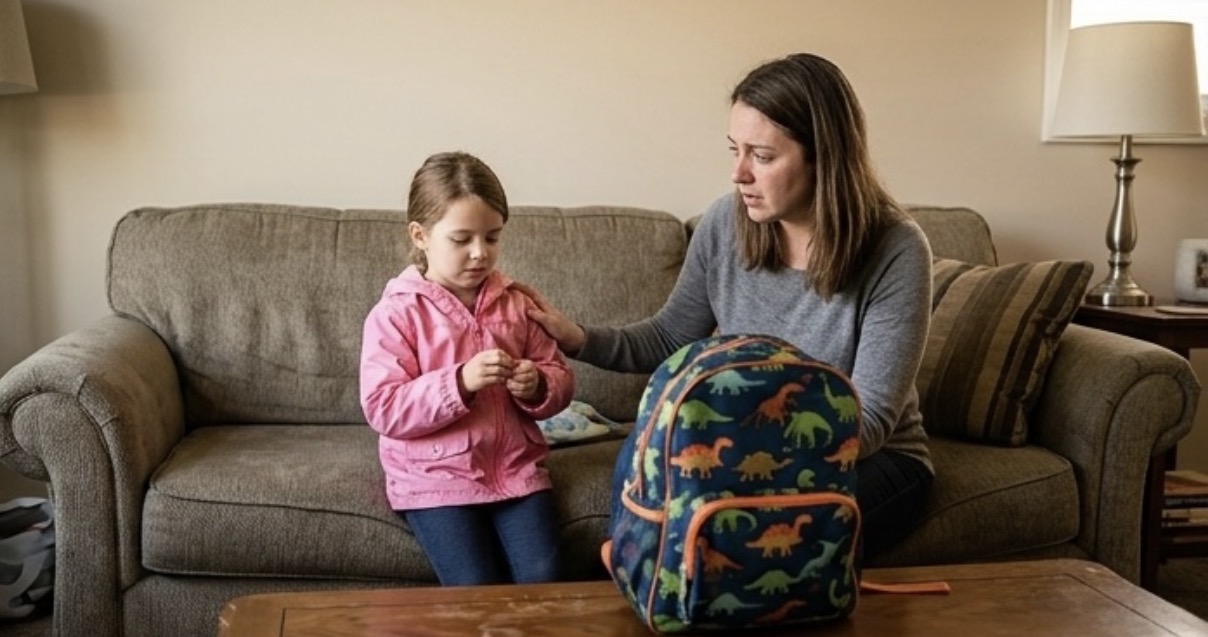
I lost my eight-year-old son, Randy, just one week before Mother’s Day.
People called it an unfortunate tragedy. Something sudden. Something unavoidable. And I tried to accept that version of events because anything else would have made it impossible to keep breathing in the same house where he once ran through the hallways.
But there was one detail I couldn’t let go of.
His backpack.
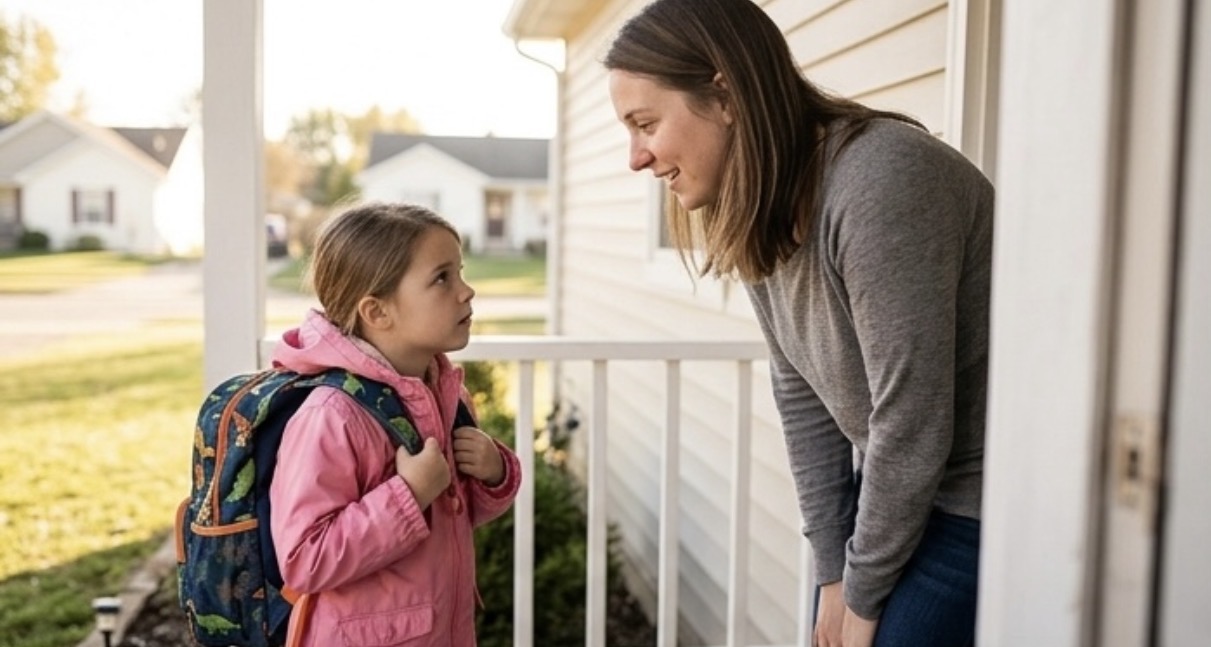
That bright red Spider-Man backpack he never parted with. The one he carried everywhere. The one he placed carefully beside his bed before school trips because he was afraid he might forget it in the morning.
And after he was gone… it disappeared.
At first, I told myself it didn’t matter. That it was insignificant compared to everything else I had lost.
But grief doesn’t work like logic.
I started asking questions.
Ms. Bell, his teacher, said she never saw it after the ambulance left. The principal assured me they searched the classrooms and hallways.
Even the officer who visited my home shifted uncomfortably whenever I mentioned it.
“Sometimes things can be misplaced in situations like this,” he said.
I remember staring at him across my kitchen table.
“My son is gone because of what happened there,” I said quietly, “and the only thing he had with him is gone too.”
He had no answer.
Neither did anyone else.
And then Mother’s Day arrived like a storm I wasn’t ready to survive.
Every year, Randy used to make me breakfast. Messy cereal. Milk spilled across the counter. Flowers picked from outside with soil still clinging to the roots.
That morning, the house was silent.
Too silent.
I sat in the living room holding his dinosaur blanket, an untouched cereal bowl sitting on the table in front of me.
At around nine, the doorbell rang.
I didn’t want to open it. I didn’t want sympathy, condolences, or another look of pity.
But the knocking continued. Harder this time.
Eventually, I forced myself to the door.
And when I opened it, I froze.
A little girl stood there, no older than eight or nine, clutching Randy’s backpack like it was something fragile she had sworn to protect. Her hair was messy, her eyes swollen with tears.
For a moment, I couldn’t breathe.
“Are you Randy’s mom?”
I nodded.
“I know you were looking for this,” she said.
My eyes locked onto the Spider-Man fabric.
“What do you mean?” I managed.
She held it tighter.
“Randy told me to keep it. He was my best friend.”
“What’s your name?”
“Sarah.”
I stepped aside without thinking. After a pause, she walked into the kitchen still holding the bag like it might disappear.
“I didn’t steal it,” she said quickly.
“I believe you,” I answered.
“I was protecting it.”
Something in my chest cracked at her words.
She placed it carefully on the table.
“Open it,” she said.
My hands trembled as I unzipped it.
Inside were balls of lavender and white yarn, knitting needles, and carefully folded tissue paper wrapped around something soft.
I pulled it out slowly.
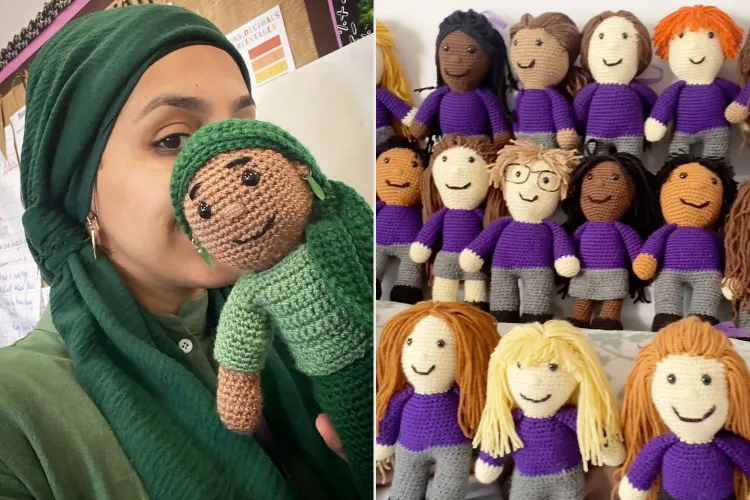
A handmade unicorn.
Or at least, it was supposed to be one. One leg was missing, the body was uneven, the horn slightly crooked.
“It was Randy’s gift for you,” Sarah said quickly. “From craft class.”
I stared at it, confused.
“Why would he make a unicorn?” I whispered. “He loved dinosaurs.”
She wiped her nose with her sleeve.
“He said you liked them.”
The words hit me harder than expected.
Months earlier, I had joked about unicorns—about liking them and drinking coffee from a silly unicorn cup. I never thought he had remembered.
Under the yarn sat a folded Mother’s Day card in his handwriting.
Mom,
It’s not done yet. Don’t laugh.
Sarah says the horn is the hardest part.
I love you more than cereal breakfasts.
Love, Randy.
A sound broke out of me before I could stop it.
Sarah began crying too.
Then she spoke again, quieter.
“There’s something else.”
At the bottom of the bag was another crumpled piece of paper, folded tightly like someone had tried to hide it.
I opened it slowly.
Dear Mom,
I’m sorry I ruined the Mother’s Day wall.
I know you’re tired of problems.
But I promise I’m not bad.
Love, Randy.
My confusion sharpened into something colder.
“What is this?”
Sarah looked down.
“Ms. Bell made him write it.”
A heavy silence filled the kitchen.
“When?”
“Before he fell.”
Then she told me.
Another student had spilled paint during the Mother’s Day display. Decorations were damaged. And Randy—who had been holding glue while helping Sarah—was blamed.
“He kept saying he didn’t do it,” Sarah said. “He said you knew he wasn’t a liar.”
I looked at the letter again, noticing how hard the pencil had been pressed into the paper.
“He was scared you’d be disappointed,” she whispered.
That sentence broke something inside me.
I imagined him standing there, carrying guilt that wasn’t his, trying to protect my image of him even in his last moments.
“Did anything else happen?” I asked.
Sarah pressed a hand to her chest.
“He said his chest felt squished again.”
“Again?”
She nodded, crying harder now.
“Yes. But he said it before too—and told me not to tell you because you were sick.”
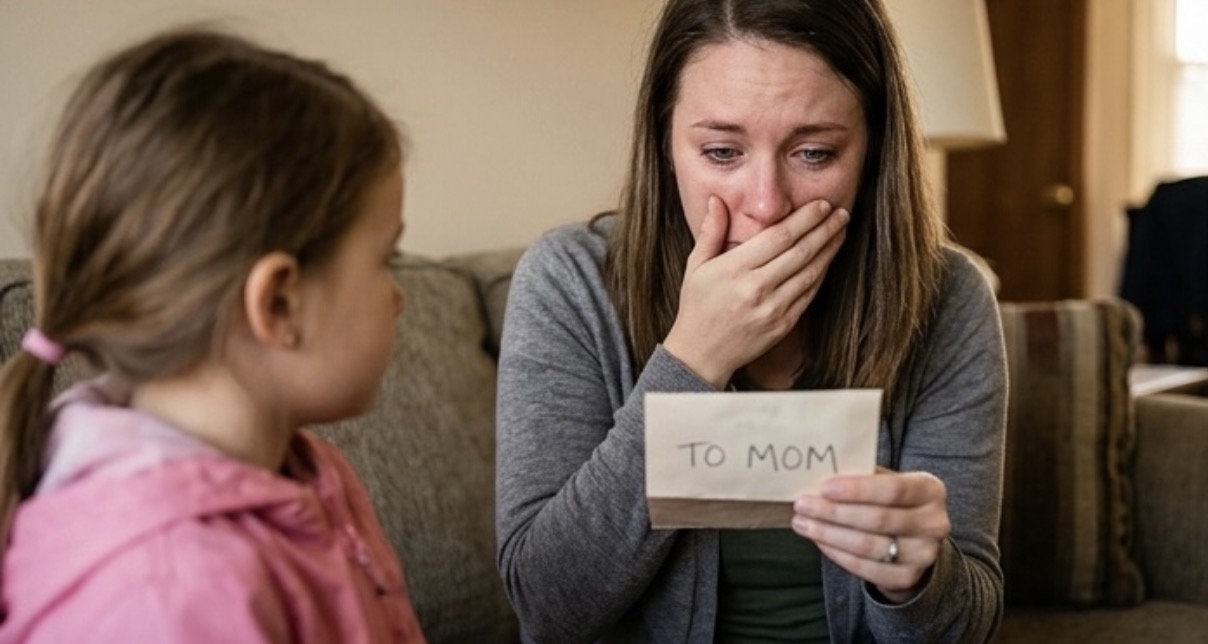
I couldn’t breathe properly.
He had been hiding pain from me.
Trying not to worry me.
Sarah wiped her face.
“I told him to drink water,” she whispered. “My grandpa says it helps.”
I knelt in front of her.
“You were trying to help him.”
“But it didn’t work.”
“No,” I said softly. “But you were kind to him. That matters.”
She explained what happened next in fragments—Randy trying to put the unicorn back, insisting it had to stay in the backpack until Mother’s Day, wanting to protect my gift from being ruined by the apology note.
Then everything collapsed.
He fell.
Teachers shouted. Paramedics rushed in. Children were pulled out of the classroom.
And his backpack stayed under the table.
Untouched.
Hidden in the chaos.
“Before it happened,” Sarah said quietly, “he told me to keep it safe until Mother’s Day.”
Her voice shook.
“I thought adults would throw it away.”
Instead of answering, I pulled her into a hug as she sobbed against me.
That bag wasn’t just an object.
It was everything he left behind.
Not just the unfinished unicorn—but proof of who he was in his final hours. Kind. Thoughtful. Worried about others even while carrying pain of his own.
After she calmed down, I asked about her family.
“Grandpa,” she said softly.
I called him.
An hour later, an exhausted man arrived at my door, apologizing repeatedly for Sarah’s visit. I stopped him.
“She gave me something important,” I said.
The next morning, I went back to the school carrying Randy’s backpack.
Inside were the apology note, the unfinished unicorn, and his Mother’s Day card.
Ms. Bell saw me in the hallway and froze when she recognized it.
I handed her the apology letter.
“This is what my son wrote before he died,” I said quietly.
Her hands went to her mouth.
I asked her directly if Randy had ruined the display.
A long silence followed.
Then she admitted it.
“No,” she whispered. “He didn’t.”
Sarah stood beside me, holding my hand.
I looked at Ms. Bell and spoke clearly.
“I don’t blame you for what happened to my son. But the last thing he felt was shame—for something he didn’t do.”
Three days later, the school held its Mother’s Day event.
Before it began, Ms. Bell publicly corrected what had happened. She admitted Randy had been wrongly blamed.
It didn’t erase anything.
Nothing could.
Later, Sarah stepped forward holding a small gift bag.
Inside was the finished unicorn.
Still imperfect. Still uneven. One ear larger than the other, the horn slightly crooked.
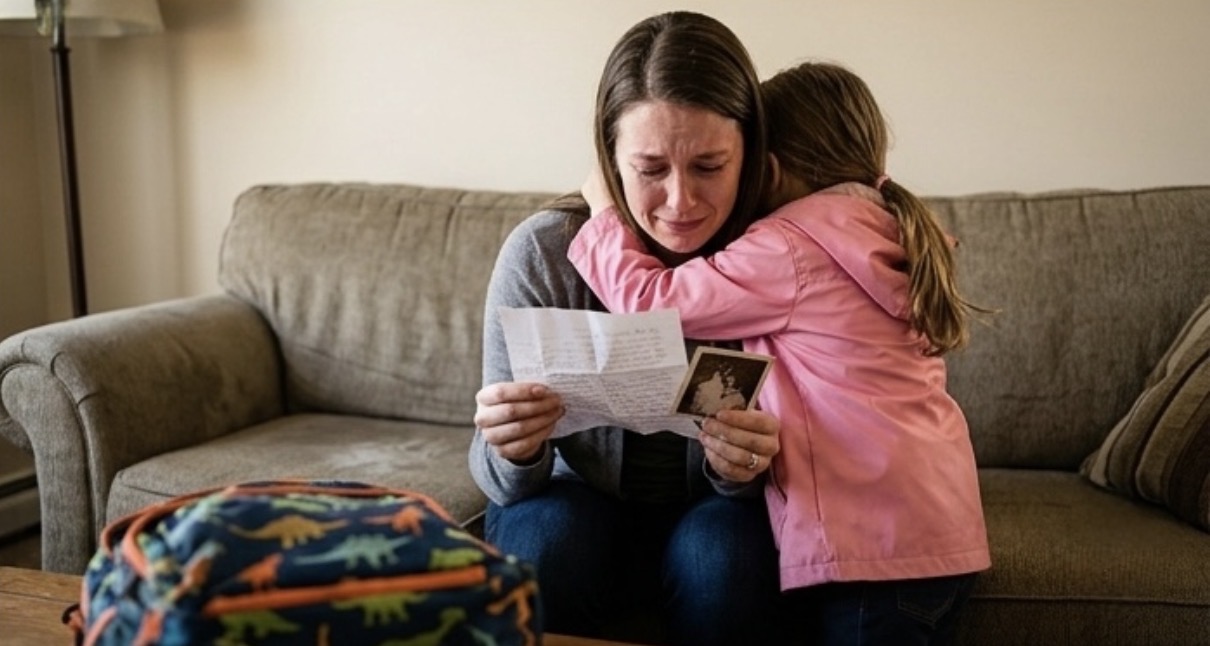
But complete.
“I finished it for him,” she said softly. “Almost.”
That Mother’s Day, I thought I had lost my son entirely.
Instead, a little girl arrived at my door carrying his backpack—and inside it, I found proof that even in loss, love doesn’t disappear.