
What Do Beach Flag Colors Mean? A Simple Safety Guide Every Beachgoer Should Know

You arrive at the beach, kids already running toward the waves. Then you notice the flags near the lifeguard station—bright, color-coded signals moving in the wind. They’re not decoration. They’re warnings that can change what happens next in the water.
These beach flags are part of an international safety system developed by the International Life Saving Federation in the 1960s to reduce drowning risks. Today, similar flag systems are used in more than 100 countries. Conditions can change quickly—calm water in the morning can turn dangerous within hours.
Here’s a clear breakdown of what each flag actually means.
Water Condition Flags
Green Flag: Low hazard (safe conditions)
Green indicates generally calm water and minimal risk.
Some beaches don’t use green at all, because no water is ever truly risk-free. Even on calm days, currents and unexpected changes can still occur, so caution is always important.
Yellow Flag: Moderate hazard – caution required
Yellow means conditions are becoming more challenging, often due to waves or developing currents.
Even strong swimmers should stay alert. Rip currents can form and quickly pull swimmers away from shore. Children and weaker swimmers should remain in shallow water close to the beach.
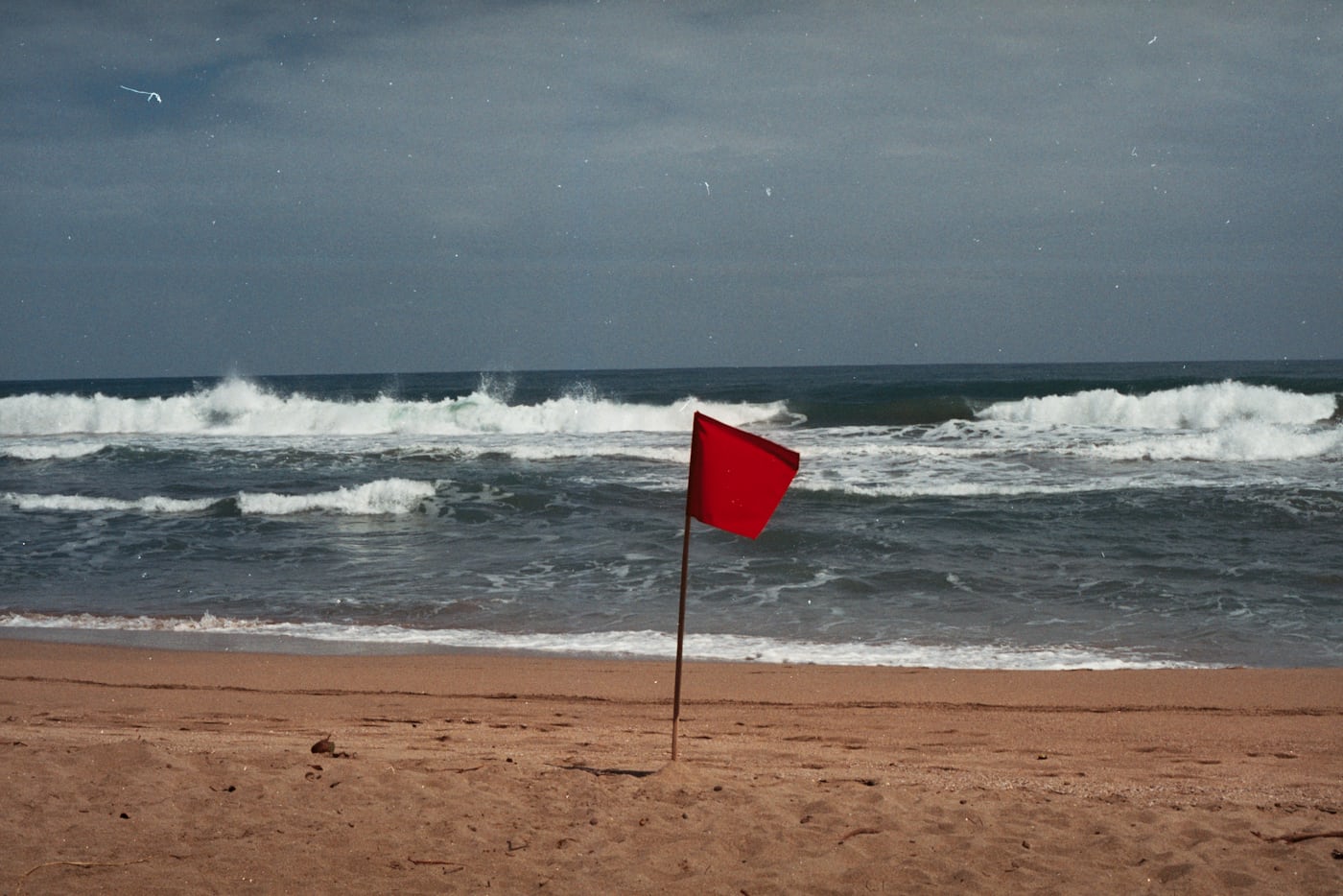
Red Flag: High hazard – swimming strongly discouraged
A red flag signals dangerous conditions such as strong surf, powerful currents, or severe weather.
Swimming is not recommended, even for experienced swimmers. In many locations, entering the water during a red flag warning can result in fines. Most visitors leave the beach when this flag is raised.
Double Red Flag: Water closed
Two red flags mean the ocean is completely closed.
This is used during extreme conditions such as storms, lightning, contamination, or dangerous wildlife activity. Entry is prohibited, and enforcement can include removal from the beach or fines.
Designated Swimming Zones
Red and Yellow Flags: Lifeguard-protected area
These flags mark the safest section of the beach.
This is where lifeguards actively monitor swimmers and respond to emergencies. Always choose this area when possible, as it is selected for lower risk conditions and easier rescue access.
Black and White Checkered Flag: Surf zone only
This area is reserved for surfers and board sports.
Swimming here is dangerous due to fast-moving surfboards and stronger wave activity. It is clearly separated so beachgoers can avoid accidental entry.
Yellow Flag with Black Ball: Swimming only zone
This flag prohibits surfboards, kayaks, and other equipment.
It is designed to reduce collisions between swimmers and watercraft, creating a safer environment in designated swimming areas.
Special Alert Flags
Purple Flag: Marine life warning
Purple indicates the presence of potentially hazardous marine life such as jellyfish or stingrays.
Swimming may still be allowed, but caution is essential. Lifeguards can provide specific information about what has been spotted.
Orange Windsock: Strong offshore winds
This warns of winds that can push swimmers and inflatables away from shore.
Even if the water looks calm, these winds can quickly carry people into deeper water. Inflatable toys are especially risky under these conditions.
Red and White Checkered Flag: Immediate evacuation
This is a serious emergency signal.
It may indicate sharks, contamination, search operations, or other critical hazards. The water must be evacuated immediately, and in many cases entry becomes illegal until conditions are resolved.
Why These Flags Matter
Beach flags are more than warnings—they’re a shared safety system designed to protect everyone in the water. When people understand and respect them, accidents decrease significantly.
Knowing what each color means doesn’t just protect you—it helps you notice danger before it becomes an emergency, and it helps others around you do the same.