34-Year-Old Mom Ignored This “Desk Job” Symptom—It Turned Out to Be Stage 3 Cancer

At only 34 years old, Courtney Liniweski never imagined that her life would change forever. An ordinary back pain signaled something far more serious.
Living in Milwaukee, Wisconsin, she brushed it off for months, convincing herself it was nothing more than the result of long hours spent sitting at her desk. It wasn’t until later that the reality hit—stage 3 cancer had been quietly moving forward in her body.
Toward the end of 2021, Courtney began noticing a persistent discomfort in her back. At first, it didn’t seem alarming enough to diagnose it. Like many people juggling work and daily responsibilities, she assumed it came down to posture and inactivity, for being sat long hours.
“I was experiencing intermittent back pain but it was really sharp and intense,” she told Unilad. “It was right below my shoulder blades, in the mid sternum area in my back. I just thought I wasn’t moving enough and I was being lazy. I was sat down a lot for my job and I was at my desk most of the day.”
As weeks passed, new symptoms started creeping in—subtle at first, but increasingly difficult to not set primary attention to. By January, she noticed her hearing fading in one ear, along with a constant runny nose. None of it seemed connected, yet together, they painted a confusing picture.
Then came a moment she couldn’t easily dismiss. One morning in early 2022, she woke up after what felt like a loud bang inside her head. Though she managed to fall back asleep, something still didn’t feel right.
When she arrived at work later that day—where she worked as a crisis counselor in an inpatient psychiatric hospital—she realized part of her face had drooped.
Concerned, a coworker rushed her to the emergency room, fearing she might be having a stroke. But after scans came back normal and given her history of migraines and anxiety, she was sent home without answers.
For a while, Courtney tried to accept that reassurance. But her body told a different story. Within weeks, her condition worsened—simple activities like climbing stairs left her breathless, and chest pain became harder to ignore.
Wants to help others identity red flags
A turning point came unexpectedly during a trip to Mexico in February. What was meant to be a getaway ended up revealing the clue doctors couldn’t find earlier.
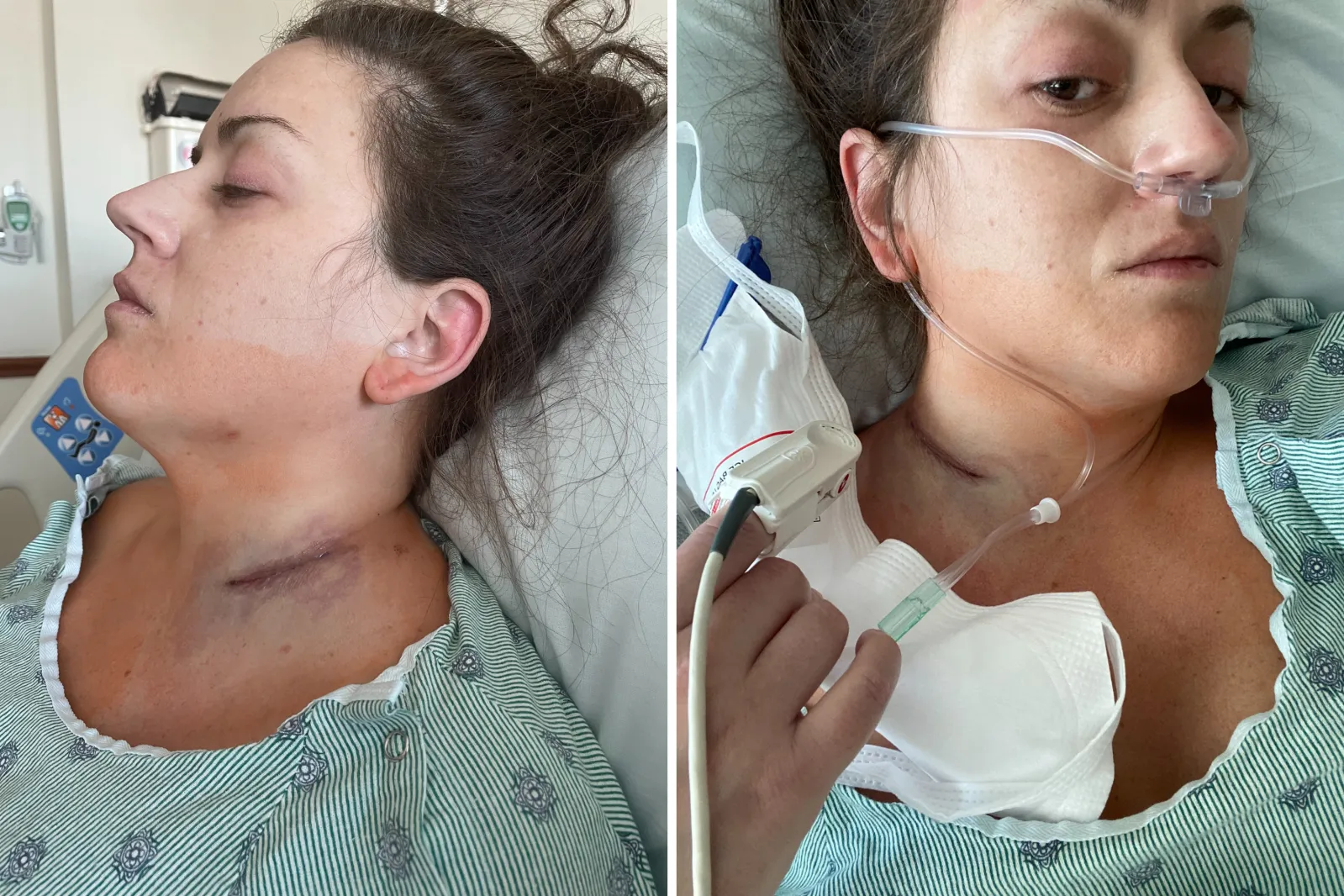
On her first morning there, she woke up to find a noticeable lump on her neck.
“My immune system was clearly reacting to travel or stress. I’ve always been prone to getting sick when I travel, but this time it was like my body finally showed me something. The lump was about 4.1 cm, and it is what led to my diagnosis,” Courtney Liniewski told Newsweek.

“Without it, I wouldn’t have met the criteria typically associated with my type of cancer. I don’t fit the demographic, since it usually affects elderly white men.”
That discovery led to a diagnosis of Grade 3B Follicular Lymphoma, a rare and aggressive form of non-Hodgkin lymphoma. While this type of cancer is often slow-growing and typically seen in older adults, Courtney’s case was different—and dangerously advanced.
Doctors later told her that without treatment, she may have had only a month to live.
Fortunately, her cancer responded to treatment. Today, three years later, she remains cancer-free, though regular check-ups are still part of her life as a precaution.
Now, Courtney is speaking out in hopes that others won’t make the same mistake she did—ignoring what their body is trying to say.
“You can’t stop pushing for it [a diagnosis] because cancer care has come a long way and people are surviving cancer significantly more than they used to,” Courtney told Unilad. “I think people should know that it’s okay to advocate for yourself if something is wrong.”