I Asked My Daughter-in-Law to Stop Smoking. My Son Hit Me — Then One Phone Call Changed Everything

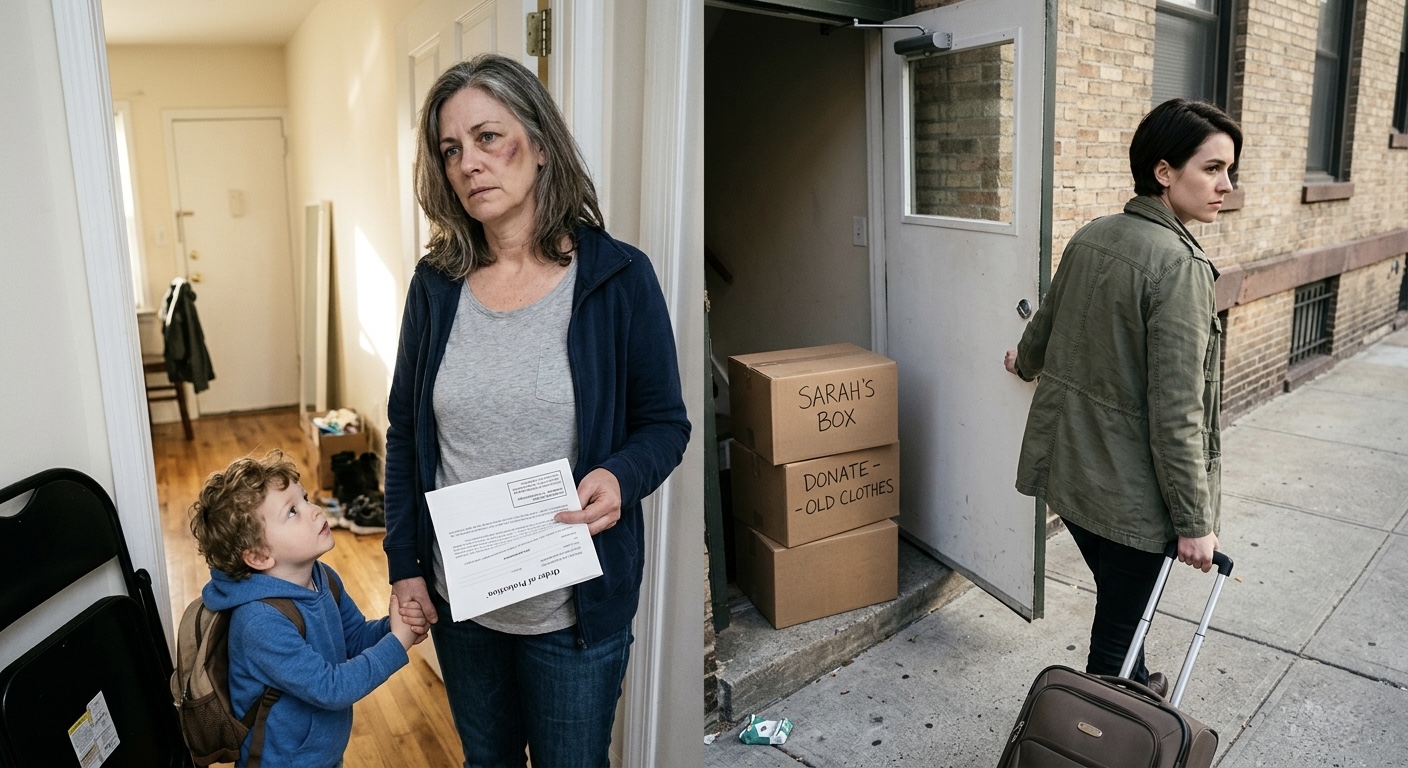
The slap lands before my mind can even process what’s happening.
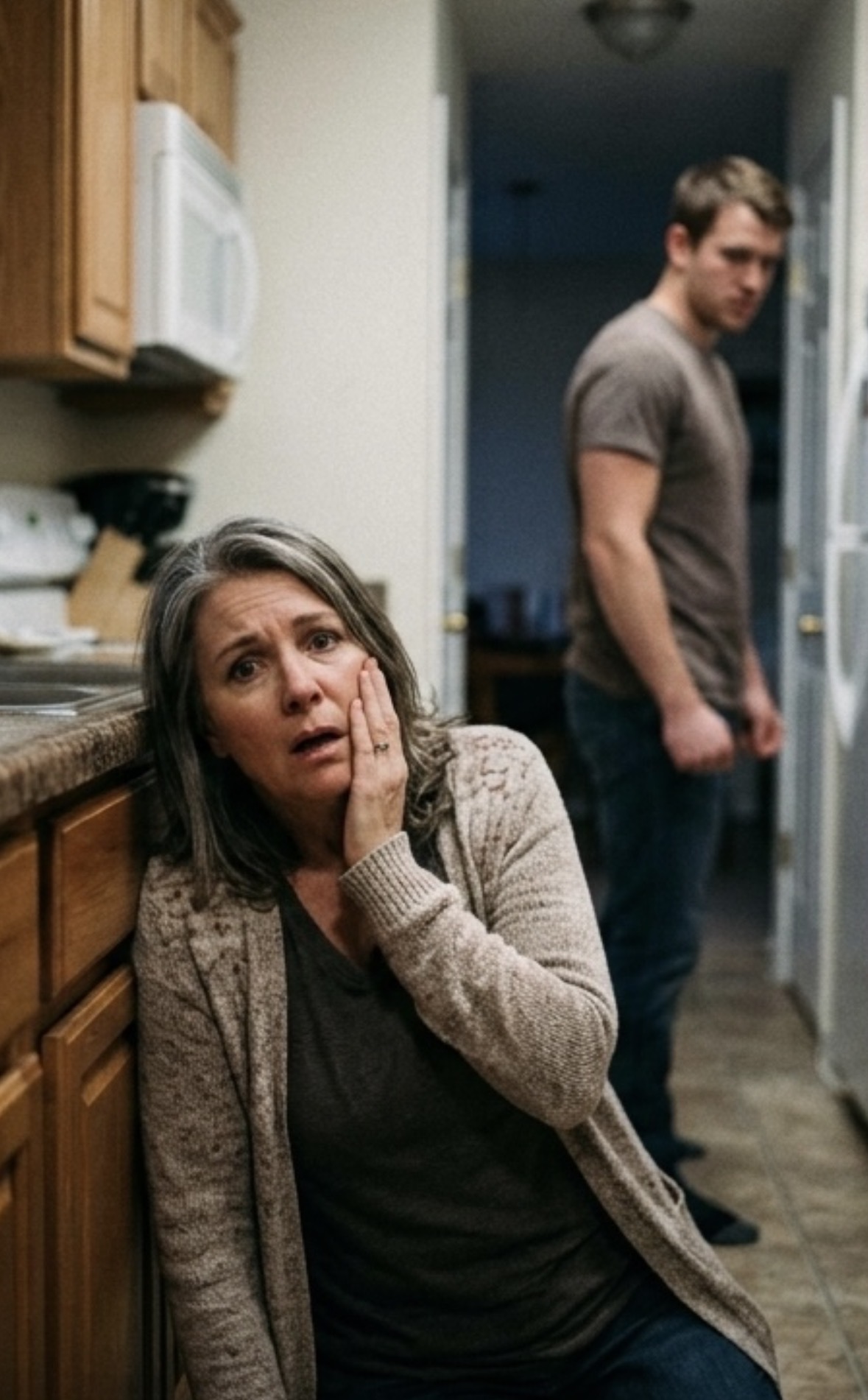
One second, I’m standing in the middle of their spotless kitchen, asking a quiet, simple favor—could my daughter-in-law please not smoke around me because my lungs are already failing—and the next, my son’s hand crashes across my face hard enough to send my head jerking sideways.
The sound rings through the room sharply, bouncing off polished granite counters and stainless-steel appliances.
For a moment, everything tilts.
Heat explodes across my cheek, instant and violent. My ears ring. I taste blood where the inside of my mouth split against my teeth. I grab the kitchen island to steady myself because my knees suddenly feel weak enough to collapse beneath me.
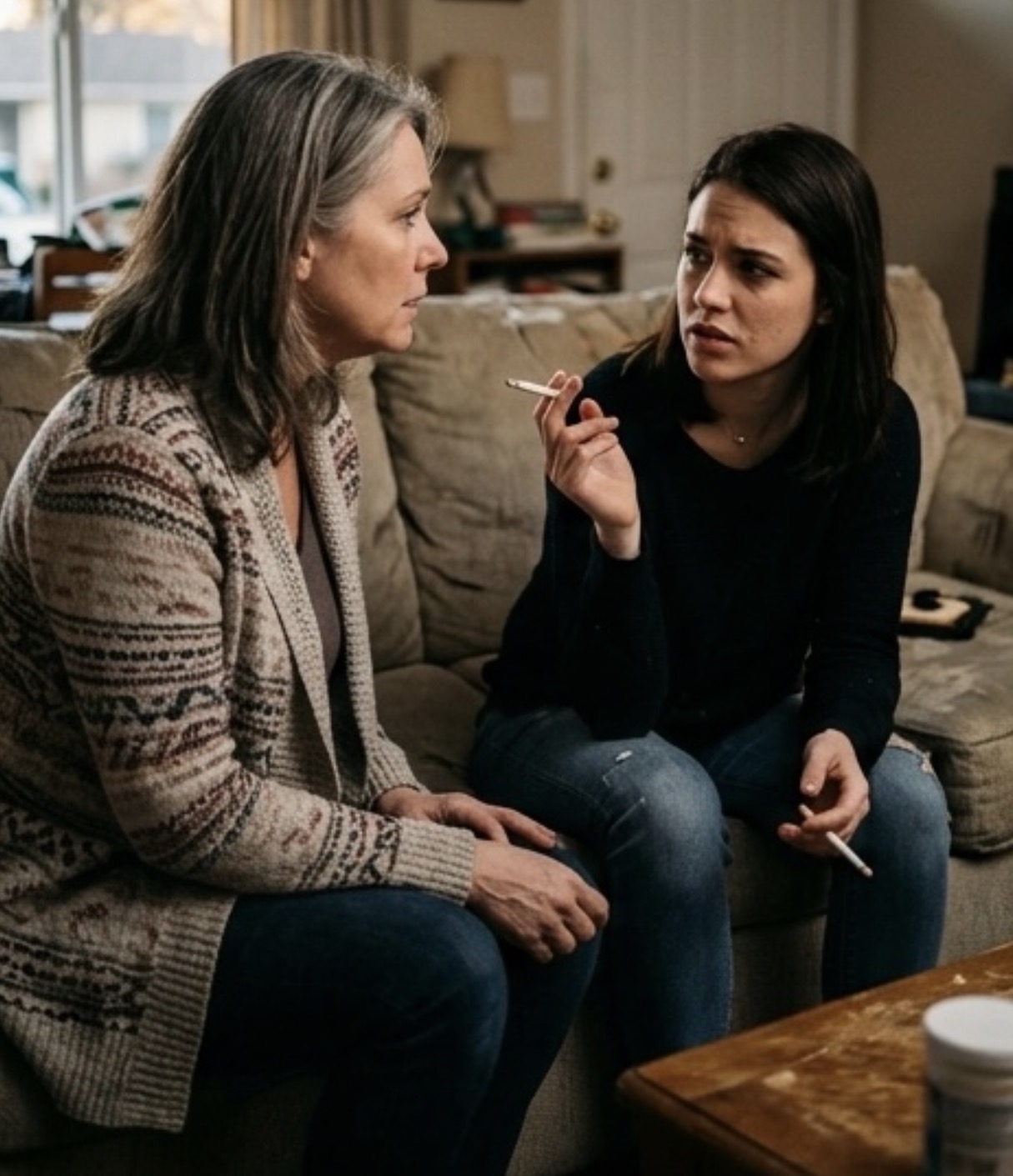
Smoke from Sloan’s menthol cigarette drifts lazily between us, thick and pale against the bright kitchen lights. It curls upward like nothing important just happened.
But something did happen.
My son hit me.
Deacon—the boy I raised by myself, the child I worked endless factory shifts to feed, the little boy whose fevered forehead I kissed through sleepless nights—just struck his seventy-three-year-old mother because I asked for air that wouldn’t destroy my lungs.
“Maybe now you’ll learn to keep your mouth shut,” Deacon says flatly.
No anger. No guilt.
Just irritation, like I’ve inconvenienced him.
I stare at him, unable to speak.
My chest tightens painfully. Between the smoke and the shock, breathing suddenly feels impossible. Every inhale scrapes through my lungs like sandpaper. My doctor warned me months ago that my condition would only worsen if I stayed around smoke. He told me my lungs couldn’t take much more damage.
Apparently none of that matters here.
Not in Sloan’s house.
Not under Sloan’s rules.
A soft laugh slips from Sloan’s mouth.
Not loud. Not shocked.
Amused.
She watches me with cold satisfaction while taking another slow drag from her cigarette, smoke escaping between perfectly glossed lips. Her blonde ponytail is sleek and flawless, her expensive cream-colored tank top wrinkle-free, her expression untouched by empathy.
Everything about her looks polished.
Everything about me feels small.
Deacon turns away from me almost immediately, as if I no longer exist. He walks toward Sloan, gently cradles her face with the same hand that just struck me, and kisses her forehead tenderly.
“Dinner out tonight?” he asks casually.
“Absolutely,” Sloan says with a pleased smile. “That new steakhouse downtown? The one everyone’s talking about?”
“Sounds good. I’ll go change.”
She crushes her cigarette onto one of the white ceramic plates with blue flowers around the edges—the same dishes I hand-washed earlier because she refuses to let them go into the dishwasher.
My hands still smell faintly like her expensive lavender soap.
Fifteen minutes later, they leave together.
I remain standing in the kitchen, one trembling hand pressed to my burning cheek as I watch through the front window.
Deacon wraps an arm around Sloan’s waist while they laugh together walking toward his BMW. The same BMW I helped him buy by giving him money I’d originally saved for a hearing aid I desperately needed.
Their laughter drifts back toward the house.
Then the garage door closes.
Silence.
The kind of silence that feels suffocating.
Only my breathing remains—uneven, shallow, painful—echoing through the oversized kitchen with its glossy floors and decorative light fixtures no one ever touches.
Every breath burns.
The Three Calls
I move upstairs slowly, gripping the bannister one step at a time.
My body feels fragile, like glass that might crack if I move too quickly.
Their house stretches around me in perfect, expensive emptiness—formal dining room nobody uses, staged living spaces that belong in magazines, spotless surfaces untouched by real life.
The guest room waits at the end of the hallway.
Not my room.
Never my room.
Just the space they allow me to occupy.
Everything inside is white, gray, and lifeless. Decorative pillows no one rests against. Curtains that stay closed most of the day. A mattress so soft it leaves my back aching every morning.
I sit carefully on the edge of the bed, trembling now that I’m finally alone.
Beside me sits my phone and a framed graduation photo of Deacon at eighteen.
He’s smiling in that picture.
Really smiling.
One arm wrapped around my shoulders proudly while I beam beside him in a secondhand dress I bought just for that day.
Back then, he still looked at me with love.
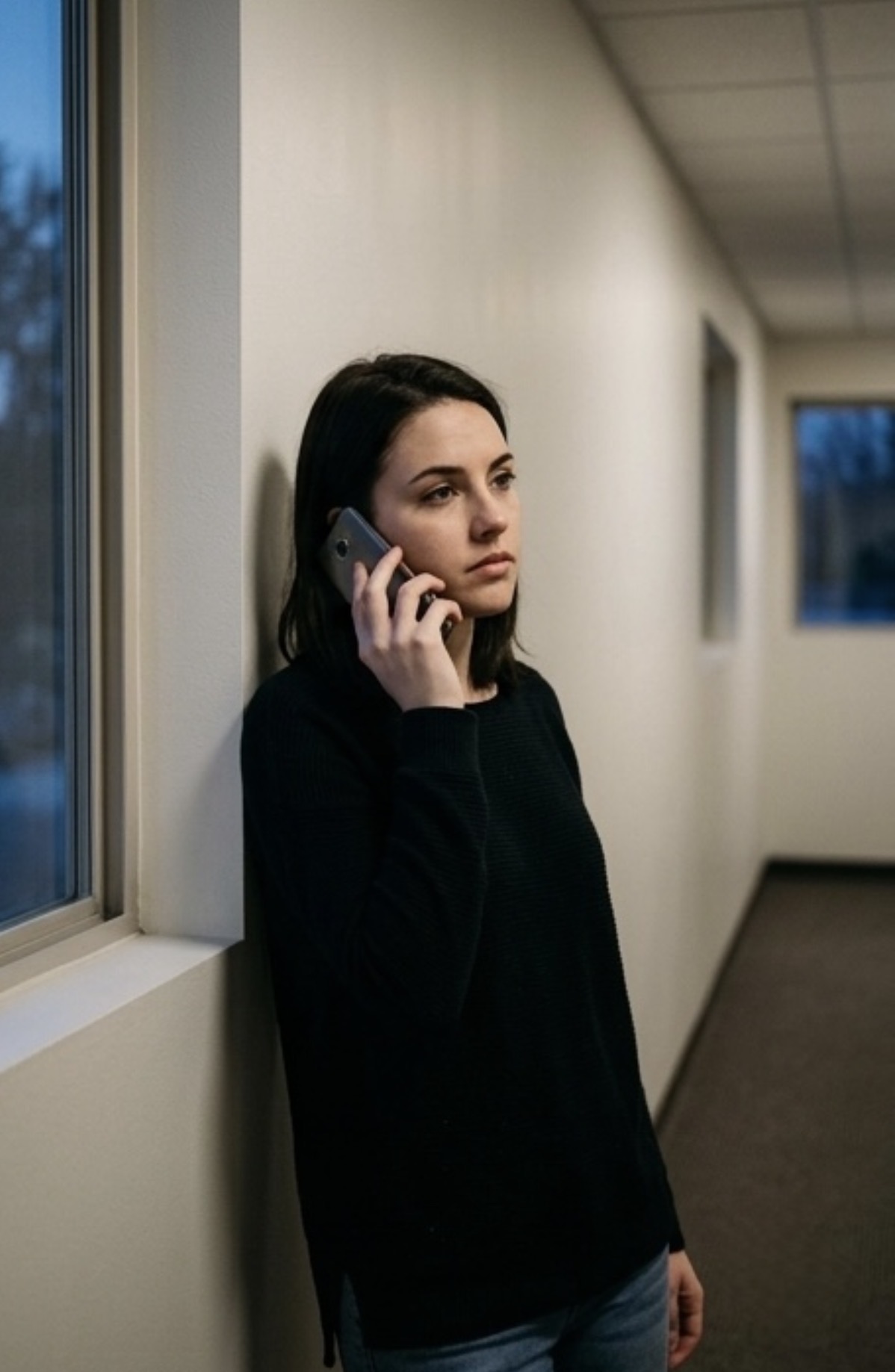
I pick up my phone.
My cheek throbs harder with every heartbeat. I already know tomorrow the bruise will darken into deep purple fingerprints across my skin.
I scroll through my contacts slowly until I stop at a name I haven’t called in years.
Marcus Chen.
Twenty years ago, Marcus lived across the hall from me in a rundown apartment building. His wife had abandoned him and their infant daughter. He worked exhausting warehouse shifts while trying to survive crushing debt and sleepless nights with a screaming baby.
I used to watch his daughter for free while he worked overtime.
I cooked extra food and brought it to his apartment.
Sometimes I slipped grocery gift cards into his mailbox pretending they came from a church charity because I knew his pride wouldn’t let him accept direct help.
I remember sitting beside him one night while he cried from exhaustion, telling him his life wasn’t over.
Turns out, I was right.
Marcus eventually finished law school and became one of Ohio’s top elder abuse attorneys.
I press call before fear can stop me.
He answers almost immediately.
“Loretta? Is that you?”
The warmth in his voice nearly breaks me.
“Marcus,” I whisper. “I need help.”
Everything in his tone changes instantly.
“What happened? Are you hurt?”
I tell him enough.
Not every detail yet. Just enough.
The slap.
The smoke.
The money they’ve taken from my disability check month after month.
The silence on the other end lasts only seconds before his voice hardens.
“Listen carefully,” he says. “Don’t move anything. Don’t throw away receipts. Don’t confront them. Act normal until I get there. Understood?”
“Yes.”
“We’re going to document everything,” he says firmly. “And Loretta? You saved me once. Let me return the favor.”
When the call ends, my hands shake harder than before.
But for the first time in months, I don’t feel completely alone.
The second call goes to Rhonda Washington.
She answers laughing.
“Loretta Denison? Well look who finally remembered I exist.”
Years ago, when Rhonda’s mother got cancer during Rhonda’s senior year of college, I practically moved into their apartment helping care for her.
I cooked meals. Bathed her mother. Stayed awake during terrifying nights when the pain medication stopped working.
I did it so Rhonda could finish school.
Now Rhonda is an investigative journalist.
And she’s very good at exposing ugly truths.
After I explain everything, her voice turns quiet.
“You really want this public?” she asks carefully.
“Yes.”
“You understand once it starts, there’s no taking it back?”
“I know.”
A long pause follows.
Then she says, “Okay. I’m with you.”
The third call hurts most.
Vincent Torres.
Deacon’s old college roommate.
That boy practically lived in my apartment during college. He ate my food, slept on my couch, called me “Mama Loretta” so naturally that sometimes it made my heart ache.
Now he works as a forensic accountant specializing in financial fraud investigations.
When he hears my voice, he sounds genuinely happy.
“Mama Loretta! Where’ve you been?”
“With Deacon,” I answer quietly.
His excitement fades immediately.
“What’s wrong?”
I tell him.
All of it.
By the end, he sounds furious.
“I’m pulling every financial record I can get access to,” he says sharply. “And I’m coming tomorrow.”
By the time the third call ends, I hear Deacon and Sloan returning home downstairs.
Their laughter carries through the hallway.
They sound carefree.
Happy.
Completely unaware their world is about to split open.
I walk to the mirror above the dresser and stare at the handprint blooming across my face.
Red.
Swollen.
Unmistakable.
I smile slightly.
Not because I’m happy.
Because I’m done being helpless.
Tomorrow changes everything.
How I Got Here
People don’t become invisible overnight.
It happens slowly.
One sacrifice at a time.
One disappointment at a time.
One excuse after another until eventually you wake up realizing you’ve spent your whole life shrinking yourself for other people.
I was seventeen when I met Jimmy Patterson.
He was older, charming, rough around the edges in a way teenage girls mistake for exciting. He worked construction jobs around Columbus and knew exactly what to say to make me feel special.
Three months after our courthouse wedding, I got pregnant.
Three months after that, I realized marriage hadn’t magically turned Jimmy into a responsible man.
Deacon was born on a rainy Tuesday afternoon.
Jimmy arrived at the hospital drunk.
That should’ve told me everything.
We lived in a tiny apartment where the walls were paper-thin and sirens screamed through the streets most nights. Money vanished faster than we could earn it because too much of Jimmy’s paycheck disappeared into bars.
So I got a job at Morrison Textile Factory.
Second shift.
Four in the afternoon until midnight.
Jimmy promised he’d watch the baby while I worked.
Most nights I came home to Deacon crying in soaked diapers while Jimmy slept drunk on the couch.
So I worked harder.
Longer hours.
Double shifts.
Holiday shifts.
Overtime whenever they offered it.
The factory destroyed people slowly.
Cotton dust filled the air constantly. Harsh cleaning chemicals coated our skin. Cigarette smoke hovered thick in the break room because nearly everyone smoked back then.
By the end of shifts, my lungs burned.
But I kept going.
Because Deacon needed me.
I started hiding money in coffee cans in the back of my closet.
Five dollars here.
Twenty there.
Loose change wrapped in old receipts.
I skipped meals sometimes just to add a little more.
That money became Deacon’s future.
Jimmy died when Deacon was twelve.
Liver failure.
Too much alcohol for too many years.
After the funeral, life became quieter.
Not easier exactly.
But quieter.
I worked even more after that.
Overnight shifts. Weekends. Holidays.
Anything that paid extra.
By the time Deacon graduated high school, those coffee cans held over seventeen thousand dollars.
Seventeen years of sacrifice.
Every missed meal.
Every worn-out pair of shoes.
Every winter spent freezing because I kept the heat low to save money.
I used every dollar to put him through college.
And when he graduated in his cap and gown with a finance degree in his hand, I sat in the audience crying so hard I could barely breathe.
I thought all the sacrifice had been worth it.
For a while, maybe it was.
Then life changed.
Success changed him.
And somewhere along the way, I stopped being his mother and became his burden.
The Diagnosis
The coughing started quietly.
A little tickle in my throat.
Then deeper.
Then painful.
Eventually I couldn’t walk across parking lots without losing my breath.
I ignored it because poor people don’t have the luxury of getting sick.
Not until the day I collapsed outside a grocery store unable to breathe.
The emergency room doctor was kind but honest.
“Your lungs are severely damaged,” she told me gently. “This isn’t reversible.”
I stared at her in disbelief.
“But I never smoked.”
She nodded sympathetically.
“Thirty years in a textile factory around chemicals, dust particles, and secondhand smoke can absolutely do this.”
COPD.
Chronic.
Progressive.
Permanent.
The medications cost more than I could afford.
Then I lost my job because I physically couldn’t keep up anymore.
Disability payments barely covered rent.
Eventually I had no choice left.
I called Deacon.
“I need help,” I told him.
The silence on the other end felt endless.
Finally he asked, “What kind of help?”
I nearly hung up from shame.
“I can’t afford my apartment anymore.”
Another long silence.
Then:
“I’ll talk to Sloan.”
Three hours later, he called back.
“You can stay in the guest room.”
No warmth.
No reassurance.
Just permission.
I thanked him anyway.
Because desperation makes gratitude out of crumbs.
Six Months of Hell
Moving into their house felt like entering a museum.
Everything was spotless.
Expensive.
Untouchable.
Sloan immediately gave me rules.
Don’t use their bathroom.
Don’t touch the thermostat.
Don’t come downstairs too early on weekends.
And four hundred dollars monthly for “household expenses.”
I could barely afford it.
But I agreed.
Because where else could I go?
At first, I tried helping around the house.
Cooking.
Cleaning.
Laundry.
Nothing pleased Sloan.
Food too salty.
Towels folded wrong.
Wrong cleaning products.
Eventually I stopped trying.
The monthly payments kept increasing anyway.
Four hundred became four-fifty.
Then five hundred.
Then more.
By month six, they were taking most of my disability check while still treating me like an unwelcome inconvenience.
And still, I stayed quiet.
Until the slap.
The Reckoning
The next morning, sunlight pours through the guest room curtains while I photograph the bruise on my face from every angle.
By eight o’clock, Deacon and Sloan are downstairs drinking coffee like nothing happened.
I sit calmly at the kitchen table.
At exactly nine, the doorbell rings.
Deacon frowns. “You expecting somebody?”
“Yes,” I answer.
I open the door.
Marcus stands there in a tailored charcoal suit carrying a leather briefcase.
His eyes land immediately on my bruised cheek.
Something cold flashes across his face.
“Good morning, Loretta,” he says gently before looking past me. “Mr. and Mrs. Patterson. I’m attorney Marcus Chen.”
Deacon goes pale almost instantly.
“What is this?”
“I called for help,” I say quietly.
Marcus walks inside.
“These documents initiate an investigation into elder abuse and financial exploitation,” he explains calmly while opening his briefcase.
Sloan rushes into the hallway looking panicked.
“This is ridiculous,” she snaps. “We supported her.”
Marcus lays out bank statements methodically.
“Your mother paid you hundreds monthly while surviving on disability income,” he tells Deacon evenly. “Meanwhile your combined household income exceeds half a million annually.”
Neither of them speaks.
Then Marcus places the photograph of my bruised face onto the counter.
The room goes silent.
“Mom,” Deacon whispers weakly, “we can fix this—”
“Don’t,” Marcus interrupts sharply. “Not without legal counsel.”
The doorbell rings again.
This time it’s Rhonda, a photographer, and an Adult Protective Services investigator.
Everything unravels quickly after that.
Questions.
Documents.
Photos.
Financial records.
Then Vincent arrives.
The moment he sees my bruised face, heartbreak floods his expression.
“Mama Loretta,” he whispers.
Then he turns toward Deacon with fury burning in his eyes.
“You charged your sick mother rent while sitting on over a million dollars in investments?”
Deacon says nothing.
“You spent thousands dining out while she skipped medication.”
Still nothing.
“You hit her.”
The silence afterward feels crushing.
Finally the investigator asks me softly, “Do you have somewhere safe you can stay?”
“Yes,” Marcus answers before I can.
And for the first time in months, I finally believe I might survive this.
Three Days Later
Three days later, I sit in Marcus’s office reviewing settlement paperwork.
Full repayment.
Medical expenses covered.
Protective order.
Scholarships for family caregivers funded for ten years.
Everything Deacon and Sloan fought to protect is now stained publicly by what they did.
I move into a small apartment shortly afterward.
One bedroom.
Warm sunlight.
Quiet mornings.
No cigarette smoke.
No fear.
Vincent helps furnish it.
Rhonda visits often.
My lungs still hurt.
But breathing no longer feels impossible.
And slowly, piece by piece, I begin rebuilding something I thought I’d lost forever.
My dignity.
The Final Visit
Three weeks later, Deacon appears outside my apartment holding an envelope.
I keep the security chain latched.
“You’re violating the protective order,” I tell him calmly.
“I know,” he says, tears already filling his eyes. “I just needed to tell you I’m sorry.”
He holds out the envelope.
“Fifty thousand dollars. It’s yours.”
I don’t take it.
“I don’t want your money.”
His face crumples.
“Then what do you want?”
I look at him for a long moment.
“I want you to become someone better than the man who hit his mother.”
He cries openly then.
“I will,” he whispers.
“You can’t undo what happened,” I tell him softly. “You can only decide who you become afterward.”
“I know.”
“I believe you’re sorry,” I say. “But love without respect becomes cruelty. And I won’t live with cruelty anymore.”
He nods slowly.
Then he walks away.
I leave the envelope outside untouched.
The next day, Vincent helps me donate the money to a shelter for abused seniors.
That evening, I sit beside my apartment window watching birds gather near the feeder Vincent installed outside.
The apartment is warm.
My lungs are calm.
And for the first time in years, I feel safe.
People think walking away means weakness.
Sometimes it’s the opposite.
Sometimes leaving is the moment you finally remember your worth.
I spent most of my life believing love meant sacrifice no matter the cost.
Now I understand something different.
Real love does not humiliate.
Real love does not exploit.
Real love does not leave bruises.
And no matter how long it takes, every human being deserves to live somewhere they can breathe freely—both in body and in spirit.