I Married an Older Woman for a Roof Over My Head — After She Died, Her Final Gift Changed Everything

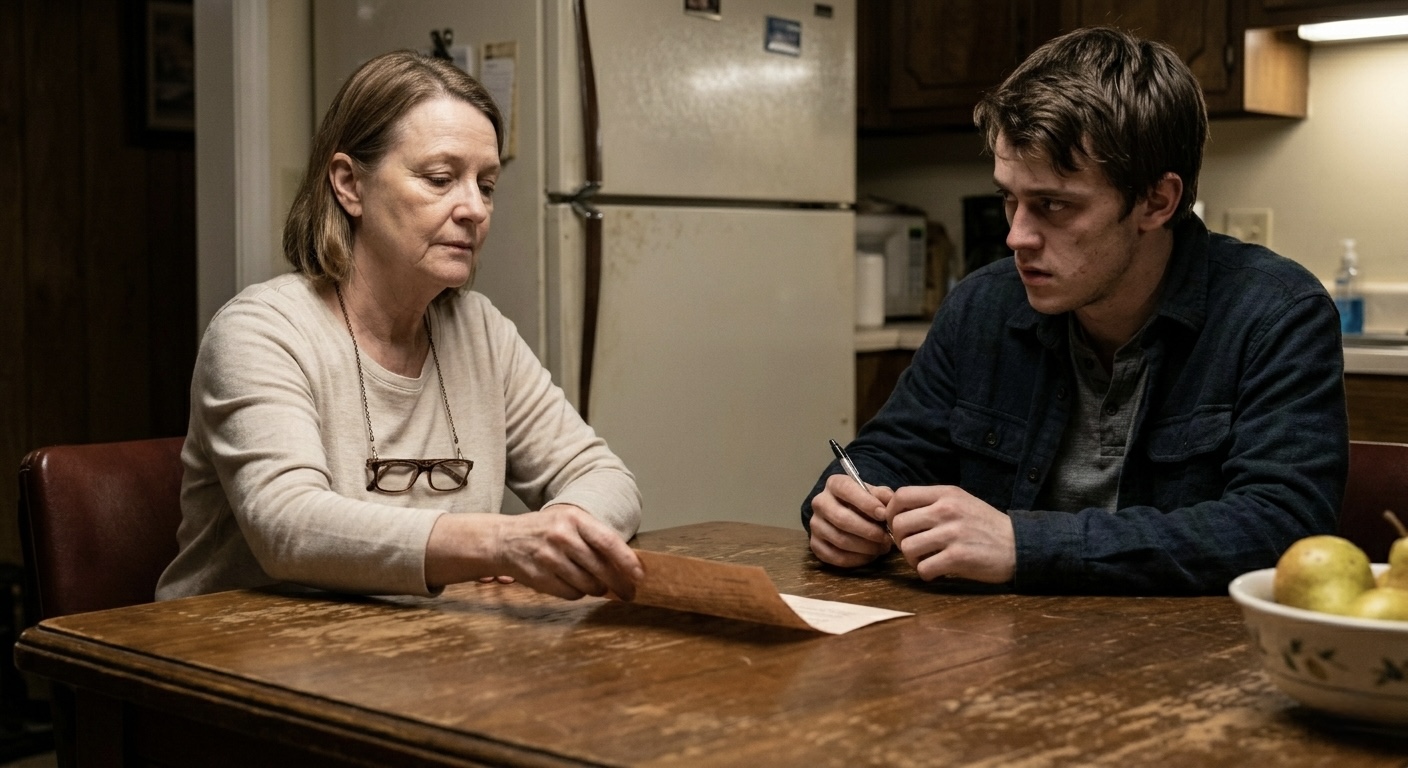
There are some decisions people spend years trying to justify, and others they spend a lifetime trying to forgive. For Damon, marrying Evie fell somewhere in between.
When he married her, it wasn’t because of love.
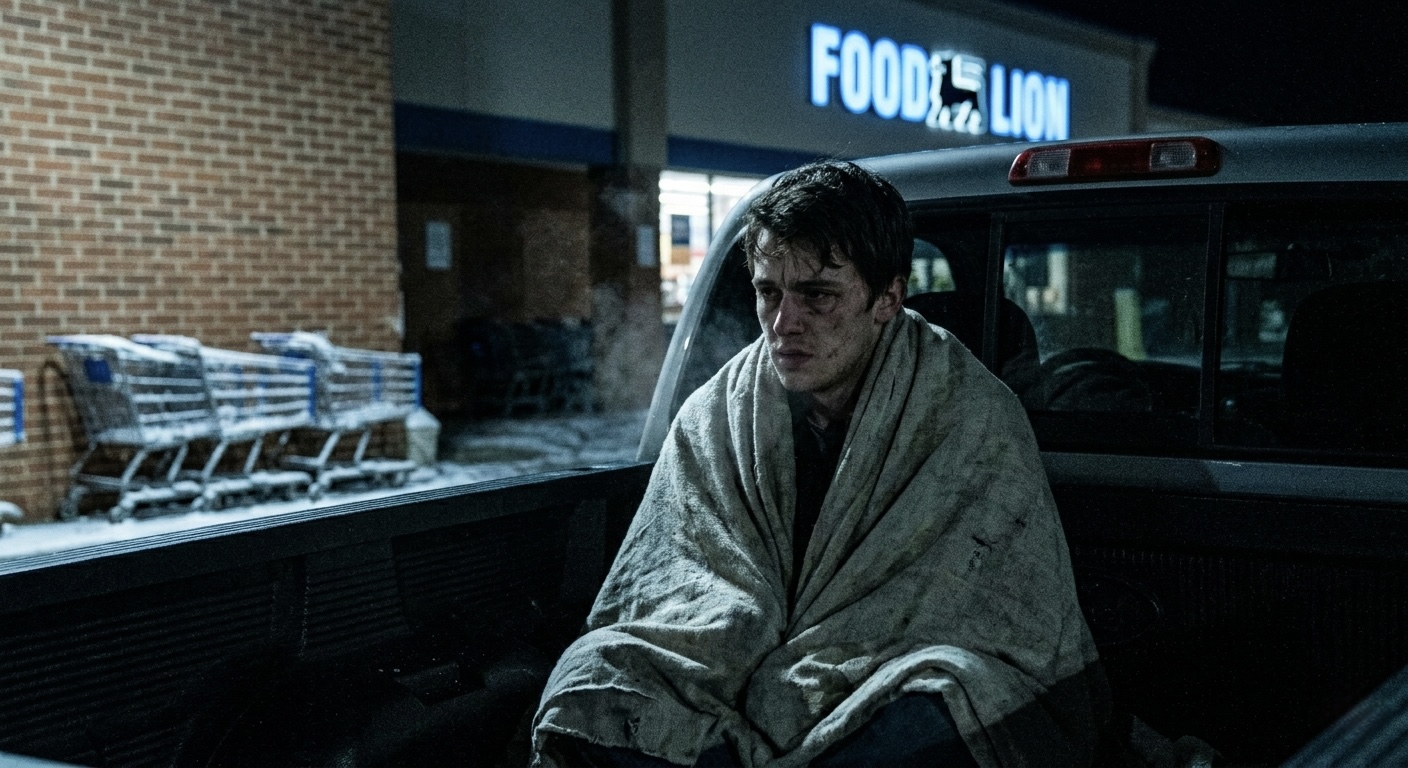
At 25, he was drowning in debt, sleeping in the back of his truck, and struggling to survive from one day to the next. He had spent months parked in a grocery store lot, trying to make it through another night. Stability felt like something that belonged to other people.
Then he met Evie.
She was 71 years old, lived alone in a blue house a few towns away, and seemed to have everything Damon lacked—a home, security, and peace of mind. To him, she represented a way out.

At first, that was all he could see.
The two met while Damon was doing yard work for a neighbor. Evie stopped by with a jar of lemonade, and a casual conversation followed. One visit led to another. Then came dinners, long talks, and a growing friendship.
Months later, she surprised him with a question he never expected.
Had he ever thought about getting married?
At first, Damon laughed.
Then he realized she was serious.
The first person he told was his friend Jesse. It turned out to be a mistake.
Jesse immediately turned the situation into a joke, teasing Damon about finding a retirement plan before turning thirty. Damon laughed along, even though part of him knew there was something ugly beneath the humor.
When Jesse eventually asked whether he loved her, Damon didn’t answer.
His silence said everything.
Before they went to the courthouse, Evie placed a prenuptial agreement in front of him.
She wasn’t angry or suspicious. She was simply honest.
When Damon questioned her decision, she calmly replied:
“I just think people do horrifying things when they are frightened.”
At the time, Damon saw the agreement as little more than paperwork standing between him and a roof over his head.
So he signed.
What he didn’t expect was how quickly ordinary life would begin to matter.
The smell of coffee waiting in the morning.
The sound of Evie moving around the house.
The simple question asking whether he had remembered to eat lunch.
When winter arrived, she bought him a new coat because his old one was falling apart. She replaced his worn boots before he could ask. She noticed things without making a scene about them.
Whenever Damon tried to insist he could take care of himself, Evie would gently challenge him.
One day, after buying him a coat, she simply asked:
“Well, when?”
It was a question he couldn’t answer.
Evie had a way of seeing through people. She rarely confronted him directly, but Damon often had the uncomfortable feeling that she understood far more than she let on.
One afternoon at a diner, she noticed how uneasy he became whenever her friends were around.
After watching him squirm through another awkward conversation, she quietly observed:
“You get nervous when people trust me.”
Damon laughed and changed the subject.
But deep down, he knew she was right.
As time passed, life settled into a comfortable routine. He drove her to doctor appointments, fixed things around the house, and spent evenings beside her watching television.
For the first time in years, he felt like he belonged somewhere.
Then came a text message from Jesse.
It was another joke about his so-called retirement plan.
Damon should have ignored it.
Instead, without thinking, he typed a reply:
“Once she’s gone, I’m set.”
For a moment, guilt hit him.
Then he pushed it away and returned to what he was doing.
Three days later, Evie collapsed in the kitchen.
One moment she was making tea. The next, she was struggling to stay on her feet.
What frightened Damon most wasn’t the fall itself—it was the confusion on her face. Evie was never confused. She was always the calmest person in the room.
At the hospital, doctors explained her condition, but Damon barely heard them. His mind kept drifting back to small, meaningless moments they had shared only hours earlier.
Suddenly, the things that once seemed important no longer mattered.
The funeral was simple and quiet.
Evie’s niece, Claire, barely spoke to him. She had never trusted him, and Damon couldn’t blame her.
The morning after the funeral, he met with Evie’s attorney, expecting to discuss paperwork and legal details.
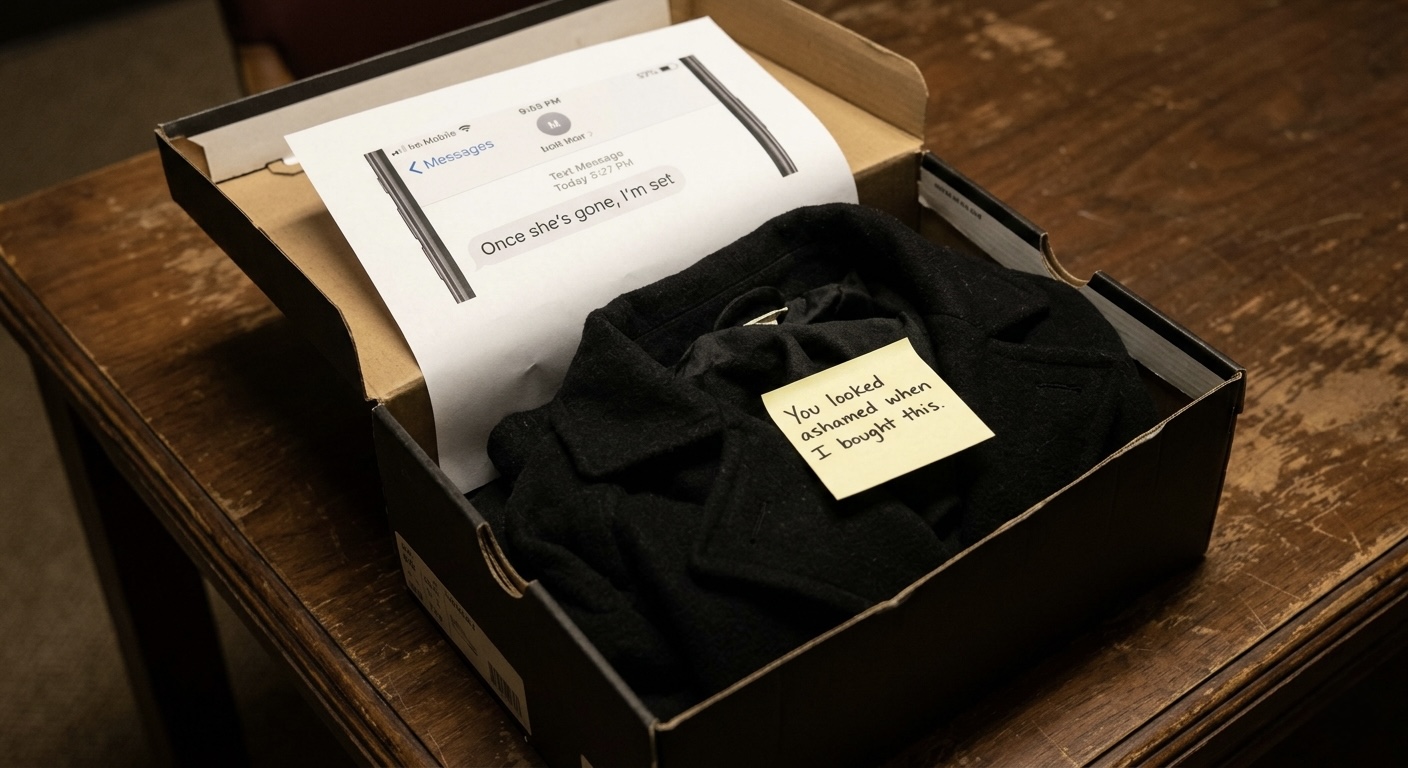
Instead, the lawyer handed him a shoebox with his name written on it.
Inside was a printed copy of the text message he had sent Jesse.
The one that read:
“Once she’s gone, I’m set.”
Damon felt sick.
But that was only the beginning.
Beneath the printout were receipts.
Receipts for the boots.
The coat.
Car repairs.
Dental work.
Dozens of small expenses Evie had quietly covered over the years.
Attached to many of them were handwritten notes.
Some were only a sentence long.
Others were more personal.
They documented moments Damon thought had gone unnoticed.
Moments when he lied.
Moments when he nearly told the truth.
Moments when embarrassment flashed across his face before he buried it.
Evie had seen all of it.
Every lie.
Every fear.
Every hidden motive.
The final note was attached to the receipt for the black wool coat Damon had worn to her funeral.
And in that moment, the truth became impossible to avoid.
Evie had known exactly why he married her.
She had understood his desperation from the beginning.
She had seen through every excuse and every story he told himself.
And despite knowing all of it, she made a decision that changed everything.
She left him the house anyway.
Not because she was fooled.
Not because she was naïve.
Because she knew.
That realization hurt more than any accusation ever could.
She could have left him with nothing. She could have punished him, exposed him, or cut him out of her life entirely.
Instead, she chose compassion.
The greatest surprise wasn’t that Evie discovered the truth.
It was that she understood the truth and loved him anyway.
In the end, the house was never the real inheritance.
The real gift was realizing that the woman he believed he had deceived had understood him from the very beginning—and still chose to save him.