Mascho Piro Tribe NEW Footage Makes Viewers Noticing Surprising Details

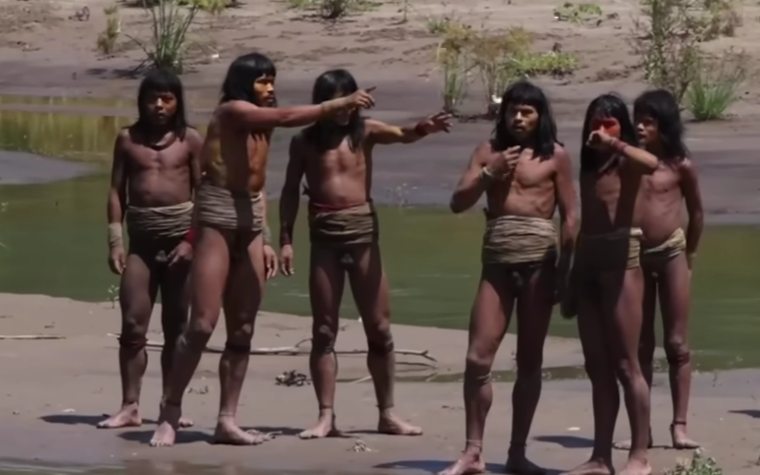
Mascho Piro tribe footage is once again drawing worldwide attention after newly released videos gave people a closer look at one of the most isolated communities living in the Amazon rainforest.
The rare footage quickly spread online, with viewers debating what they noticed in the background, the tribe’s appearance, and the objects seen in the clip.
While many people were fascinated by the images, others began questioning whether the community is truly as isolated as experts have claimed for years.
The footage itself captured an emotional and unusual moment deep inside the Peruvian Amazon. Members of the Mascho Piro tribe appeared near a riverbank surrounded by butterflies while cautiously observing the people filming from a distance.
Unlike previous clips that were blurry and recorded from very far away, this new footage offered a much clearer view of the tribe, allowing viewers to notice details that had never been visible before.
The Mascho Piro tribe is believed to be one of the largest uncontacted groups left in the world today.
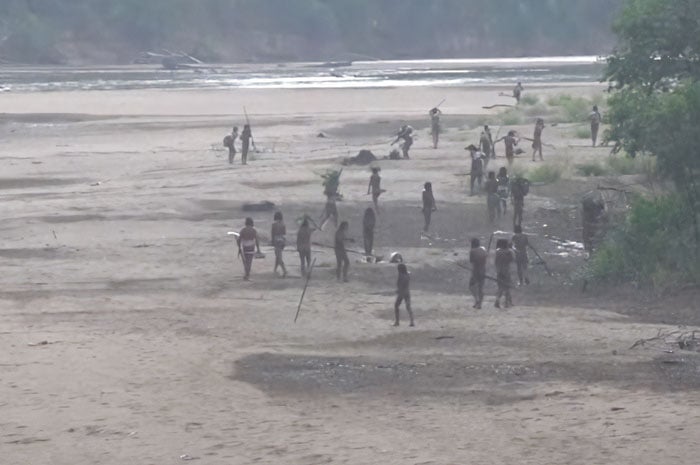
Experts estimate that around 750 people belong to the community.
They live in a remote part of the Amazon rainforest near the border between Peru and Brazil, an area filled with dense vegetation and extremely difficult terrain.
Because of the location and the laws protecting uncontacted tribes, very few outsiders are allowed near them.
For decades, governments and conservation groups have tried to keep these communities protected from outside contact. Countries such as Peru and Brazil have legal protections designed to prevent outsiders from entering tribal territory.
The main concern is health. Uncontacted groups often have little or no immunity to common illnesses carried by modern society. Even a simple cold or flu could create devastating consequences for an isolated community.
That is one of the main reasons why researchers, photographers, and conservationists usually keep their distance when observing the Mascho Piro tribe.
Previous photographs and videos were often taken from extremely far away using powerful camera lenses. Most of those images appeared grainy, shaky, or unclear, which made it difficult for the public to understand what life inside the tribe may actually look like.
The latest footage changed that almost instantly. Viewers online were surprised by how detailed the video appeared compared to earlier recordings.
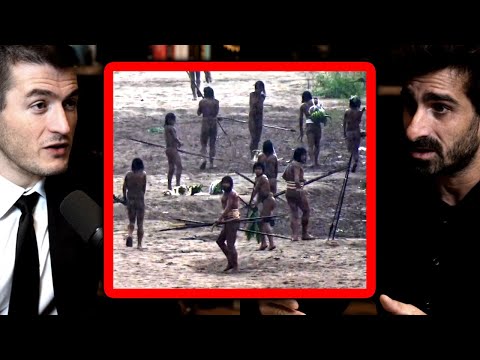
The clip was shared by conservationist Paul Rosolie and later discussed during an episode of the Lex Fridman podcast. During the conversation, Rosolie explained why the footage looked so different from older material people had seen before.
According to Rosolie, the team used advanced camera equipment capable of capturing detailed images from a safer distance.
He explained that most previous footage of the Mascho Piro tribe was filmed from over 100 meters away, which made it difficult to see facial expressions, movements, and objects clearly.
The newer recording allowed people to observe details that were impossible to identify in older clips.
Rosolie has spent more than two decades working in the Amazon rainforest. His work has focused on protecting wildlife, plants, and indigenous communities living in the region.
Because of his long history in the Amazon, many viewers trusted his explanation regarding how the footage was captured and why conservation efforts remain so important.
The video itself begins with members of the Mascho Piro tribe standing together near a riverbank. They appear alert and cautious while observing the people filming them from a distance.
Several tribe members are seen carrying traditional weapons, including bows and arrows. At first, their body language suggests uncertainty and caution.
As the moments continue, however, the mood appears to shift slightly. The tribe members seem less defensive and more curious about the people observing them.
In one part of the footage, a member of the tribe appears to lower his weapon. Rosolie described this moment during the podcast, explaining that the tribe members seemed to understand there was no immediate danger.
The footage quickly spread across social media platforms, where thousands of viewers shared reactions and theories. Some people described the clip as beautiful and emotional.
Others focused more on the scientific and cultural importance of seeing such a clear recording of an isolated community. For many viewers, the footage offered a rare glimpse into a way of life that has remained hidden from most of the modern world.
Still, not everyone reacted positively. As the clip gained attention online, several viewers began pointing out details they believed raised questions about the isolation of the Mascho Piro tribe.
These comments quickly became part of a growing debate across social media platforms.
One of the most discussed details involved rope visible in the footage. Some viewers claimed the material looked modern and argued that it appeared similar to products commonly sold in hardware stores.
This observation caused some people to question whether the tribe had more interaction with outsiders than originally believed.
One commenter online wrote that the rope around a tribe member’s head looked like something purchased in a modern store.
Another viewer sarcastically questioned how an uncontacted tribe could possess what appeared to be fresh modern rope. A third comment suggested the tribe may be trading with nearby communities or outsiders while still being described as isolated.
These online reactions created a wave of speculation. Some viewers became convinced the footage proved the tribe had already interacted with modern civilization.
Others argued the situation was far more complicated than people online realized.
Experts have repeatedly explained that the term “uncontacted” does not always mean a tribe has never seen or indirectly interacted with outsiders in any form.
In many cases, isolated tribes may encounter objects left behind by loggers, traders, or nearby communities without fully integrating into modern society. Limited exchanges can happen near protected territories without sustained direct contact.
The Mascho Piro tribe has reportedly faced increasing pressure from illegal logging and nearby development projects for years.
Logging activity in parts of the Amazon rainforest has continued expanding, bringing workers and machinery closer to tribal territories.
Conservation groups have warned that these activities threaten both the rainforest itself and the survival of isolated indigenous communities.
Illegal logging remains one of the biggest concerns surrounding the Mascho Piro tribe. Loggers entering protected areas may accidentally or intentionally encounter tribal groups while cutting trees and building routes through remote parts of the forest. These encounters can be extremely dangerous for both sides.
Conservation organizations have repeatedly called for stronger enforcement of land protections in the region. Many activists believe the recent footage highlights the urgent need to preserve tribal territories before outside development causes irreversible harm.
For people working in conservation, the footage was not simply about curiosity or internet debate. Many saw it as another reminder of how fragile isolated communities can be.
Even though the video fascinated millions of viewers online, conservationists continue stressing that maintaining distance is necessary to protect the health and safety of the Mascho Piro tribe.
The Amazon rainforest itself also plays a major role in the discussion. The forest is one of the most biologically diverse places on Earth and remains home to countless species of plants and animals. Indigenous communities have lived there for generations, developing survival knowledge closely connected to the environment around them.
Because of this deep connection to nature, many conservation groups argue that protecting indigenous communities also helps protect the rainforest.
Areas controlled by indigenous groups often experience lower levels of deforestation compared to regions affected by industrial activity.
The recent attention surrounding the Mascho Piro tribe has also sparked wider conversations about ethics. Some viewers questioned whether footage of isolated tribes should even be shared publicly online. Critics argue that viral videos can turn serious cultural and humanitarian issues into entertainment.
Others believe responsible documentation can help raise awareness about the dangers these communities face. Without public attention, conservation groups may struggle to gain support for stronger protections. Supporters of the footage argue that seeing the tribe clearly helps people understand why preserving these territories matters.
At the same time, many experts warn against romanticizing isolated tribes or treating them like mysterious attractions. The people shown in the footage are living communities with their own culture, history, and social structures. Reducing them to internet debates or viral clips risks ignoring the real challenges they face.
The Mascho Piro tribe has remained largely separated from mainstream society for generations. Their daily lives, traditions, and internal social systems remain mostly unknown to the outside world. This mystery naturally creates curiosity, especially in an era where nearly everything can be filmed and shared online instantly.
Modern technology has also changed the way isolated communities are documented. High powered lenses, drones, and advanced cameras now allow photographers and researchers to capture images from much greater distances than before. While this technology can reduce direct physical contact, it also increases public access to images that were once impossible to obtain.
For many viewers, the most striking part of the footage was the emotional atmosphere. The butterflies surrounding the riverbank created an almost surreal scene, while the cautious body language of the tribe members reminded people how unusual and tense these encounters can be.
The moment when the tribe members appeared to relax slightly became one of the most talked about sections of the clip. Some viewers described it as peaceful, while others focused on the uncertainty visible in the group’s reactions. The footage captured both curiosity and caution at the same time.
Discussions surrounding the Mascho Piro tribe also reveal how quickly online audiences form conclusions from short clips. Social media users often zoomed in on tiny details, creating theories about objects, clothing, and tools visible in the video. While some theories gained attention, experts continue warning that outsiders may misinterpret what they see.
For example, the rope discussed online could have reached the tribe in many possible ways. Objects from nearby communities, abandoned materials, or indirect exchanges can move through remote areas over time. Experts caution against assuming that one object alone proves full integration with modern civilization.
The situation highlights how complicated the idea of isolation really is. Some indigenous communities avoid permanent outside contact while still occasionally encountering neighboring groups or modern materials. These realities do not necessarily erase their cultural independence or isolated lifestyle.
The debate also reflects growing public fascination with uncontacted tribes in general. Stories involving isolated communities often spread rapidly online because people are naturally curious about lifestyles completely different from their own. However, conservation experts repeatedly stress that curiosity should never outweigh respect for tribal safety and autonomy.
Many organizations working in the Amazon continue urging governments to strengthen protection for indigenous territories. Deforestation, mining, road construction, and illegal logging remain serious threats across multiple parts of the rainforest. These activities can push outsiders deeper into regions where isolated communities live.
Increased exposure can create dangerous consequences for tribes like the Mascho Piro tribe. Beyond disease risks, outside intrusion can disrupt traditional ways of life, increase conflict, and damage essential natural resources the communities rely on for survival.
The footage has therefore become more than just a viral video. It now represents a broader conversation about environmental protection, indigenous rights, and the responsibilities that come with documenting isolated communities.
Some viewers admitted the footage changed their perspective on the Amazon entirely. Rather than seeing the rainforest as an empty wilderness, the video reminded audiences that real communities continue living there, often under growing pressure from the modern world.
Others remained skeptical about the claims surrounding the tribe’s isolation. Online debates continued long after the footage first circulated, with viewers repeatedly revisiting screenshots and discussing specific details visible in the clip.
Despite the controversy, conservationists insist the most important issue remains protecting the land where the Mascho Piro tribe lives. Activists argue that whether or not the tribe has indirectly encountered modern objects is far less important than preserving their ability to live according to their own traditions.
The footage also demonstrates how quickly viral content can shape public conversations. Within days of being shared, millions of people were discussing the tribe, the Amazon rainforest, and indigenous rights. Social media amplified both accurate information and speculation at the same time.
For researchers and conservation groups, this creates both opportunities and challenges. Viral attention can bring awareness and financial support to important causes. At the same time, misinformation can spread rapidly when audiences make assumptions based on limited footage.
The conversation around the Mascho Piro tribe continues growing as more people discover the video online. Some viewers remain fascinated by the rare glimpse into an isolated community, while others focus on the ethical and environmental concerns surrounding the footage.
Regardless of the debate, the video has once again highlighted the fragile balance between modern society and isolated indigenous groups living deep inside the Amazon rainforest. As development pressures continue expanding across the region, the future of communities like the Mascho Piro tribe may depend heavily on how effectively their territories are protected.
Conservation groups hope the renewed attention will encourage stronger legal protections and greater respect for indigenous lands. They warn that once isolated territories are permanently disrupted, the damage may be impossible to reverse.
For now, the footage remains one of the clearest recordings ever shared of the Mascho Piro tribe. It has fascinated viewers around the world while also reigniting difficult conversations about privacy, conservation, and the growing threats facing uncontacted communities.
Although opinions online remain divided, one thing is certain. The rare footage has forced many people to think more seriously about the realities facing indigenous groups living deep within the Amazon rainforest. The discussion surrounding the Mascho Piro tribe is unlikely to disappear anytime soon, especially as pressure on the Amazon continues increasing year after year.