My Mom Made a Call at 3 A.M, Whispered “Help Me” Then Hung Up

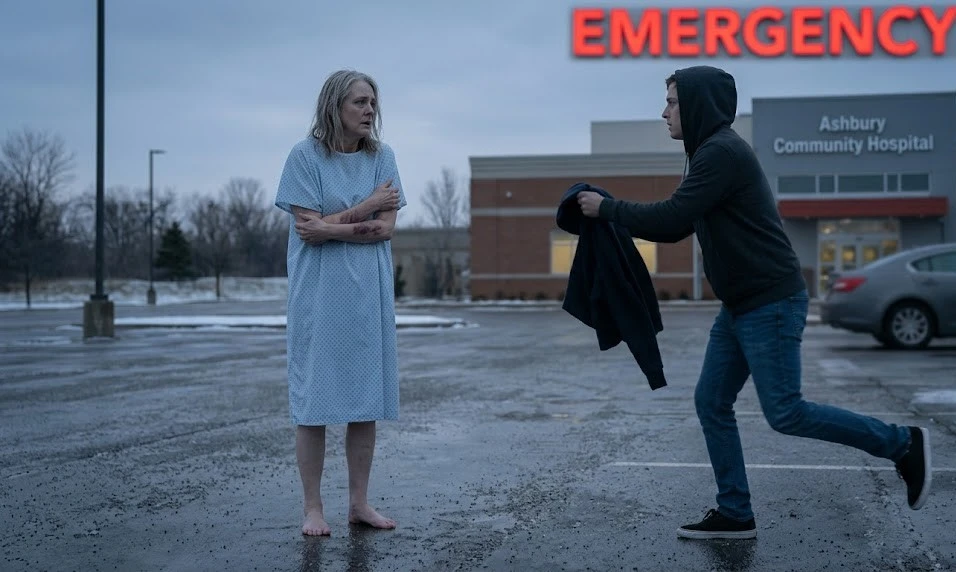
I had a phone call at 3:14 in the morning.
At first, I just stared at it. Nobody calls at that hour unless something is seriously wrong.
When I saw it was my mom, my stomach dropped.
I answered immediately.
“Mom? What’s going on?”
What came through the phone barely sounded like her. She was gasping for air.
Then she said two words.
“Help me.”
The line went dead.
“Mom? Mom!”
I sat up so fast I almost dropped the phone. I called her back immediately. It rang several times before going to voicemail.
I tried again.
Voicemail.
Again.
Nothing.
By then my hands were shaking.
The thing about my mom is that she’s always been fiercely independent. Sometimes too independent. She’d rather struggle through something herself than ask anybody for help. Growing up, I don’t think I ever heard her ask for help with anything.
So when she made that call me in the middle of the night sounding terrified, I knew this wasn’t a small problem.
Something was very, very wrong.
I don’t remember making a conscious decision to leave. One minute I was standing in my bedroom, staring at my phone, and the next I was throwing on jeans, grabbing a hoodie, and running for my car.
My mom lived in Ashbury, about five hours away.
Under normal circumstances, the drive was long enough.
That night was worse.
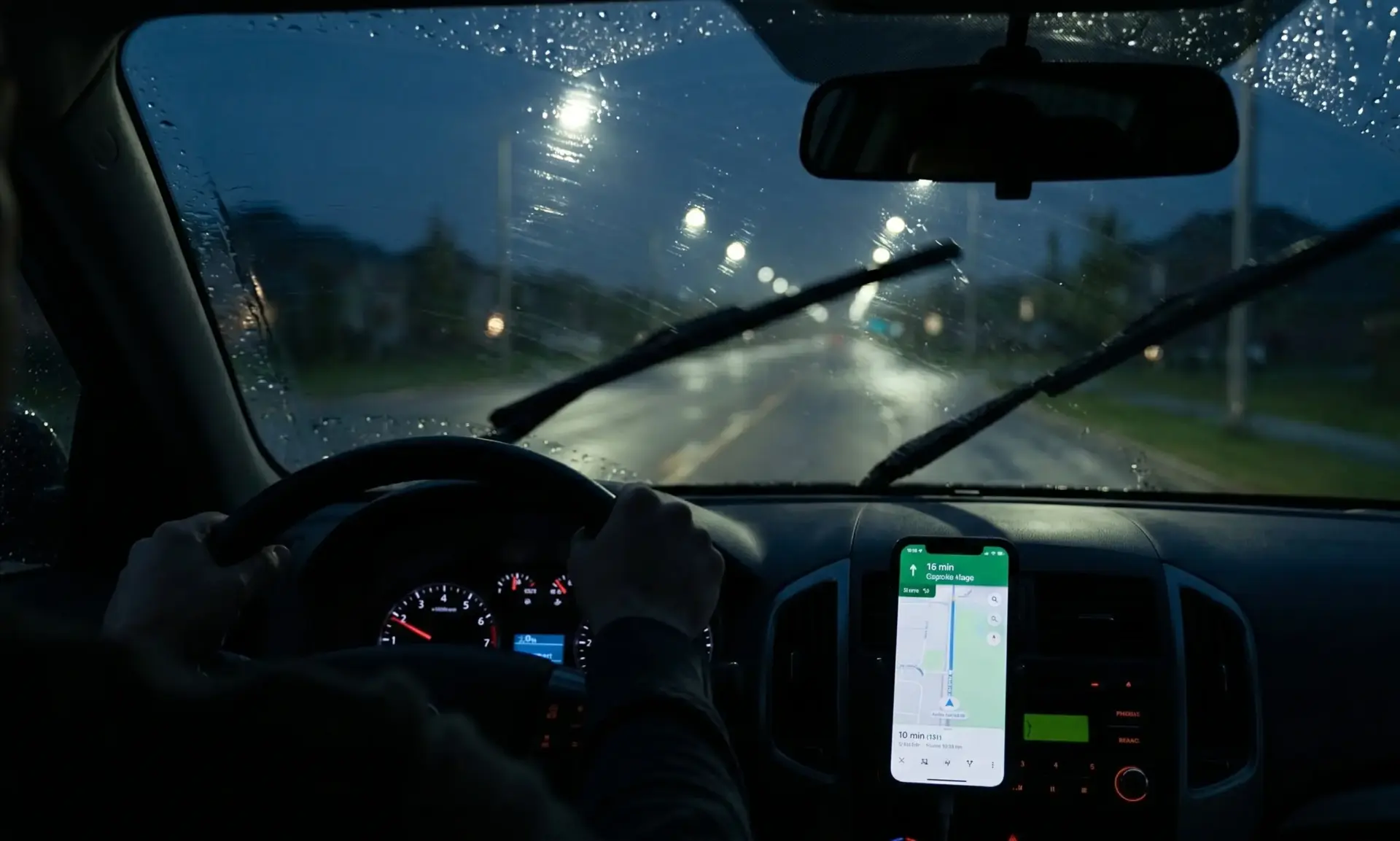
A freezing storm had moved in, turning the roads into a slippery mess. Rain hammered the windshield, and the wipers struggled to keep up. Visibility was awful. Most people would have waited until daylight.
I never even considered it.
The entire drive, I kept calling her.
Straight to voicemail.
Every single time.
The longer she didn’t answer, the more scenarios played through my head.
By the time I reached Ashbury Community Hospital, daylight was starting to creep across the sky. The rain had turned into sleet, and the wind felt like needles against my face.
I pulled into the parking lot, threw the car into park, and ran toward the emergency entrance.
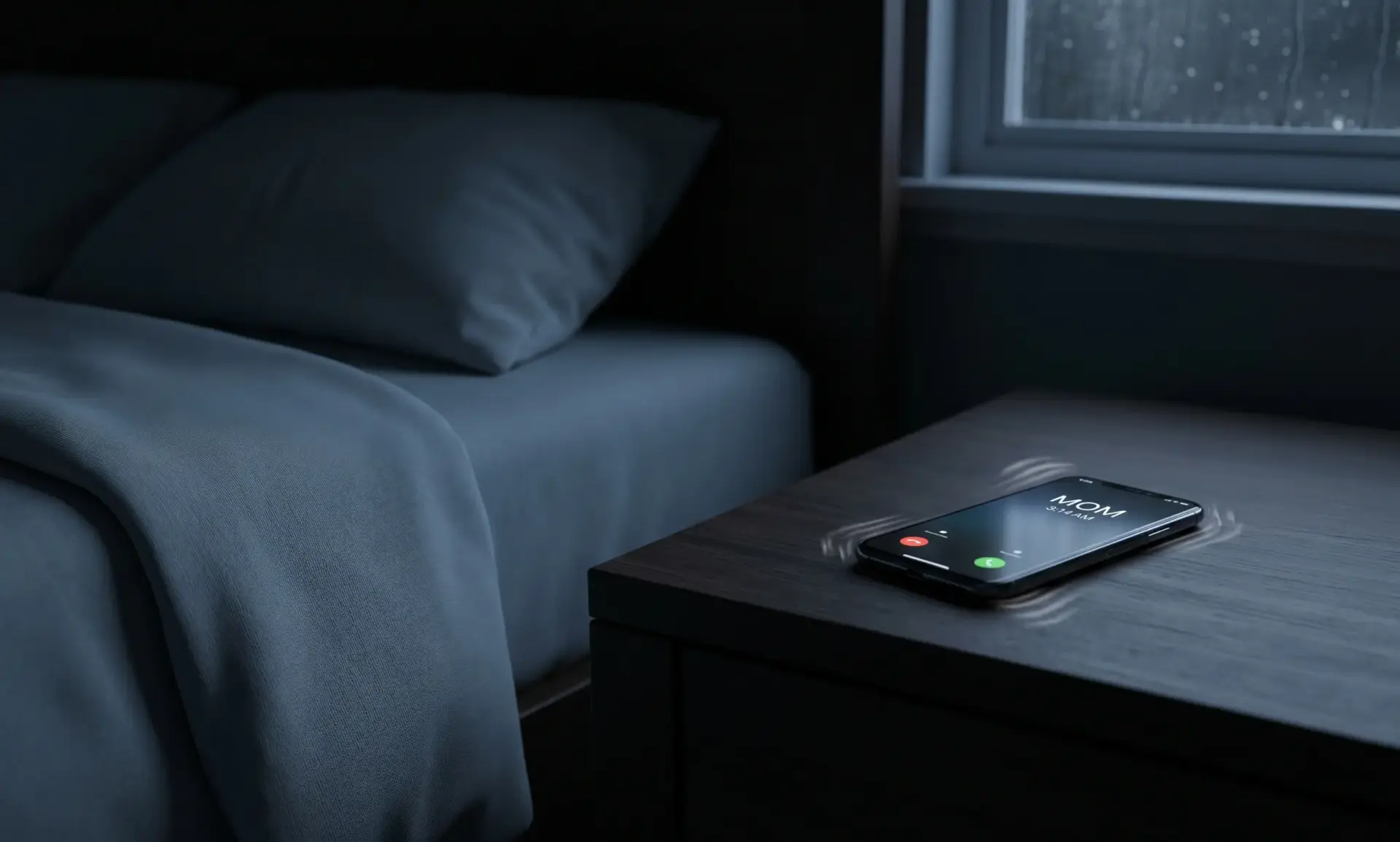
Then I saw her.
She was standing outside the hospital doors.
Barefoot.
Wearing nothing but a thin hospital gown.
No coat.
No shoes.
Nothing.
She looked so small standing there in the freezing weather.
Her gray hair was plastered to her forehead, and her whole body was shaking uncontrollably.
“Mom!”
I ran to her.
When I wrapped my arms around her, she felt ice cold.
But what scared me even more was the look in her eyes.
She barely seemed to know where she was.
As I slipped off my hoodie and draped it around her shoulders, the sleeve of her gown shifted.
That’s when I saw the bruises.
Dark purple marks covered both of her forearms.
Then I noticed the discoloration around her neck.
My stomach turned.
I wanted answers right then and there.
Instead, I focused on getting her inside.
Whatever had happened could wait.
Getting her warm couldn’t.
Inside the emergency department, a nurse immediately rushed over when she saw my mother. Within minutes, they had her wrapped in heated blankets and seated in an examination room.
I stayed beside her the entire time.
At first, she barely spoke.
She seemed exhausted, confused, and frightened.
Every time someone asked what happened, she would glance toward the door as if she expected someone to walk in.
That alone terrified me.
Eventually, after a doctor examined her and confirmed she was suffering from hypothermia, dehydration, and multiple bruises consistent with physical assault, a social worker joined us.
That’s when my mother finally started talking.
And what she told us made my blood run cold.
For nearly a year, she had been living with her boyfriend, a man named Richard.
To everyone else, Richard seemed charming.
Polite.
Helpful.
The kind of man who carried groceries for neighbors and remembered everyone’s birthday.
But behind closed doors, he was someone else entirely.
The abuse hadn’t started immediately.
According to my mom, it began with control.
He criticized her friends.
Monitored her spending.
Questioned where she went and who she spoke to.
Then came the insults.
The threats.
The isolation.
By the time things became physical, she felt trapped.
Ashamed.
And convinced nobody would believe her.
The bruises on her arms came from Richard grabbing her during an argument.
The marks on her neck came from him trying to stop her from leaving.
That night, things escalated further than ever before.
She managed to lock herself in a bathroom and call me.
Those two words, “Help me,” were all she had time to say before he forced the door open.
What happened next still makes me sick to think about.
According to hospital staff and police reports, a neighbor heard shouting and called emergency services.
When officers arrived, Richard fled before they could question him.
My mother was transported to the hospital.
Disoriented and terrified, she wandered outside before anyone realized she had left her room.
That’s where I found her.
Barefoot in the freezing cold.
Alone.
The following weeks were a blur of police interviews, medical appointments, and legal paperwork.
Richard was eventually located and arrested.
Investigators uncovered evidence that supported my mother’s account, including prior complaints from another woman who had dated him years earlier.
The man who appeared kind and trustworthy had been hiding a pattern of abuse for a long time.
My mother struggled after everything happened.
The emotional wounds were deeper than the physical ones.
There were days she blamed herself.
Days she wondered how she had missed the warning signs.
Days she felt embarrassed to tell people the truth.
But little by little, she began rebuilding her life.
She moved into a small apartment closer to me.
She started counseling.
She reconnected with friends she hadn’t spoken to in years.
Most importantly, she stopped carrying the burden alone.
The first real sign that she was healing came about six months later.
I stopped by her apartment one Saturday afternoon expecting to find her sitting quietly in front of the television, the way she often did after everything happened.
Instead, I found her in the kitchen.
Music was playing.
She was baking.
Actually baking.
For years, my mother had been known for her cinnamon rolls. Every holiday, every birthday, every family gathering, people would ask if she was bringing them.
After Richard, she stopped making them altogether.
That afternoon, the smell filled the entire apartment.
When she noticed me standing there, she laughed.
Not a polite laugh.
Not a forced one.
A real laugh.
For a second, it felt like getting a piece of my old mom back.
The recovery wasn’t perfect after that.
There were setbacks.
Some nights she called because she couldn’t sleep.
Sometimes she panicked if an unfamiliar car sat outside her apartment for too long.
Certain songs reminded her of things she wanted to forget.
Trauma doesn’t disappear just because the danger is gone.
But slowly, the good days started outnumbering the bad ones.
A year later, she testified at Richard’s sentencing hearing.
I sat in the front row.
The entire time, I watched her stand there with her shoulders back and her head held high.
She wasn’t shaking.
She wasn’t crying.
She simply told the truth.
For the first time in a very long time, Richard looked small.
Not powerful.
Not intimidating.
Just small.
After the hearing ended, my mother walked out of the courtroom and took a deep breath.
Then she looked at me and smiled.
“It’s over,” she said.
Three simple words.
But they carried the weight of everything she’d survived.
Today, she’s doing better than I ever thought possible.
She volunteers at a local community center.
She spends weekends gardening.
She’s surrounded by people who genuinely care about her.
Every now and then, I’ll catch her laughing at something completely ridiculous, and it reminds me just how far she’s come.
I still think about that phone call sometimes.
3:14 a.m.
The panic in her voice.
The drive through the storm.
Finding her standing alone outside that hospital.
Those memories never really leave you.
But they no longer define the story.
Because the story isn’t about what happened to her.
It’s about what happened after.
It’s about survival.
It’s about rebuilding.
And it’s about a woman who found the strength to start over when she had every reason to give up.
Whenever people ask me what courage looks like, I don’t think of heroes in movies or famous people in history.
I think of my mother.
Cold.
Terrified.
Standing outside a hospital in the middle of a storm.
And still finding the strength to keep going.