A “Simple Flu” Cost Him His Limbs — What Happened Next Shocked Everyone

It began the way so many illnesses do—quietly, almost forgettably.
A scratchy throat. A rising temperature. That dull heaviness that makes you cancel plans and curl up under a blanket, telling yourself it’s nothing serious.
In November 2013, Alex Lewis thought he was dealing with what people casually call “man flu.” His partner, Lucy Townsend, didn’t see any reason to worry either. Their life was full—running a busy pub, raising their young son Sam, and managing the constant rhythm of work and family. Getting sick was just an inconvenience.
Until it wasn’t.
Their home, perched above the pub, was always filled with people—regulars, laughter, long nights. It made sense to assume he’d picked up a seasonal bug.
But this time, it didn’t fade.
It intensified.
View this post on Instagram
When Something Felt Deeply Wrong
“It’s just a cold. I’ll be fine.”
That’s likely what Alex believed at first. But his body had other plans.
The fever kept climbing. His strength disappeared. Then came the signs that couldn’t be brushed off—his urine darkened, streaked with blood, and his skin began turning an unnatural shade of purple.
Lucy watched the change happen in front of her eyes.
“This isn’t normal. Something’s wrong.”
That realization came fast—and it changed everything.
A Race Against Time
There was no hesitation. Lucy called emergency services.
“I need an ambulance. Now.”
Paramedics arrived quickly, and their urgency said more than words could. This wasn’t routine.
At the hospital, Alex was rushed straight into intensive care. Machines surrounded him. Doctors moved fast, speaking in clinical tones that barely masked the severity of the situation.
Then came the sentence no one is ever prepared for:
“You should prepare yourself to say goodbye.”
The Diagnosis No One Expects
Doctors soon identified the cause—a severe streptococcal infection.
But it had already spiraled into something far worse: sepsis, toxic shock syndrome, and necrotizing fasciitis.
Inside his body, the damage was spreading rapidly.
His organs began to fail. His immune system turned against him. Blood poisoning cut off circulation to his limbs.
His skin darkened.
Blackened.
Dying.
Doctors fought to save him—but the odds were devastating.
Just three percent.
Facing the Unthinkable
Lucy stood beside him as machines kept him alive.
“They told me to say goodbye.”
Time seemed to stretch endlessly in that room. Every second felt fragile. Every breath uncertain.
Alex remembers almost nothing.
“It’s all a blur.”
But for his family, it was painfully clear—they were watching him slip away.
The Only Option Left
Doctors reached a breaking point.
The infection had spread to his limbs. If it reached his vital organs, there would be no chance.
There was only one decision left.
Amputation.
“This arm is killing me… so it has to go.”
That reality came in stages.
First one arm.
Then both legs.
Then the remaining arm.
Even parts of his face.
Each surgery wasn’t just about removing tissue—it was about buying time.
Keeping him alive.
Waking Up to a Different Life
Survival was only the beginning.
When Alex regained awareness, everything had changed.
His body was unrecognizable.
His limbs were gone. His face altered by life-saving procedures.
Even the simplest actions had to be relearned.
“I had to learn everything again. Everything.”
Holding objects. Sitting upright. Speaking clearly.
Nothing came easily.
The Hardest Moment
The most painful moment wasn’t physical.
It was when his son saw him.
Young Sam didn’t understand what had happened. The man in the hospital bed didn’t look like the father he knew.
He was afraid.
Lucy tried to bridge the gap in the only way she could.
“Daddy is becoming a Power Ranger.”
Slowly, Sam began to come closer.
Starting Over
Leaving the hospital didn’t mean returning to normal life.
There was no normal anymore.
Only adaptation.
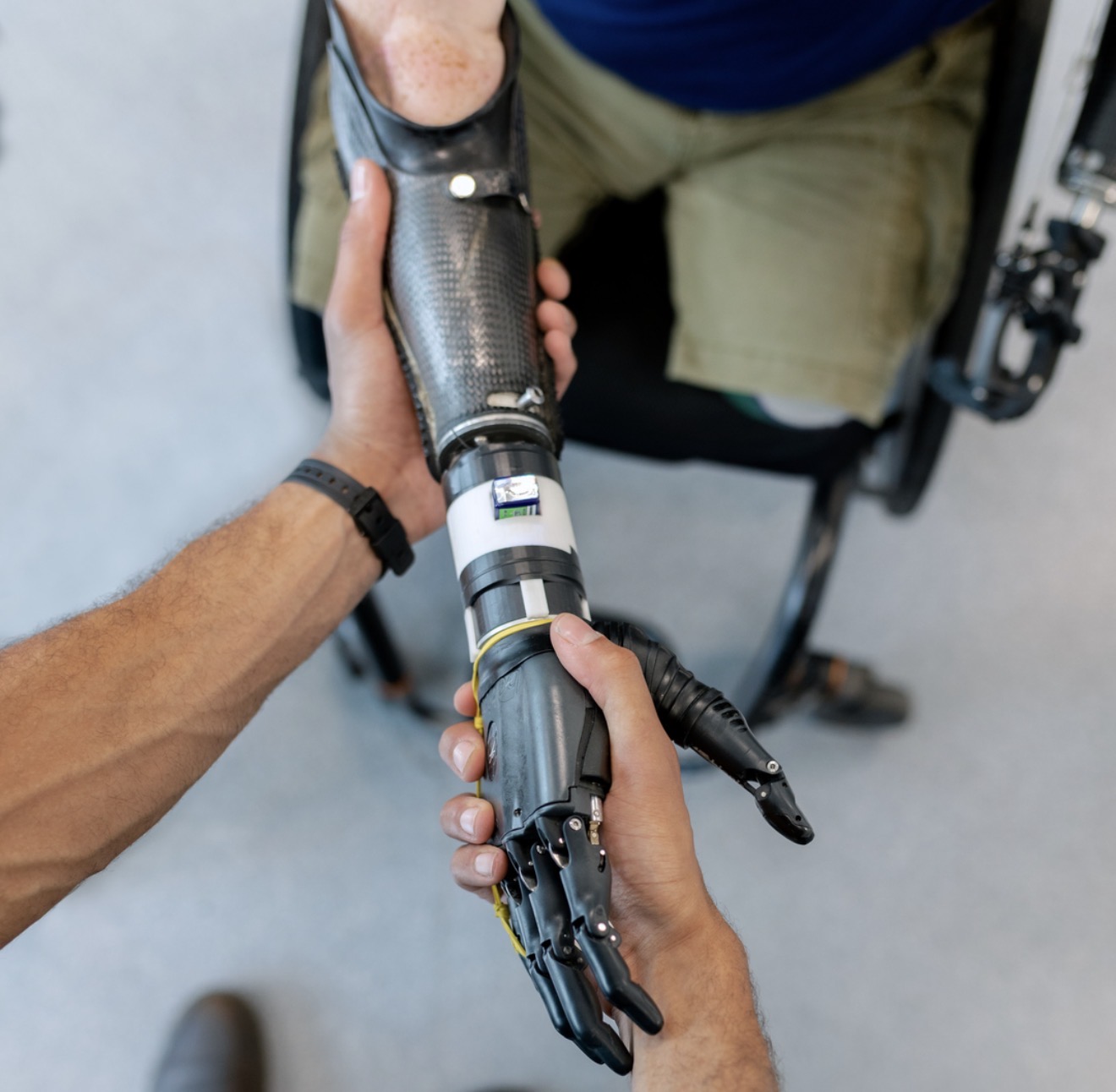
Alex learned to use prosthetics. He adapted to a wheelchair. He relearned how to eat and function independently.
One small detail made a huge difference—he retained part of his right arm at the elbow.
“That one elbow is his whole independence.”
It became his anchor.
View this post on Instagram
Choosing Not to Give Up
There were days when everything felt overwhelming.
Moments of frustration.
Moments where quitting might have seemed easier.
But he didn’t stop.
Not for himself.
Not for his family.
“Everything I do is to show that disability is not a problem. You just have to find a way.”
That belief became his foundation.
Turning Survival Into Purpose
Over time, something shifted.
Alex began to see his experience differently—not just as survival, but as something that could help others.
He started speaking publicly.
He got involved in developing prosthetics.
He worked on projects aimed at improving accessibility worldwide.
“We want to improve the lives of the mobility impaired globally.”
Redefining Limits
In 2019, he took on a challenge few would even consider.
He climbed one of Africa’s highest mountains—Mount Kilimanjaro.
Not conventionally.
But with adapted equipment and relentless determination.
“We reached over 4,000 meters… and I climbed the final stretch.”
It wasn’t just a climb.
It was proof.
A Different Kind of Strength
Through it all, Lucy remained beside him.
But she never framed it as caregiving.
“I’m not his carer. I’m his wife.”
Their relationship didn’t become defined by hardship—but by resilience.
A Perspective Few Understand
Looking back, Alex says something unexpected:
“That year… was the best year of my life.”
It sounds impossible.
But for him, it stripped life down to what truly matters.
“I’ve lived more in the years since than I ever did before.”
View this post on Instagram
Still a Father, First
Today, Sam sees his father for who he is.
Not what he lost.
“He just sees me as me.”
And that might be the most powerful part of the story.
What Stays With You
It’s easy to get caught up in everyday frustrations.
But stories like this change perspective.
They remind you how quickly life can shift—and how strong people can be when everything is taken away.
Because sometimes survival isn’t just about making it through.
It’s about choosing to live—fully, fiercely, and without excuses.