
Creatine Could Help the Immune System Fight Cancer

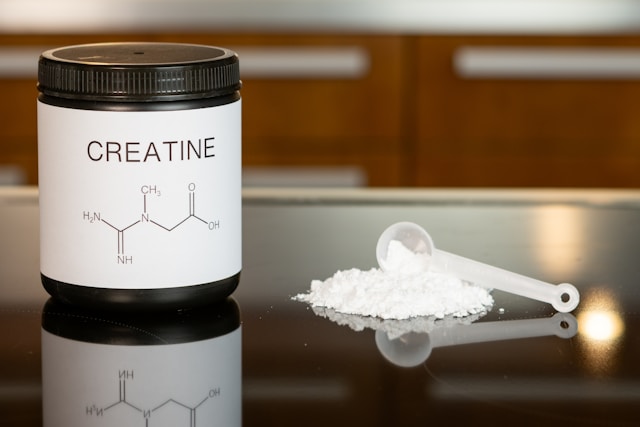
Creatine has built a reputation as one of the most popular supplements in the fitness world, helping athletes improve strength and support muscle growth.
Now, scientists are beginning to explore a very different question: could the same supplement also help the immune system fight cancer?
A new study suggests it might, although researchers are stressing that the findings are still in their early stages. So far, the work has only been carried out in mice and in laboratory experiments using human immune cells.
While the results are encouraging, much more research is needed before anyone can say whether creatine offers the same benefits to people undergoing cancer treatment.
Still, the discovery has caught the attention of researchers because it focuses on an unexpected role for a supplement that most people associate with the gym rather than the immune system.
For years, creatine has been widely used to improve athletic performance. It helps muscles produce energy during short bursts of intense activity, making it easier to lift heavier weights, sprint faster, or recover between sets.
Researchers at the University of California, Los Angeles wanted to know whether that same energy boost could help immune cells do their jobs more effectively.
Instead of studying muscles, they focused on specialized immune cells called dendritic cells.
These cells play an essential role in the body’s defenses. They are often described as the immune system’s messengers because they detect potential threats, collect information about them, and alert other immune cells to take action.
Without dendritic cells, many of the body’s strongest defenses would struggle to recognize cancer cells in the first place.
Unlike killer T cells, which directly destroy cancer cells, dendritic cells work behind the scenes.
Think of them as coordinators rather than soldiers. Once they recognize something abnormal, they present pieces of that threat to T cells, essentially teaching them what to attack.
This communication is critical for immunotherapy, one of the fastest-growing areas of modern cancer treatment.
Immunotherapy aims to activate the body’s own immune system so it can identify and destroy tumors. In many patients, the treatment has produced remarkable results.
However, it doesn’t work for everyone.
Some people respond extremely well, while others see little or no benefit.
That challenge is exactly what researchers hope to improve.
According to Professor Lili Yang, the study’s senior author, creatine may support more than just the immune cells that attack cancer.
“Immunotherapy has shown remarkable promise, but it only works for a subset of patients,” Yang explained.
Her team found evidence that creatine appeared to strengthen the entire network responsible for organizing an immune response.
“What this study shows is that creatine doesn’t just help the T cells fighting cancer,” Yang said. “It also energizes the entire infrastructure that supports and guides them.”
That distinction is important.
Rather than focusing only on the cells that destroy tumors, the research suggests creatine may also support the cells responsible for recognizing cancer and directing the immune response from the very beginning.
Yang believes this could make creatine a valuable addition to future immunotherapy strategies.
“That makes creatine a promising supplement to holistically support the immune response that modern immunotherapies depend on.”
The researchers tested their theory in several ways.
In mice with tumors, creatine supplementation slowed tumor growth compared with animals that did not receive it.
They also examined human immune cells in laboratory conditions and observed similar signs that creatine helped improve immune cell activity.
Although those findings are encouraging, they should be interpreted carefully.
Experiments in mice often provide valuable clues, but many treatments that succeed in animals never produce the same results in humans.
Laboratory studies also cannot fully recreate the complexity of the human body.
That means these findings should be viewed as an important first step rather than proof that creatine can help cancer patients.
The UCLA team believes creatine could eventually have two different roles in cancer treatment.
James Elsten-Brown, one of the study’s co-authors, explained both possibilities.
“The potential we see here is that creatine could be used in two complementary ways: as a supplement to enhance the immune response of patients already receiving immunotherapy, and as a tool to improve the quality of dendritic cell-based vaccines before they’re administered.”
The first approach would be relatively straightforward.
Patients already receiving immunotherapy could also take creatine to help strengthen the immune response generated by their treatment.
The second possibility is more specialized.
Scientists are developing dendritic cell vaccines, which involve collecting a patient’s immune cells, preparing them in the laboratory to better recognize cancer, and then returning them to the body.
If creatine improves the function of those cells before they are administered, it could potentially increase the effectiveness of these personalized treatments.
As exciting as the findings sound, researchers emphasize that they are still far from becoming standard medical practice.
Large clinical trials involving cancer patients will be needed before doctors know whether creatine actually improves treatment outcomes.
Those studies must answer several important questions.
Does creatine work equally well across different types of cancer?
What dose provides the greatest benefit?
Could it interfere with chemotherapy, targeted therapy, or other medications?
Are certain patients more likely to benefit than others?
Until those questions are answered, creatine should not be viewed as a cancer treatment.
Researchers are studying whether it could support existing therapies, not replace them.
Cancer research often begins exactly this way.
Scientists observe something interesting in laboratory experiments, test it in animals, and then gradually move toward carefully designed human studies.
Only after several stages of research can doctors determine whether a promising idea truly improves patient care.
The latest findings place creatine into that early category.
They provide enough evidence to justify further investigation, but not enough to change medical recommendations.
Anyone currently receiving cancer treatment should continue following the advice of their oncology team and speak with their doctor before adding any supplement, including creatine.
The supplement may be available over the counter, but that does not automatically make it appropriate for every patient or every situation.

Although creatine is often associated with bodybuilding, its role inside the body is much broader.
The human body naturally produces around half of the creatine it needs each day. The rest usually comes from foods such as red meat and fish.
Once absorbed, most of it is stored inside skeletal muscles.
There, creatine combines with phosphate to form phosphocreatine, an energy reserve that helps regenerate adenosine triphosphate, better known as ATP.
ATP is often called the body’s energy currency because nearly every cell depends on it to function.
During intense exercise, muscles burn through ATP incredibly quickly.
Phosphocreatine helps replace that energy almost immediately, allowing muscles to continue working at a high intensity for longer periods.
That is why creatine has remained one of the most researched and widely used performance supplements in the world.
Could Creatine Help Prevent Cancer?
Researchers are also exploring whether creatine might play a role in cancer prevention, although the evidence is still limited. One theory is that healthier, better energized immune cells may be more effective at spotting and eliminating abnormal cells before they develop into tumors.
At this stage, however, there is no proof that taking creatine lowers a person’s risk of developing cancer. Scientists say much more research is needed before any such claim can be made.
Creatine remains one of the most studied sports supplements available, and for most healthy adults, it is considered safe when taken as directed. Still, more is not always better.
Some people experience temporary bloating or digestive discomfort, especially when starting with high loading doses. Because creatine increases water inside muscle cells, it can also cause a small increase in body weight that is usually related to water, not fat.
Questions have also been raised about kidney health, but current evidence has not shown that recommended doses damage healthy kidneys. People with kidney disease, existing medical conditions, or those undergoing cancer treatment should always speak with their doctor before taking any supplement.
The latest research suggests creatine may do far more than support strength and muscle growth. Early findings indicate it could also help power key immune cells involved in the fight against cancer, potentially making future immunotherapies more effective.
That said, the research is still in its early stages. The results have so far been seen in mice and laboratory studies, not in clinical trials involving cancer patients. Until larger human studies are completed, creatine should be viewed as a promising area of research rather than a cancer treatment.
For now, its role in oncology remains a possibility worth watching, but not one that replaces proven medical care.