She Recorded 30 Years of News Because She Didn’t Believe in the Future

Before the phrase “fake news” became part of everyday language, one woman was already acting on the fear that truth itself could be reshaped, diluted, or lost entirely. Instead of debating it or warning the public, she chose a far more radical response: she documented everything.
Her name was Marion Stokes. Rather than stepping into the spotlight as an author or public intellectual, she lived quietly while carrying out an extraordinary private mission—recording television news continuously for decades.
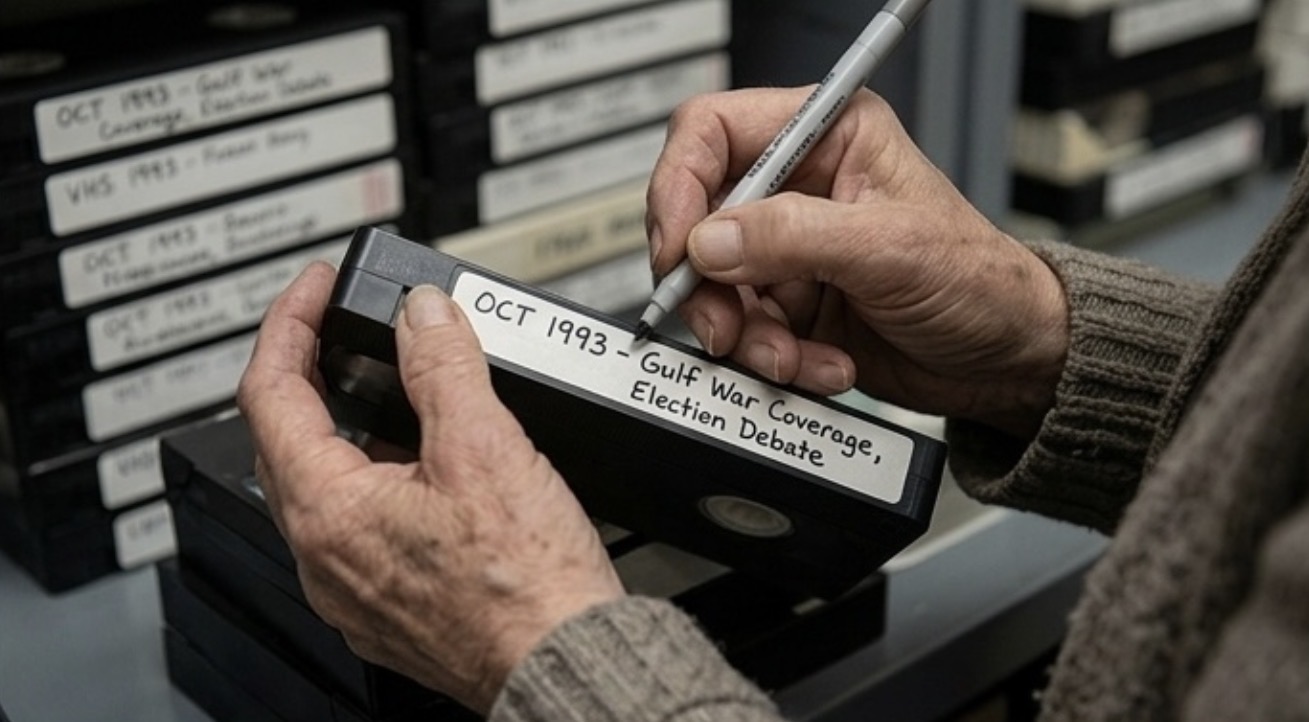
A life built around preserving reality
Marion Stokes was convinced that future generations would not be able to rely on public records or media summaries alone. In her view, what mattered was not just what happened in the world, but how it was presented at the moment it happened.
So she pressed record—and kept pressing it for over 30 years.
Her recordings included everything: breaking news, political debates, global crises, local weather reports, and routine broadcast segments. Nothing was too small or too large. She did not filter or curate. The goal was total preservation.
What started as a personal concern gradually evolved into an all-consuming discipline that structured her entire daily life.
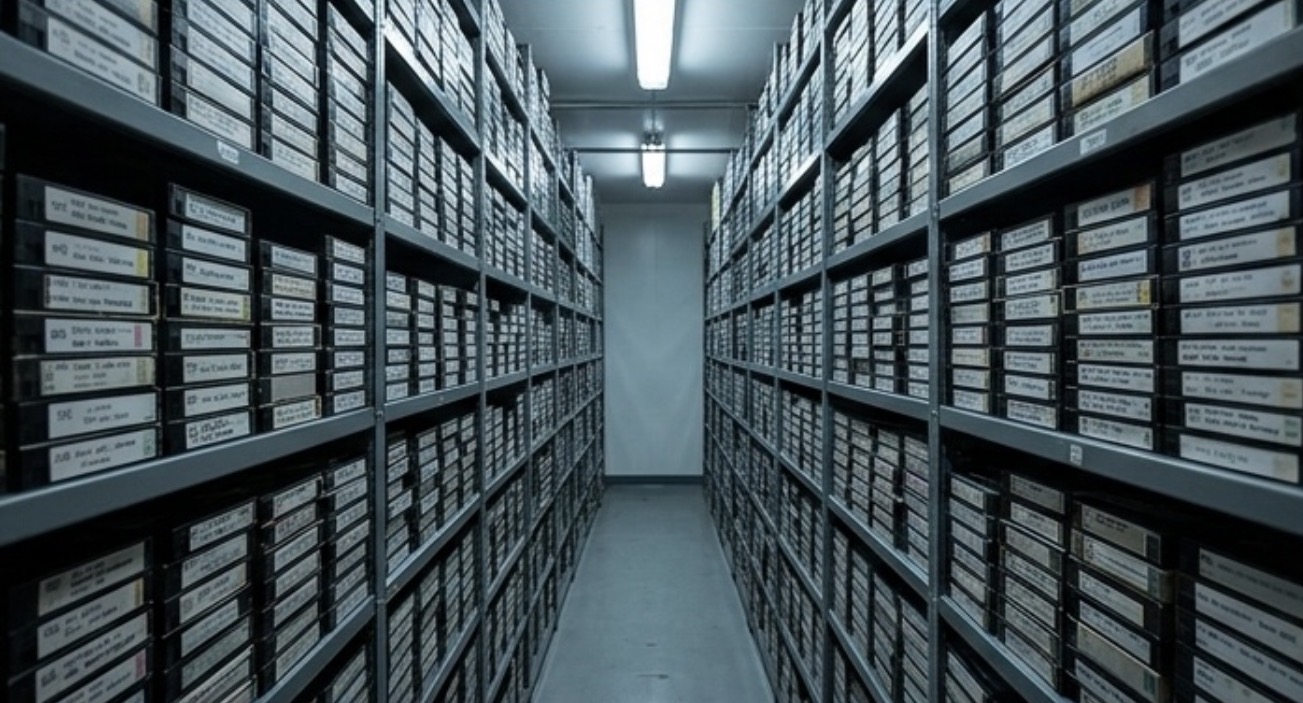
Turning her home into a broadcast archive
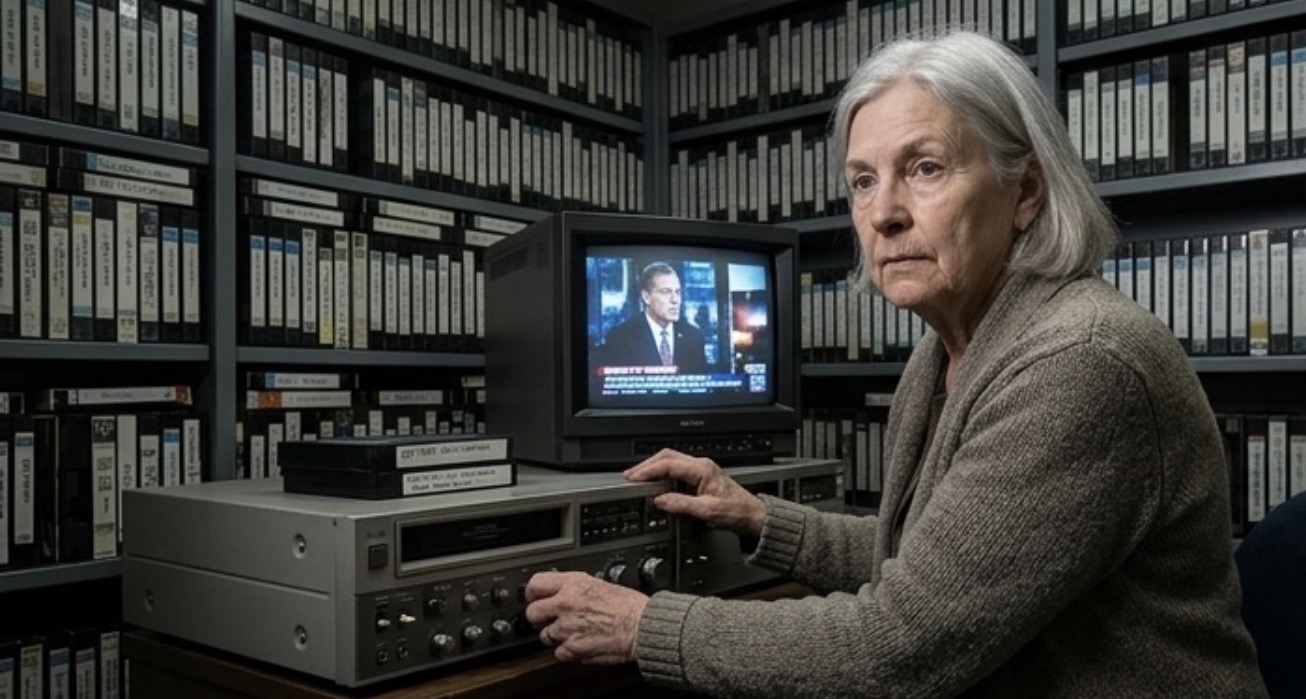
Rather than treating this as a hobby, Stokes built a full-scale recording setup inside her home. Multiple televisions ran simultaneously, each tuned to different channels. VHS recorders worked around the clock, carefully maintained so no broadcast would be missed.
She constantly upgraded her equipment as technology evolved. When devices became obsolete, she replaced them without hesitation. Her priority was continuity—ensuring that the flow of televised information was never interrupted.
Family members described her as highly disciplined and unwavering in her routine. Recording wasn’t something she did alongside life; it became the framework of it.
A massive archive of everyday history
Over three decades, Stokes accumulated an archive of staggering scale—estimated at more than 71,000 VHS tapes.
Unlike traditional archives that focus only on landmark historical events, her collection captured everything in equal measure. A presidential speech and a local weather update existed side by side. This lack of hierarchy is exactly what makes the archive so unique today.
Researchers and historians now value it not only for what it contains, but for how it captures media itself—tone, repetition, framing, and editorial choices that shape public perception in real time.
Understanding media long before the digital age
Stokes’ earlier life as a civil rights and social justice activist had already shaped her awareness of power structures. She understood how information could influence public opinion, and how easily narratives could be shaped by those controlling the broadcast.
As television became the dominant force in shaping public understanding, she began noticing patterns—how certain stories were amplified, how others disappeared, and how repetition influenced belief.
Rather than simply criticizing the system, she documented it.
A personal response to information anxiety
Stokes believed that media narratives were not fixed. In her view, they could be edited, reframed, or even quietly erased over time. This concern led her to a radical solution: preserve the original broadcasts so that nothing could be lost or rewritten without evidence.
At the time, many saw her fears as excessive. But in hindsight, her instinct aligned closely with today’s concerns about misinformation, selective reporting, and fragmented digital realities.
Her archive became a safeguard against forgetting—not just of events, but of how those events were originally presented.
What remained after her death
When she passed away in 2012, her enormous collection risked being lost entirely. The scale alone made preservation a serious challenge.
Fortunately, the Internet Archive stepped in to save her work. The process was painstaking: each VHS tape had to be digitized, cataloged, and organized into a searchable system. It took years of technical effort and commitment.
What emerged was not just a digital library, but a living record of modern broadcast history.
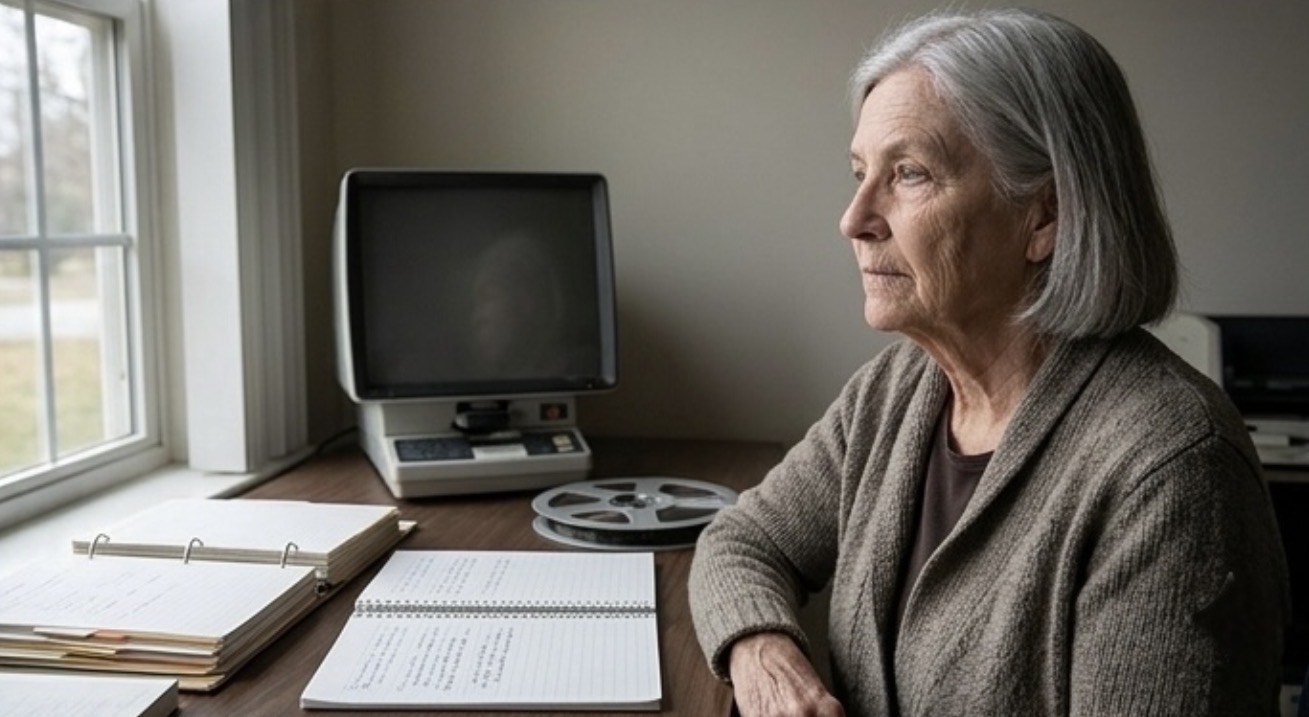
Why her work matters even more today
In an era defined by rapid information flow, social media cycles, and constant narrative shifts, Stokes’ archive has taken on new relevance. It offers something rare: direct access to original broadcasts without later interpretation.
It allows viewers to compare memory with record, perception with presentation.
Her work also raises a broader question about how media is consumed today. Short-form content, headlines, and algorithm-driven feeds often remove context. Stokes’ archive stands as the opposite—a complete, uninterrupted record of how information actually unfolded.
A quiet legacy with lasting impact
Marion Stokes did not set out to become famous. She did not build institutions or lead public movements in the traditional sense. Instead, she built something quieter but arguably more enduring: a preserved mirror of media history itself.
What once looked like an unusual personal obsession is now widely recognized as an extraordinary act of foresight. Her life’s work continues to serve researchers, journalists, and anyone trying to understand how truth is shaped, packaged, and remembered.